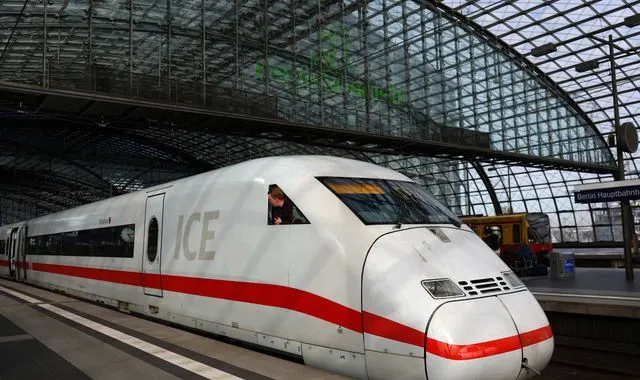

Train services across Germany were brought to a temporary halt after a fault in Deutsche Bahn’s railway communications network disrupted safety-critical operations, creating one of the country’s most significant rail disruptions in recent years. The incident left thousands of passengers stranded, delayed freight movements and highlighted how heavily modern railway systems depend on digital infrastructure to keep trains running safely. The nationwide stoppage was lifted within a few hours, but delays continued well into the following day as operators worked to restore normal timetables.
The disruption affected Deutsche Bahn, Germany’s state-owned railway operator, after the GSM-R railway radio system experienced a failure. Because the network carries essential communication between train drivers and traffic control centres, rail operators suspended services as a precaution until reliable communications could be restored.
What caused the nationwide rail disruption?
Deutsche Bahn later confirmed that the outage occurred during scheduled maintenance involving a key network switch. Engineers encountered an unexpected software issue that prevented the communications system from switching over correctly, forcing operators to suspend rail traffic while the fault was investigated.
The railway operator said technicians restored services after activating backup systems and completing safety checks. According to the Deutsche Bahn newsroom, additional technical safeguards and revised maintenance procedures are being introduced to reduce the risk of a similar disruption in the future.
Once the emergency communications platform was operating, train services resumed gradually. However, restarting a national railway network is a complex process, as trains, crews and equipment must first be returned to the correct locations before regular timetables can be restored.
Passengers experienced widespread delays
Major stations including Berlin, Munich and Duisburg became crowded as passengers searched for travel updates, replacement tickets and alternative transport. Many travellers missed onward connections, while others were forced to postpone business trips and holidays.
Deutsche Bahn provided hotel accommodation and taxi vouchers where required and arranged replacement transport whenever possible. Some trains remained at stations to provide shelter while services were gradually restored. Even after trains started moving again, delays continued across regional and long-distance routes because of the knock-on effects throughout the network.
Why the GSM-R network is essential
According to the European Union Agency for Railways (ERA), GSM-R (Global System for Mobile Communications–Railway) is the standard communications platform used by railway operators across much of Europe. It enables secure voice and data communication between train drivers, dispatchers and traffic control centres.
If the GSM-R network is unavailable, railway operators cannot safely authorize train movements or coordinate traffic. For that reason, Deutsche Bahn suspended operations until communications were fully restored, prioritising passenger and operational safety over keeping trains running.
What investigators have learned so far
Following the disruption, DB InfraGO completed a technical review and identified the sequence of events that triggered the software failure during maintenance. The company said the incident was not linked to physical damage to railway infrastructure and that engineers have already implemented corrective measures.
Officials also stated that the outage was not caused by external interference. A detailed technical review has been shared with the relevant supervisory authorities as part of the follow-up investigation.
Why digital resilience is becoming just as important as railway infrastructure
The incident has renewed attention on the growing role of digital technology within modern transport systems. While investment often focuses on new tracks, stations and signalling equipment, communications platforms now play an equally critical role in keeping rail services operating safely and efficiently.
Connected infrastructure is becoming increasingly common worldwide. Projects such as California’s smart freeway project on Interstate 15 demonstrate how digital technology is improving transport management, while also highlighting the importance of building resilient communications systems that can withstand unexpected failures.
Read More
Attention turns to strengthening Germany’s railway network
Germany operates one of Europe’s busiest passenger and freight rail systems, making even short nationwide disruptions highly significant. Although services resumed within hours, the event demonstrated how quickly a software problem can affect transport across an entire country.
Rail experts expect the incident to influence future investment in communications resilience alongside ongoing upgrades to tracks, stations and signalling. As railway operators continue modernising their networks, maintaining reliable digital infrastructure will remain essential for preventing large-scale service disruptions and protecting passenger confidence.

Make Swikblog your go-to source on Google for reliable updates, smart insights, and daily trends.