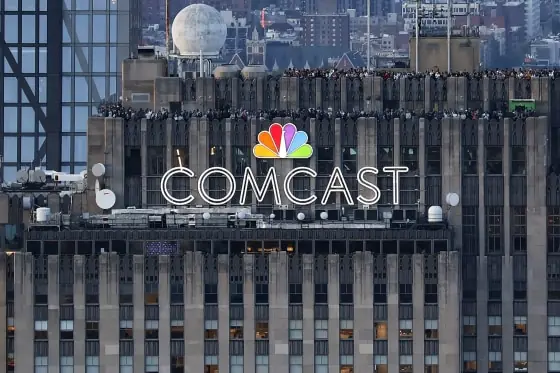

Comcast is preparing for a major break-up that will reshape one of America’s biggest media and communications groups. The company announced plans to split into two publicly traded businesses by spinning off NBCUniversal and Sky, separating its entertainment empire from its broadband, wireless and technology operations.
The planned tax-free spin-off is expected to be completed in about one year, if it receives the required board, regulatory, tax and financing approvals. Once completed, existing Comcast shareholders are expected to hold shares in both the remaining Comcast business and the new NBCUniversal company.
Comcast’s new structure explained
The remaining Comcast company will be built around connectivity. That includes broadband, wireless, business services and entertainment platforms used by residential and commercial customers. Comcast says this business reaches more than 65 million homes and businesses, giving it a large network base as competition grows from fiber providers and fixed wireless rivals.
The new NBCUniversal company will hold Comcast’s major media and entertainment assets. That portfolio will include Universal Pictures, Universal Television, Universal theme parks, NBC, Telemundo, Peacock, Bravo and Sky, the European media group Comcast acquired in 2018.
Why NBCUniversal and Sky are being spun off
The split reflects a simple business reality: broadband and media now face very different markets. Comcast’s connectivity business depends on network investment, customer retention, wireless growth and business services. NBCUniversal depends on content, streaming, advertising, film releases, sports rights, theme parks and international distribution.
Keeping those businesses under one roof can make capital decisions more complex. By separating them, Comcast is giving each company a clearer identity and more freedom to invest in the areas that matter most to its future.
Leadership after the separation
Mike Cavanagh, Comcast’s current co-chief executive, will lead the new NBCUniversal as chief executive officer. Michael Angelakis, Comcast’s former chief financial officer, will return to the group as a strategic adviser before becoming chief executive officer of Comcast after the separation.
Brian L. Roberts, Comcast’s chairman and co-chief executive officer, will remain involved with both companies. His continued role is important because the transaction affects some of Comcast’s most valuable assets, including Universal, Peacock, Sky and the company’s core connectivity platform.
What shareholders should know
Comcast shareholders are expected to receive shares in both companies after the transaction closes. Comcast also plans to keep up to a 19.9% stake in NBCUniversal for up to one year after the spin-off, with the company intending to monetize that holding over time in a tax-efficient way.
The company also expects both Comcast and NBCUniversal to begin independent life with investment-grade balance sheets. That detail matters because it gives both businesses more flexibility to invest, borrow and compete without starting from a weak financial position.
Why Wall Street welcomed the move
Comcast shares rose sharply in pre-market trading after the announcement, with reports showing gains of more than 20%. Investors often respond positively to spin-offs when they believe separate companies may be easier to value than a large combined group.
For Comcast, the market may now value the broadband and wireless business more directly. For NBCUniversal, investors will be able to judge the media company on its own performance across theme parks, studios, Peacock, Sky, broadcast networks and advertising.
A bigger shift in the media industry
The Comcast split comes during a difficult period for legacy media companies. Cable television continues to lose subscribers, streaming remains expensive and major entertainment groups are under pressure to gain scale. At the same time, broadband providers are fighting harder to keep customers as wireless carriers and fiber networks expand.
Comcast has already moved several cable network assets, including MSNBC and CNBC, into Versant. The planned NBCUniversal and Sky spin-off goes further by separating a much larger media business from Comcast’s communications operations.
What it means for Peacock, Universal and Sky
NBCUniversal’s future as an independent company will likely depend on how well it balances premium content, streaming growth and theme park expansion. Peacock remains central to its streaming strategy, while Universal’s film and television studios provide valuable franchises and a deep content library.
Sky adds international reach across Europe, giving the new company a broader platform than a U.S.-only media group. That global footprint could help NBCUniversal compete for sports rights, advertising budgets, streaming partnerships and distribution deals.
Read More
Key risks before the deal closes
The deal is not final yet. Comcast said the transaction depends on customary conditions, including final board approval, tax opinions, regulatory approvals and financing arrangements. Any delay in those steps could affect the timeline or final structure of the separation.
There are also business risks after the split. Comcast must defend its broadband base and grow wireless, while NBCUniversal must compete with Netflix, Disney, Warner Bros. Discovery, Paramount and other global entertainment companies. The separation gives both companies focus, but it does not remove the competitive pressure.
Timeline of Comcast’s media reset
Comcast bought Sky in 2018 to expand its global media reach. It later separated several cable network assets into Versant. Now, in 2026, Comcast is preparing to spin off NBCUniversal and Sky into a standalone public company. Together, those moves show how quickly the company is reworking its structure as media, streaming and broadband economics move in different directions.
For more company and market coverage, see this related update on Tortilla shares being suspended after an accounting error delayed results.
Comcast’s official investor announcement and related materials are available through Comcast Investor Relations.

Make Swikblog your go-to source on Google for reliable updates, smart insights, and daily trends.