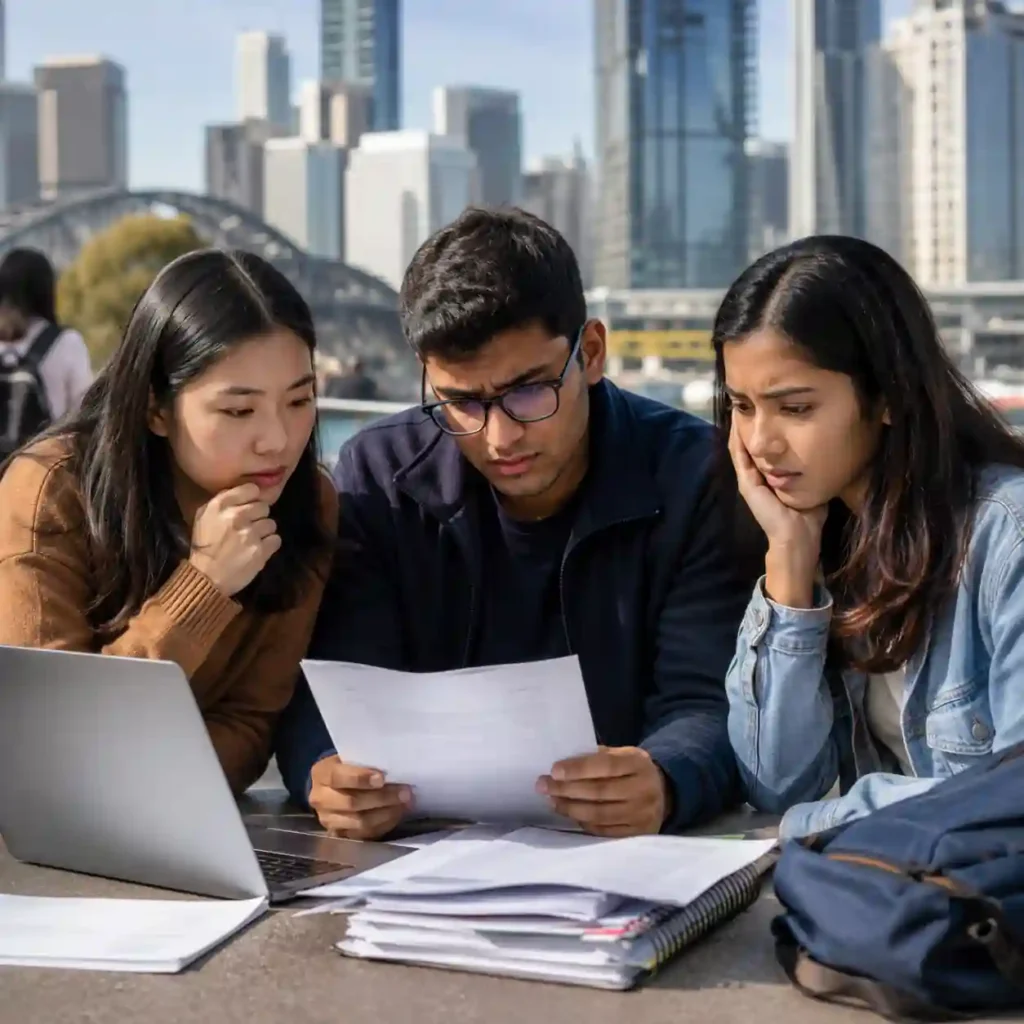

International students in Australia are voicing growing concern after the federal government introduced another round of visa fee increases, pushing the cost of studying and staying in the country to record levels. While annual fee adjustments are common, this year’s changes are far larger than usual and have triggered criticism from students, universities and business groups.
From July 1, 2026, the base Student visa (subclass 500) application charge increased from A$2,000 to A$2,500. The Temporary Graduate visa (subclass 485), which allows many overseas graduates to work in Australia after completing their studies, now costs A$5,750.
The latest rise follows another major increase earlier this year. On March 1, the subclass 485 application fee doubled from A$2,300 to A$4,600 before climbing again four months later. Students planning to remain in Australia after graduation can also read about the earlier Temporary Graduate visa fee increase, which marked the first major pricing change in 2026.
Students say confidence in Australia’s education pathway is fading
Many international students say the issue is not just the higher cost but the uncertainty created by repeated policy changes during their studies. Tuition fees, rent, health insurance and daily living expenses were already stretching budgets before the latest visa increases.
The International Students Representative Council of Australia (ISRC) says prospective students should carefully assess Australia’s changing policy environment before choosing it as a study destination.
ISRC president Weihong Liang said international students increasingly feel they are being treated as a source of government revenue instead of valued members of Australian universities.
Some students have described the latest increase as a “kick in the teeth”, while others questioned whether overseas students have become “official ATMs” for the government.
National Union of Students ethnocultural officer Syed Taqi Abbas Razvi, who arrived from Pakistan during the pandemic, said the higher graduate visa fee has left him uncertain about his future. As a final-year science student, he expected to apply for a Temporary Graduate visa within months but now faces paying thousands of dollars more before his current visa expires.
According to the Department of Home Affairs, the new visa pricing officially took effect on July 1.
The increases affect far more than student visas
The July changes extend across Australia’s migration system. While many visa application charges increased by around 25%, some categories rose by as much as 200%.
The Resident Return Visa increased from A$490 to A$1,475, while the Bridging Visa B fee rose from A$190 to A$575. Skilled Independent visa charges climbed from A$4,910 to A$6,140, and Partner visa fees increased from A$9,365 to A$11,710.
The broader changes have also affected permanent residents. A petition opposing the Resident Return Visa increase has attracted more than 30,000 signatures from people arguing the new charge is excessive for those who already live and pay taxes in Australia.
Readers looking for the wider migration changes can explore Australia’s latest visa fee increases, including the new charges for permanent residents and skilled migrants.
Read More:
- Bunnings launches PowerPass Pro Rewards with fuel discounts, Qantas Points and store credits
- KFC confirms nationwide breakfast rollout across Australia after Sydney Airport trial
- Visit the Swikblog homepage for more latest news
Universities and employers warn Australia could lose its appeal
Business leaders and universities believe the higher costs could make Australia less competitive against destinations such as the United Kingdom, Canada, New Zealand and the United States, where comparable visa charges are significantly lower.
The Australian Chamber of Commerce and Industry says rising fees may discourage skilled workers and international students, while Universities Australia argues repeated policy changes and higher visa refusal rates are making the country harder to promote globally.
The federal government has defended the increases as part of its broader migration strategy. Home Affairs Minister Tony Burke has said visas remain valuable despite the higher charges, while Education Minister Jason Clare says international education must continue to support students, universities and the national interest.
The government has also confirmed a cap of 295,000 international student commencements in 2027, around 8% below the immediate post-pandemic peak.
For many international students, however, the biggest concern is not simply paying more. It is whether Australia’s study-to-work pathway will remain stable enough to justify the growing financial commitment.

Make Swikblog your go-to source on Google for reliable updates, smart insights, and daily trends.