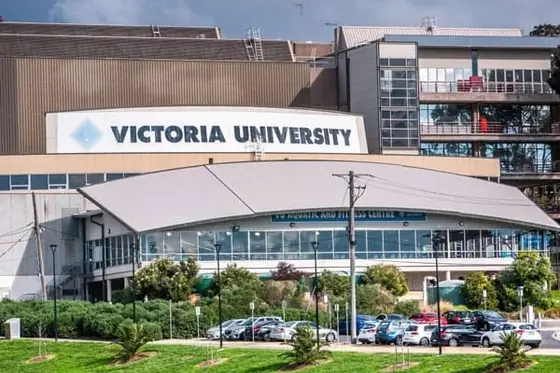

Victoria University has become the first Australian university accredited under the Welcoming Universities Standard, marking a national milestone for cultural inclusion in higher education. Welcoming Australia confirmed the accreditation on July 28, 2026, after examining how the university applies inclusion and belonging across leadership, education, services and campus life.
The recognition is particularly relevant at Victoria University, commonly known as VU, where students and employees represent more than 90 cultures and speak over 200 languages. The institution provides both university and TAFE education, with a strong presence in Melbourne’s culturally diverse western suburbs.
What is the Welcoming Universities Standard?
The Welcoming Universities Standard is a voluntary national framework developed by Welcoming Australia, a non-partisan organisation focused on belonging and social cohesion.
It helps universities determine whether cultural inclusion is supported by evidence and everyday action. The framework examines leadership, social and cultural participation, teaching and research, and the management of university places and spaces.
Universities seeking accreditation must submit policy evidence, including strategies, procedures and action plans. They must also demonstrate how those commitments are being applied through consultation records, program evaluations, community partnerships and activities delivered in practice.
Welcoming Australia provides further information about the university accreditation and assessment process on its official website.
Why was Victoria University accredited?
Assessors found evidence that VU’s inclusion work extended across the institution rather than being confined to individual projects.
One example was the presence of a First Nations Executive Director in the Vice-Chancellor’s Group. This places First Nations representation within the university’s senior leadership and decision-making structure.
VU’s partnership with CommUnity+ was another recognised initiative. Through the Melbourne-based community organisation, students studying law, social work and community education can gain placement experience while assisting individuals and families in Melbourne’s west.
Other evidence included co-designed programs, community-led governance and education pathways for culturally diverse students and people from refugee or asylum-seeker backgrounds.
What does the accreditation mean for students?
The accreditation shows that VU supplied evidence of its commitment to cultural safety, participation and inclusion. Students should expect these principles to influence support services, teaching practices, representation and campus activities.
However, the award does not change admission requirements, tuition fees, scholarships, qualifications or Australian visa rules. International applicants must still assess the full cost of studying, including the effect of Australia’s higher student and graduate visa fees.
The recognition should therefore be treated as one factor when comparing universities. Course content, teaching quality, fees, accommodation, student support and graduate outcomes require separate checks.
Which accreditation level did VU receive?
The Welcoming Universities framework contains different entry and accreditation levels. More detailed assessments may include focus groups with students, employees and community representatives to determine whether institutional claims match practical experiences.
Neither the July 28 announcement from Welcoming Australia nor Victoria University’s public statement identified the particular level awarded to VU. Until that information is released, describing the university as having received the highest category would be inaccurate.
No later official announcement confirming VU’s accreditation level had been published as of July 30, 2026.
Does accreditation mean discrimination has ended?
No. Accreditation recognises documented progress and accountability; it is not proof that an institution has removed every barrier or resolved every complaint.
Welcoming Australia chief executive Aleem Ali said the process is intended to support improvement rather than certify perfection. Marian Cronin, VU’s Director of Equality, Inclusion and Belonging, similarly acknowledged that more work is required to strengthen cultural safety and anti-racism initiatives.
The practical test will be whether students and employees can report discrimination safely, receive appropriate support and participate meaningfully in decisions affecting them.
Read More:
Why this Australian first matters
Victoria University participated in the pilot group that helped develop the national standard before becoming its first accredited Australian university.
The milestone gives other institutions an example of how inclusion can be demonstrated through leadership, policy, teaching and measurable action. It also places VU under greater public scrutiny because its future performance can be compared with the commitments recognised during assessment.
Prospective students should still investigate how individual courses are delivered. Complaints about older recorded lectures in Australian university courses show why an institutional award cannot replace careful checks of teaching methods and course materials.
VU’s accreditation is a positive marker, but its lasting value will depend on what students, employees and local communities experience after the announcement.

Make Swikblog your go-to source on Google for reliable updates, smart insights, and daily trends.