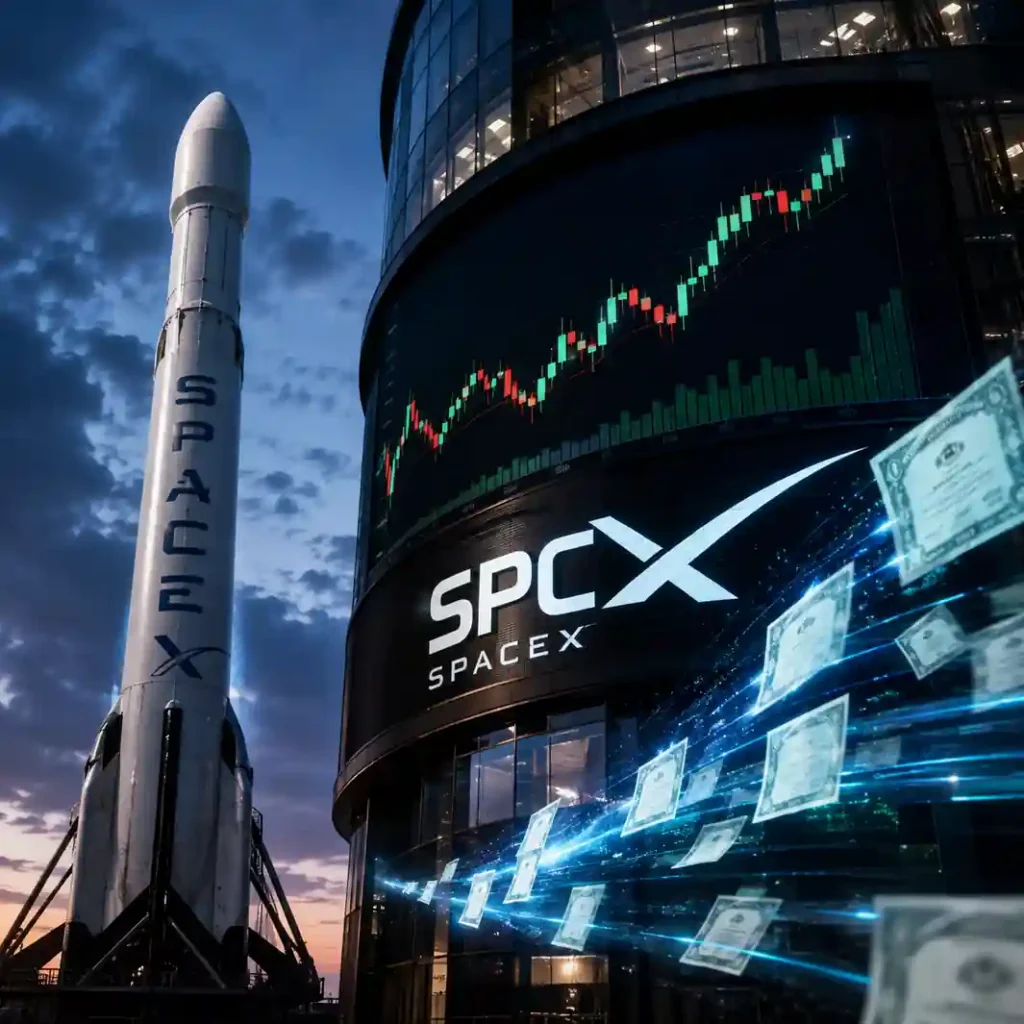

SpaceX stock rebounded on Thursday after the company’s first major post-IPO lockup expiration allowed employees and early investors to sell up to 911.5 million shares. The move came one day after SPCX recorded its second-worst trading session since listing, underlining how closely investors are watching the balance between fresh selling pressure and longer-term demand.
Shares rose about 3.8% after closing Wednesday at an all-time low of $108.27. The previous session’s nearly 14% decline pushed the stock further below its $135 offering price and added to concerns that a wave of newly tradable shares could place more pressure on the market.
Thursday’s recovery provided some relief, but it did not answer the most important question for shareholders: how many employees and early investors will actually sell? A lockup expiration creates the right to trade shares, but it does not mean every eligible holder will immediately exit their position.
SpaceX Stock Faces Its First Major Supply Test
SpaceX entered the public market with an unusually limited number of shares available for normal trading. Fewer than 5% of the company’s total shares were included in the initial public float, allowing strong demand to drive sharp price movements during the stock’s first few sessions.
The company sold 638,888,888 Class A shares through its IPO after underwriters exercised their full option. SpaceX raised approximately $85.7 billion at an offering price of $135 per share, according to its official IPO announcement.
The 911.5 million shares released from restrictions on Thursday represent roughly 143% of the number sold in the IPO. If all of those shares entered the public market, the available float would rise substantially, potentially changing the supply-and-demand dynamics that supported the stock after its Nasdaq debut.
At Wednesday’s closing price, the newly eligible shares carried a market value of nearly $99 billion. That figure measures the value of the unlocked block, not the value of confirmed insider sales. The actual effect on SPCX will depend on trading decisions made by thousands of employees, early investors and venture funds.
Many eligible holders acquired their shares at prices well below the current market value. Some employees may sell to cover taxes, purchase property, diversify their wealth or convert years of stock-based compensation into cash. Early funds may also sell or distribute shares to their own investors.
Others may decide to keep holding. Employees and early backers who believe in SpaceX’s launch business, Starlink growth and long-term technology ambitions may view the recent decline as temporary rather than a reason to exit.
Elon Musk’s holdings are not included in this first release. His stake remains restricted until June 2027, reducing the risk of a major sale from the company’s largest shareholder in the near term. Investors unfamiliar with the newly listed company can read more about how to buy SpaceX stock and evaluate SPCX risks.
Can Demand Offset More Insider Selling?
The lockup expiration is only one factor behind the recent weakness in SpaceX stock. The company reported revenue growth of 92% in its first earnings update as a public business, but investors focused heavily on rising artificial intelligence expenditure and larger-than-expected capital investment.
Heavy spending may support future growth, particularly if SpaceX expands Starlink, develops new launch systems and builds AI infrastructure. However, those investments could also pressure cash flow, delay profitability and increase the financial risk attached to the company’s ambitious expansion plans.
Why Datadog (DDOG) Stock Dropped Despite a Strong Q2 Earnings Beat and Raised 2026 Outlook
WPP Shares Surge as Advertising Giant Announces Job Cuts and Revenue Strategy
Visit the homepage for the latest business news, stock market updates and global corporate stories
Before Thursday’s rebound, SPCX had fallen about 20% below its IPO price and roughly 50% from the record high reached shortly after listing. That decline has divided investors over whether prices near $100 represent an attractive entry point or simply reflect a reassessment of the company’s valuation.
Bullish investors argue that SpaceX combines a dominant commercial launch operation, recurring Starlink revenue and long-term exposure to artificial intelligence and satellite communications. They believe the company could justify a premium valuation if those businesses continue expanding.
More cautious investors point to the size of the company’s valuation, rising capital requirements and the large number of restricted shares still waiting to become tradable. A lower share price does not automatically make a stock inexpensive, particularly when future earnings remain uncertain.
Thursday’s unlock is only the first stage of SpaceX’s staggered release schedule. More than 5 billion additional Class A shares could become eligible for trading during 2026, including another major block expected after third-quarter results. Each new expiration could increase supply and create additional volatility.
At the same time, a larger public float could support new institutional demand. TD Securities estimates SpaceX’s Nasdaq 100 weighting could rise from approximately 1% to more than 3.5% during the September rebalance if the newly available shares are recognised as part of the public float.
A higher weighting would require passive funds tracking the Nasdaq 100 to purchase more SpaceX shares. That demand could help offset selling from employees and early investors, creating a more balanced market than the size of the unlock initially suggests.
The next few weeks will provide a clearer picture of investor sentiment. Trading volume, insider disclosures, price stability and future lockup dates will determine whether SpaceX stock can establish support near $100 or whether additional supply keeps pressure on SPCX.

Make Swikblog your go-to source on Google for reliable updates, smart insights, and daily trends.