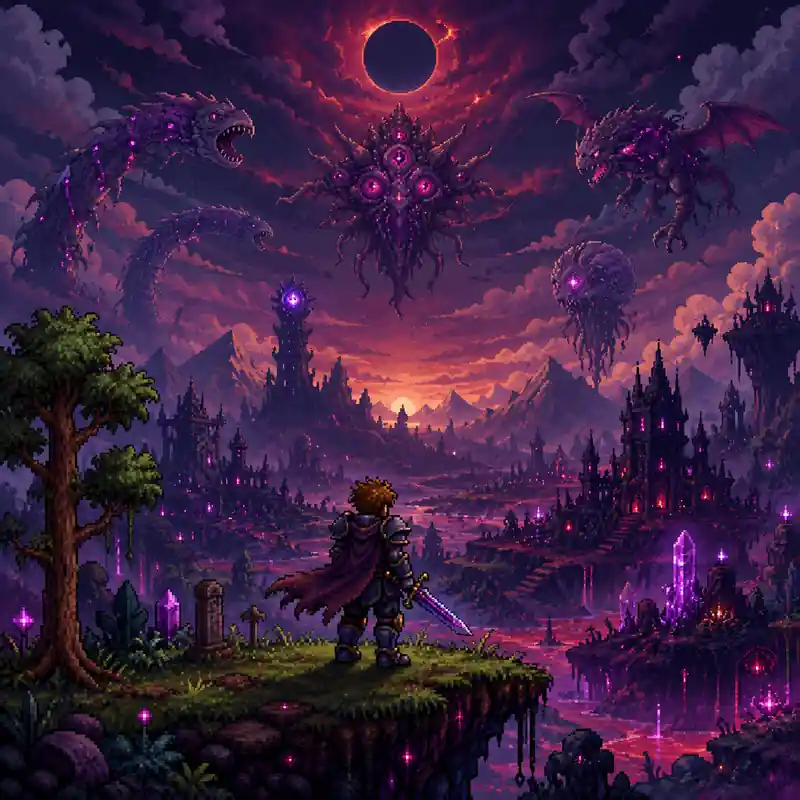

Terraria’s Calamity Mod is shutting down after about 10 years of development, bringing an unexpected end to one of the most ambitious fan-made projects built around Re-Logic’s long-running sandbox game.
The Calamity development team announced that work on the mod would cease following years of internal problems, developer departures and mounting requests from contributors to remove their assets. The announcement comes amid serious allegations involving current project lead Ozzatron, while remaining team members have described the project’s development history as deeply troubled.
The timing is especially notable because Calamity was still receiving major updates in 2026. Version 2.1, known as “Brainstorm,” arrived in February with close to 4,000 changes, and the team was discussing further releases only months before the shutdown announcement.
Why the Terraria Calamity Mod is shutting down
The decision was not presented as a normal end-of-life announcement for an old mod. In a statement shared through the project’s Discord community, developers said repeated internal problems had exhausted the team and damaged their enthusiasm for continuing.
The latest crisis involves allegations concerning Ozzatron and inappropriate conduct involving minors. These are allegations and should not be treated as established criminal findings without confirmation from an appropriate official or legal source.
The situation follows earlier controversy involving former project lead Fabsol, who had previously been replaced after separate allegations. That history helps explain why remaining developers described the problems as broader than a dispute involving a single person.
Instead of appointing another lead and continuing as before, many contributors have decided to leave altogether and focus on projects that are not tied to Calamity.
Asset removals made continuing development harder
A second problem involves work contributed to Calamity over its long development history.
The mod was built collaboratively, combining programming, artwork, music, sprites, designs and other assets created by numerous contributors. Following the latest turmoil, several people reportedly requested that their material be removed.
The team said there were too many removal requests and not enough remaining developers to replace everything involved. Stopping development was therefore described as the closest practical option available for respecting those requests.
This is one of the biggest differences between a volunteer mod and a conventional commercial game. A studio generally has a defined ownership structure covering its production assets, while a community project can depend on material created by many people under different arrangements.
The wider gaming industry has faced other forms of development contraction this year. Riot, for example, reduced staffing around its fighting game while keeping production alive, as explained in this report on Riot’s major reduction of the 2XKO development team. Calamity’s situation is more severe because its remaining developers have chosen to stop active development entirely.
GitHub control and reuploads remain important issues
The shutdown does not automatically resolve questions surrounding Calamity’s existing files and development infrastructure.
According to accounts of the team’s announcement, Ozzatron retains control of the current GitHub repository and had not been responding to developers during efforts to settle outstanding matters. Team members have also raised concerns about access to the official website and unresolved compensation issues.
The developers have warned that legal concerns mean people should not simply create and distribute unauthorized Calamity reuploads or forks. Separate addons and independent projects, including Calamity Fables, were described differently and are not necessarily affected in the same way.
For players, that means development ending should not be confused with the mod instantly becoming unavailable. The existing distribution, repository and future compatibility are separate questions that may depend on how unresolved ownership and asset issues are handled.
Anyone looking for primary-source project information should use the official Calamity Mod website rather than unfamiliar downloads or supposed replacement versions appearing elsewhere.
Calamity had major updates planned only months ago
The speed of the reversal is one of the most significant parts of the story.
Calamity 2.1 “Brainstorm” launched on February 6, 2026. The developers described it as their largest update at the time, with close to 4,000 changes covering weapons, accessories, structures, difficulty systems and bosses including the Devourer of Gods and Ravager.
Development still appeared active in June, when the team celebrated Calamity’s 10th anniversary and discussed Version 2.2 “Hog Wild” along with a planned Version 2.3 Anniversary Update. That roadmap included a major Desert Scourge rework, interface improvements, new music and other planned content.
The shutdown therefore differs from a project that slowly stopped receiving attention. Calamity still had public development plans shortly before the internal situation brought that roadmap to an end.
The contrast is particularly striking in a genre built around longevity. Other sandbox games continue extending themselves through frequent official content, including Minecraft’s major Chaos Cubed expansion announced for 2026. Calamity showed that a community-created project could sustain a similarly long cycle of additions, even without operating as a commercial game studio.
How big did the Calamity Mod become?
Calamity grew far beyond the scale of a typical Terraria modification. Over the years it introduced large numbers of items, bosses, NPCs, biomes, difficulty modes and progression changes while developing its own lore and original soundtrack.
Its influence became significant enough that Terraria creator Andrew “Redigit” Spinks publicly invited Calamity contributors to consider working for Re-Logic. That recognition demonstrated how highly developed the volunteer project had become.
The mod also inspired its own addons, music community and fan projects, giving it an identity that often extended beyond a single Terraria playthrough.
Destiny 2 Ends Major Development After 12 Years as Bungie Releases Its Final Update
EA Game Shutdowns in 2026: What Players Need to Know About Titles Losing Online Support
What the shutdown means for Terraria players
The immediate impact is the loss of future official Calamity development rather than the end of Terraria itself. Re-Logic’s base game is separate from the mod, and nothing in the Calamity announcement indicates that Terraria development is ending.
Existing Calamity players may still be able to use the current version, but long-term compatibility could eventually become an issue if Terraria or tModLoader changes while Calamity remains frozen. Players should therefore avoid assuming that the present build will work indefinitely without maintenance.
The larger legacy is already clear. A project that began in 2016 survived for roughly a decade, expanded Terraria with an enormous amount of original content and built a community large enough to become part of the game’s wider culture.
The planned roadmap may now remain unfinished, but Calamity’s shutdown shows both the creative potential and the structural risks of large volunteer projects: they can grow to rival professional expansions in scope while still depending heavily on individual contributors, shared ownership and trust within the team.

Make Swikblog your go-to source on Google for reliable updates, smart insights, and daily trends.