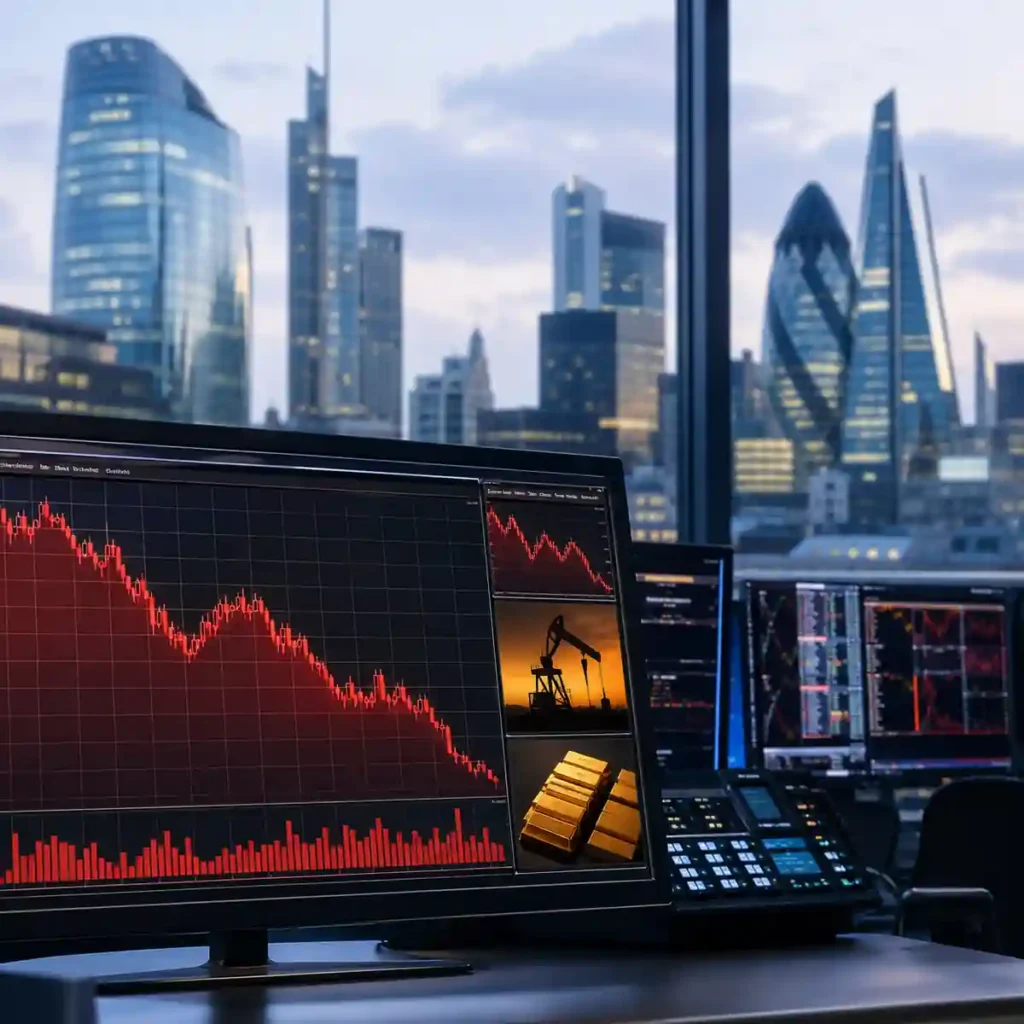

The FTSE 100 opened almost flat on Monday, August 24, as investors assessed forthcoming US economic measures against Iran, lower oil prices, rising gold and a broad decline across Asian markets.
At 8:33 a.m. BST, London’s blue-chip index stood at 10,811.35, down 5.21 points, or 0.05%. The small movement indicated caution rather than a major sell-off, although energy companies, miners and other internationally exposed shares remained vulnerable to sudden geopolitical developments.
Latest FTSE 100 level
The FTSE 100 opened at 10,816.33 after closing 0.6% higher at 10,816.56 on Friday. Its early trading range was 10,806.29 to 10,821.48, compared with a 52-week range of 9,107.40 to 10,989.50.
These figures represent an early-session snapshot and will change throughout the day. The latest index and constituent information is available through the London Stock Exchange’s FTSE 100 overview.
Why Iran sanctions matter to UK markets
Washington is preparing additional economic pressure against Iran. Investors are waiting to learn whether the measures will target Iranian oil exports, banks, shipping networks or foreign companies that continue trading with Tehran.
The larger risk is Iran’s response. Iranian officials have warned neighbouring countries against supporting the US campaign, raising concern about regional trade and shipping through the Strait of Hormuz.
The waterway is critical for global oil and liquefied natural gas supplies. Restrictions, attacks or higher war-risk insurance costs could disrupt shipments without a complete closure of the strait.
London has already experienced how rapidly the conflict can change market conditions. An earlier FTSE 100 decline during an Iran-driven oil surge showed why traders remain sensitive to developments involving Gulf shipping and energy exports.
Why BP and Shell shares are lower
Brent crude retreated to around $93 a barrel, with available market readings showing a decline of roughly 1.5% to 2%. BP shares were down about 0.8%, while Shell slipped approximately 0.16%.
Lower oil prices can weaken earnings expectations for energy producers. However, crude could reverse higher if sanctions restrict Iranian exports or Tehran’s response threatens shipping.
Previous concerns about Iran-related risks to Shell and global LNG supply routes demonstrate how quickly geopolitical developments can affect London-listed energy shares.
Cheaper crude may help airlines, retailers, manufacturers and transport companies through lower fuel and distribution costs. A supply shock would have the opposite effect and could add to inflation concerns.
Gold rises as investors seek safety
Gold climbed to approximately $4,645 an ounce, supported by safe-haven demand and a softer US dollar. Its rise alongside falling oil suggests investors are seeking protection from political risk without pricing in an immediate energy-supply disruption.
Copper eased to around $6.58 per pound, producing a mixed outlook for London-listed miners. Gold producers may benefit from stronger bullion, while diversified miners remain sensitive to industrial demand and China’s economy.
Walmart Stock Falls After Q2 Earnings: What Investors Need to Know
Nebius Stock Surges as AI Cloud Revenue Jumps in Q2 Earnings
Asian markets add to cautious mood
Most major Asian markets declined before London opened. South Korea’s Kospi sank around 3.5% as Samsung fell after its shareholder-return plan disappointed investors.
Hong Kong’s Hang Seng dropped approximately 2.1%. Japan’s Nikkei 225 and Taiwan’s Taiex lost around 0.5%, while China’s Shanghai Composite fell about 0.7%.
Alibaba added to Hong Kong’s weakness after announcing an HK$80 billion, or $10.2 billion, share placement. The company plans to issue 710 million new shares at HK$112.70 each to non-US investors.
The shares represent approximately 3.7% of Alibaba’s existing share count. The company intends to invest the proceeds in AI infrastructure and other full-stack artificial-intelligence capabilities, but existing investors face dilution. Completion is expected on August 26, subject to customary conditions.
Australia moves against the regional trend
Australia’s S&P/ASX 200 finished about 0.5% higher near 9,107 as miners led the advance. BHP gained approximately 3.4%, helping the materials index reach a record high.
Ansell surged around 18% following its annual results. Data#3, Paladin Energy and Deep Yellow gained more than 10%, while Nib Holdings, Endeavour Group and Aussie Broadband were among the notable fallers.
Bitcoin, bonds and US markets
Bitcoin traded near $77,100, up around 1.8% in the available snapshot, while US equity futures edged lower.
UK government bond yields also remain important. Elevated yields can pressure property companies, utilities and highly indebted businesses by increasing financing costs and making bonds more competitive with shares.
What investors should watch today
The UK economic and corporate calendars are relatively quiet, leaving geopolitics, commodity prices and bond yields as the principal market drivers.
Investors will focus on the scope of the US measures, Iran’s response, Brent crude and shipping conditions around the Strait of Hormuz. The FTSE 100 could recover if oil stabilises and the sanctions are narrower than feared. A threat to energy exports or shipping could instead lift BP and Shell while putting airlines, retailers and other fuel-intensive companies under pressure.

Make Swikblog your go-to source on Google for reliable updates, smart insights, and daily trends.