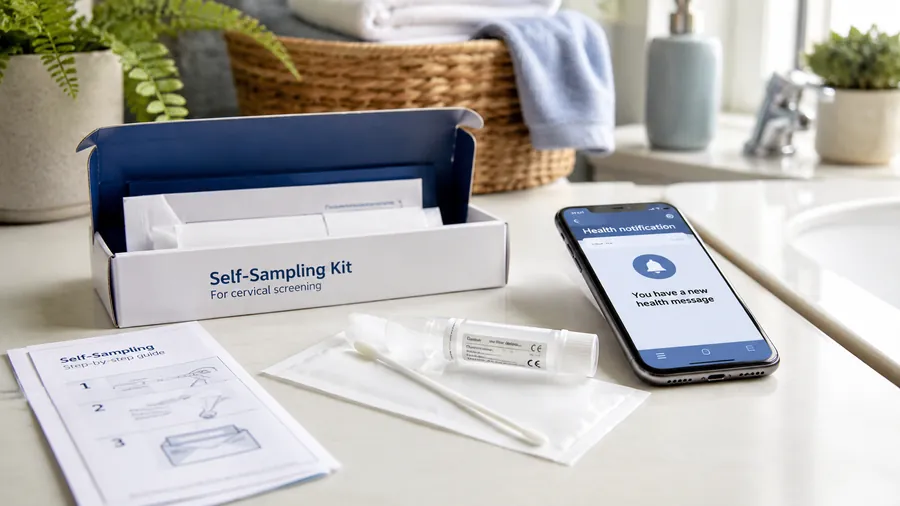

Millions of women in England who are behind on cervical screening are being offered free HPV self-testing kits they can use at home, as NHS England expands efforts to detect cancer risk earlier and remove barriers to screening.
From August 25, 2026, eligible women aged 30 to 65 who have missed previous cervical screening invitations can be contacted through the NHS App, text message, email or letter and invited to order a free home kit.
The rollout targets some of the estimated four million women who are not up to date with cervical screening and supports the NHS ambition to eliminate cervical cancer as a public health problem by 2040.
Who can get an NHS home HPV test?
The programme is initially aimed at women and people with a cervix aged 30 to 65 who have not attended screening after earlier invitations. It is being introduced in phases, so kits are not currently available as an unrestricted on-demand test for everyone.
Those invited can follow the official instructions to order their kit online. Routine cervical screening remains available separately, with eligible people generally invited from their mid-20s until age 64.
The move reflects a wider NHS focus on earlier intervention in cancer care. England has also expanded access to treatments such as abiraterone for some men with high-risk prostate cancer, showing how prevention, diagnosis and earlier treatment are increasingly being addressed together.
How does the home HPV test work?
The kit contains a swab that is used to collect a sample from the vagina. The sample is then returned for laboratory testing for high-risk human papillomavirus, or HPV.
HPV is a common group of viruses that often causes no symptoms. Certain high-risk types can lead to abnormal cervical cell changes and are associated with the overwhelming majority of cervical cancer cases.
HPV prevention is important alongside screening. Vaccination programmes have become a major part of long-term cervical cancer prevention, as explained in this overview of HPV vaccination and wider immunisation progress.
People seeking official eligibility and programme information can check the NHS England website.
What happens if high-risk HPV is found?
A positive high-risk HPV result does not mean someone has cervical cancer. Instead, they will be asked to attend a cervical screening appointment with a healthcare professional.
A clinician can then take a cervical sample so cells can be examined for changes that may require monitoring or treatment. The home swab therefore acts as an additional route into screening rather than replacing clinical follow-up.
Jaquie Brown Breast Cancer Diagnosis and Treatment Update
NHS guidance continues to regard clinician-collected cervical screening as the preferred option for people who already attend routinely. Self-testing is being offered mainly to help reach those who may otherwise remain unscreened.
Why NHS England is introducing home testing
Latest figures cited by NHS England show that 68.8% of eligible women are up to date with cervical screening, below the programme’s 80% target. That leaves an estimated four million women overdue.
Reasons for missing screening can include lack of time, embarrassment, difficulty attending appointments or concerns about discomfort. A private test completed at home may therefore remove some practical barriers without requiring an initial clinic visit.
Evidence from previous self-sampling research has suggested that making HPV testing easier to access could bring hundreds of thousands of additional people into screening each year.
What women should know before ordering
Women should not assume they need to buy a commercial HPV kit because of the NHS announcement. The NHS programme is free for people who receive an official invitation, and instructions will explain how to order and return the sample.
People who prefer a conventional screening appointment can continue using the existing NHS pathway. HPV vaccination does not remove the need for screening, because vaccines do not protect against every high-risk HPV type.
The key change in 2026 is greater choice. Women who previously postponed or missed cervical screening now have another route to check for high-risk HPV while remaining connected to NHS clinical follow-up if further testing is needed.

Make Swikblog your go-to source on Google for reliable updates, smart insights, and daily trends.