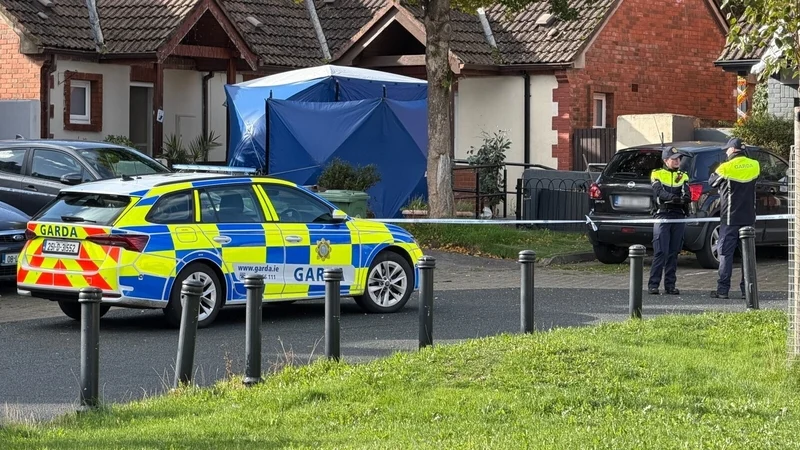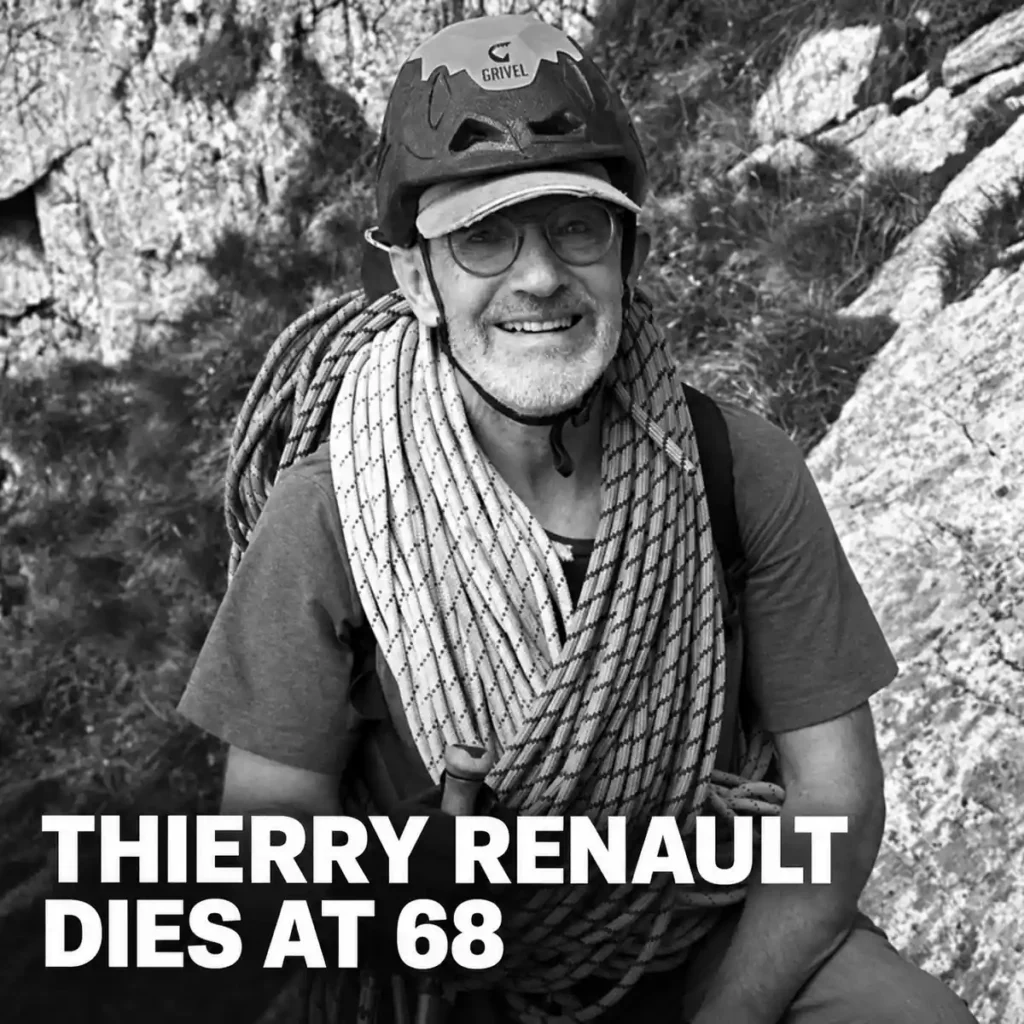

CHAMONIX, France — Thierry Renault, a celebrated French mountaineer and high-altitude climbing guide, has been found dead beneath the south face of Brévent near Chamonix. He was 68.
Climbers preparing to enter the area discovered Renault’s body on Sunday, September 6, and alerted mountain rescuers late that morning. Members of the Chamonix high-mountain police rescue unit, known as the PGHM, attended the scene but could only confirm his death.
Initial information indicates that the accident may have happened the previous day while Renault was working alone on a climbing route. He was reportedly cleaning or re-equipping a line on the south face of Brévent, an area where he had established several routes during his career.
Investigators are examining whether the rope supporting Renault rubbed against a sharp rock edge and was severed, causing him to fall. However, that explanation remains preliminary, and authorities have not released their final findings.
How Thierry Renault’s fatal Brévent accident unfolded
No witnesses are believed to have seen the fall. According to initial reporting from Le Dauphiné Libéré, Renault had gone to the mountain alone and was found at the foot of the south face.
The possibility that his rope was cut by repeated contact with a protruding section of rock is among the circumstances being investigated. Until the inquiry is completed, officials have not formally confirmed precisely how the experienced guide fell.
Renault’s death has shaken the Chamonix climbing community because of his extensive knowledge of the area and decades of experience in difficult rock, ice and mixed terrain. He belonged to the Compagnie des Guides de Chamonix and remained involved in opening and maintaining routes well beyond the peak of his competitive career.
Fellow climber and longtime friend Alain Ghersen said Renault had adapted his climbing as he grew older, choosing areas such as Brévent that required less approach time. His continued route work reflected a desire to discover new lines and leave climbs that others could enjoy.
Ghersen described Renault as someone who was more comfortable in the mountains than in ordinary life, telling Outside France that his former climbing partner seemed to “breathe better up high than down below.”
A pioneer who took elite free climbing into the high mountains
Renault emerged as one of France’s leading climbers during the 1980s. He finished third at the inaugural Sportroccia competition in Bardonecchia, Italy, in 1985, behind Stefan Glowacz and Jacky Godoffe. The event is widely regarded as an important early moment in the development of international competitive climbing.
Although Renault possessed the athletic ability required for climbing competitions, his larger influence came from taking high-level free-climbing techniques onto major Alpine walls.
In 1983, he participated in the first free ascent of the American Directissima on the Drus. Seven years later, Renault and Ghersen completed a landmark free ascent of Divine Providence on the Grand Pilier d’Angle.
The approximately 900-metre route, originally established by Patrick Gabarrou and François Marsigny in 1984, climbs a serious and exposed wall high in the Mont Blanc massif. Renault’s performance on its hardest sections demonstrated that the technical standards of sport climbing could be transferred to remote Alpine terrain.
During the same period in 1990, Renault and Ghersen established Digital Crack, graded 8a, near the Aiguille du Midi at an altitude of roughly 3,800 metres. It became one of the most recognisable high-altitude rock climbs of its generation.
Renault was equally influential on ice. In January 1992, he and François Damilano climbed La Lyre and La Massue in the Cirque du Fer-à-Cheval. Those ascents helped push technical ice climbing into grade seven, requiring extraordinary control on steep, fragile formations where protection could be difficult to place.
Renault stepped away from elite climbing for almost a decade beginning in 1993. He maintained a low public profile and continued working as a guide before returning to serious climbing in 2003. His comeback included a repeat of Beyond Good and Evil on the Aiguille des Pèlerins with Ghersen.
In his later years, Renault’s focus shifted away from records and publicity. He continued guiding, opening routes and sharing the mountain environment with clients. Friends remembered not only his mental strength on difficult climbs but also his enthusiasm, humour and ability to communicate his love of the Alps.
His death comes during a difficult period for the European mountaineering community, with recent incidents including the deadly Mount Mizhirgi avalanche involving climbers in Russia.
Renault leaves behind a legacy built on some of the most demanding rock and ice routes of the 1980s and 1990s. The investigation into his death at Brévent remains open.

Make Swikblog your go-to source on Google for reliable updates, smart insights, and daily trends.