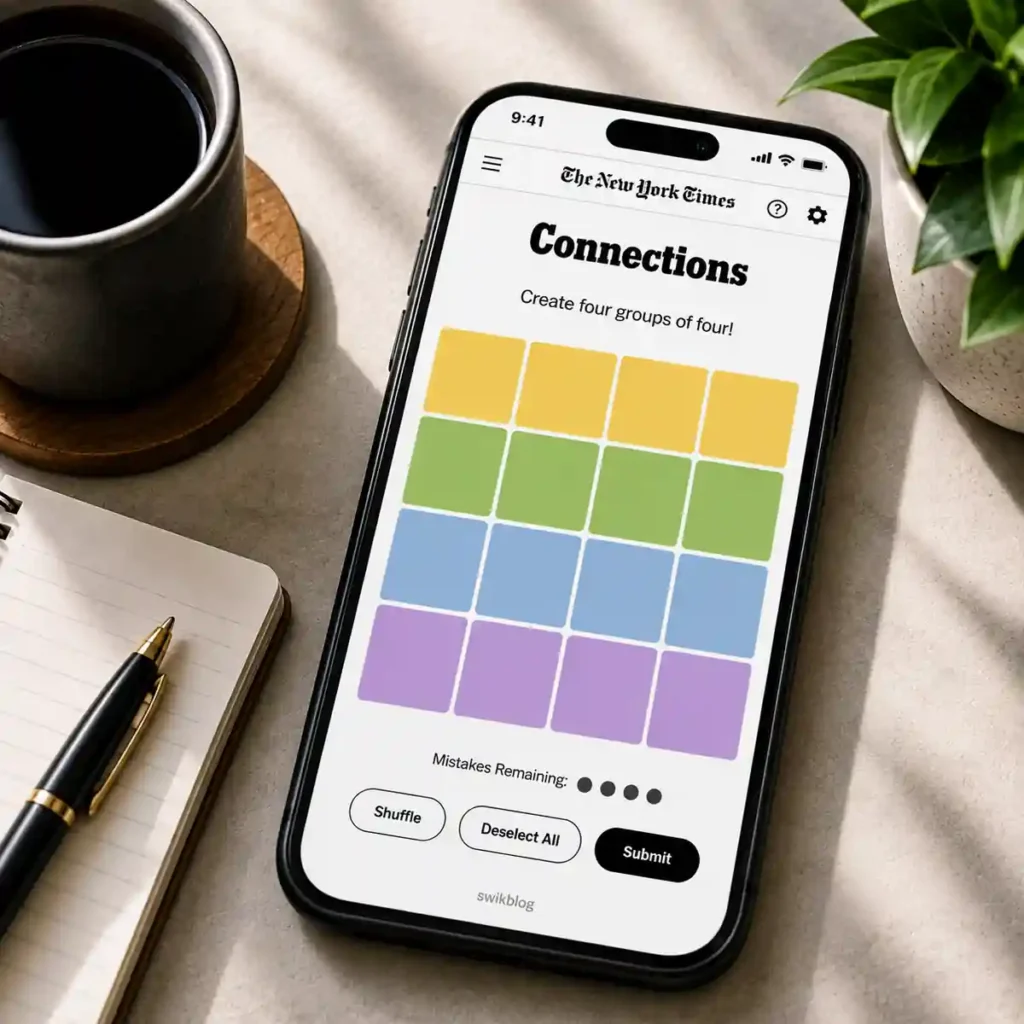

Today’s NYT Connections puzzle #1232 for Sunday, October 25, 2026, challenges players to find four hidden connections among 16 words, with categories involving stealing, pasta shapes, fictional characters and things that can be snapped.
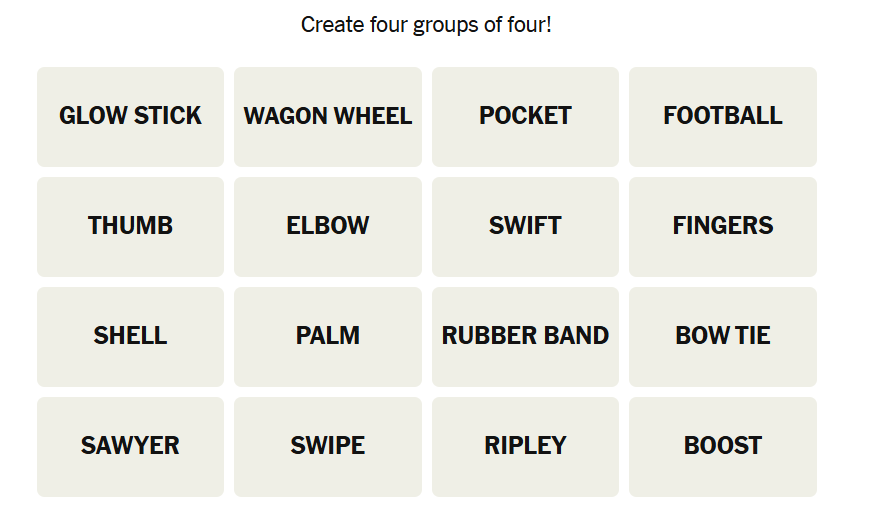
NYT Connections hints for October 25
- Yellow: Think about different ways someone might take something that does not belong to them. Some words suggest secretly concealing an object, while others describe quickly removing something without permission. The four answers have unrelated everyday meanings, but each can function as a verb associated with stealing.
- Green: Look for familiar shapes associated with an Italian food. Some resemble clothing accessories, while others take their names from parts of the body, objects found in nature and traditional transportation. Their shapes differ, but all four are recognizable varieties of the same food.
- Blue: Focus on fictional characters who share the same first name. Their stories range from childhood adventures and traditional folklore to scientific inventions and psychological crime fiction. The four answers complete the names of recognizable fictional characters rather than describing one shared personality or profession.
- Purple: Think about objects or body parts associated with the same physical action. The action can produce a sharp sound, activate a light-producing object or begin a sporting play. Although the four answers come from unrelated subjects, each can be described using the same familiar verb.
Main trap: Today’s Connections puzzle #1232 includes several words that appear to belong together because of their everyday meanings. ELBOW, FINGERS and THUMB might initially suggest a category involving parts of the human body, but all three belong to different groups. ELBOW is a pasta shape in the green category, FINGERS belongs to the purple category because fingers can be snapped, and THUMB belongs to the blue category through the fictional character Tom Thumb. POCKET and PALM may also suggest body-related or clothing-related connections, while FOOTBALL and WAGON WHEEL could encourage players to search for objects associated with movement. Recognizing the specific relationship behind each category is essential to avoiding incorrect guesses.
Blue clue: SAWYER and THUMB provide useful starting points because both complete the names of well-known fictional characters called Tom. Tom Sawyer is the adventurous boy created by Mark Twain, while Tom Thumb is a tiny character from traditional folklore. SWIFT completes the name Tom Swift, the fictional young inventor associated with science and adventure stories. RIPLEY completes Tom Ripley, the central character in Patricia Highsmith’s psychological crime novels. Although these characters belong to different literary traditions, all four answers identify fictional characters sharing the first name Tom.
Purple clue: FINGERS and RUBBER BAND are useful starting points because both can be snapped to produce a sharp sound. A GLOW STICK can be bent or snapped to break an internal container, allowing chemicals to mix and produce light. FOOTBALL completes the category through the snap that begins a play in American football. The four actions differ in purpose and physical movement, but all involve a recognized meaning of the verb SNAP. Identifying this shared action reveals the intended relationship.
Today’s NYT Connections answers
Reveal the Yellow Group
Category: Steal
Answers: BOOST, PALM, POCKET, SWIPE
Each answer can describe taking something dishonestly or without permission.
The four words have different everyday meanings, but they share an established use as verbs associated with stealing.
BOOST can mean to steal something, particularly merchandise from a store.
The word is sometimes used informally when referring to shoplifting or taking goods without paying.
It may describe someone secretly removing merchandise from a retail establishment.
However, BOOST also has several familiar meanings unrelated to theft.
It can mean increasing something, such as confidence, energy, performance or sales.
A company might boost revenue, while an athlete might receive a boost in motivation.
These meanings are generally positive or neutral.
That contrast makes BOOST potentially misleading in today’s puzzle.
Players may initially associate the word with improvement or encouragement rather than stealing.
However, its informal meaning involving theft provides the intended connection.
PALM can mean secretly taking or concealing an object in the hand.
The verb is commonly associated with hiding small objects without attracting attention.
For example, someone might palm a coin or another small item.
The technique is also familiar in stage magic, where performers conceal objects during illusions.
In the context of theft, palming an object may involve secretly removing it from another person’s possession or from a location.
However, PALM also has everyday meanings unrelated to stealing.
It refers to the inner surface of the hand.
It can also describe a tropical tree commonly associated with warm climates.
These meanings may encourage players to search for a category involving anatomy or nature.
Because FINGERS and THUMB also appear in today’s puzzle, PALM may seem connected to other body-related words.
However, the intended category concerns stealing rather than anatomy.
POCKET can mean to take something and keep it for personal use, sometimes dishonestly.
Someone might be described as pocketing money that was intended for another person or purpose.
The expression can imply quietly taking possession of something without proper authorization.
However, POCKET is more commonly recognized as a noun.
A pocket is a compartment in clothing used to hold money, keys, phones and other belongings.
The word also appears in expressions describing small spaces or isolated areas.
These meanings may make POCKET seem unrelated to BOOST and SWIPE.
It may also appear connected to PALM because both words can involve concealing an object.
However, the intended relationship is broader than hiding something.
Both words can function as verbs associated with taking something improperly.
SWIPE can mean to steal something quickly or without permission.
The word is frequently used informally when describing the theft of an unattended item.
Someone might swipe a wallet, phone or another possession.
However, SWIPE also describes a rapid movement across a surface.
In digital technology, swiping is a familiar gesture used on smartphones and tablets.
People swipe across screens to navigate photographs, applications and menus.
The word can also refer to striking or swinging at something.
These meanings may suggest physical movement or technology rather than theft.
However, its informal stealing meaning places it alongside BOOST, PALM and POCKET.
BOOST can describe stealing merchandise.
PALM can describe secretly taking or concealing an object.
POCKET can describe dishonestly keeping something for oneself.
SWIPE can describe taking something quickly without permission.
Although the actions may differ in method, they all involve taking something improperly.
The main challenge is recognizing their shared meaning rather than their unrelated everyday definitions.
The central connection is straightforward: BOOST, PALM, POCKET and SWIPE can all mean STEAL.
Reveal the Green Group
Category: Pasta shapes
Answers: BOW TIE, ELBOW, SHELL, WAGON WHEEL
Each answer describes a recognizable pasta shape.
The four words normally refer to different everyday objects, but they are also familiar names for varieties of pasta.
BOW TIE refers to pasta shaped like a small bow tie or butterfly.
This pasta is commonly known by its Italian name, farfalle.
Each piece typically has a pinched center and wider sections extending outward.
The shape resembles a bow tie worn around the neck.
Bow tie pasta is commonly served with sauces, vegetables, cheese and other ingredients.
It is also frequently used in pasta salads.
The pinched center and folded edges give it a distinctive appearance.
However, BOW TIE normally refers to an item of formal clothing.
That meaning might encourage players to search for a category involving fashion or accessories.
The intended connection instead concerns the shape of the pasta.
ELBOW describes short, curved tubular pasta.
Elbow macaroni is one of the most recognizable pasta varieties.
It is commonly used in macaroni and cheese, soups and pasta salads.
The curved shape resembles a bent elbow.
The hollow interior can hold small amounts of sauce.
Elbow macaroni is widely associated with comfort food and everyday cooking.
However, ELBOW also refers to the joint connecting the upper arm and forearm.
This anatomical meaning may encourage players to group ELBOW with FINGERS or THUMB.
All three words are associated with the human body.
However, they belong to different Connections categories.
ELBOW belongs to the green category because it identifies a pasta shape.
SHELL refers to pasta shaped like a small seashell.
Shell pasta is commonly associated with the Italian name conchiglie.
The curved shape and hollow interior allow it to hold sauces and other ingredients.
Shell pasta is available in different sizes.
Smaller shells are often used in soups, pasta salads and dishes with creamy sauces.
Larger shells can be stuffed with cheese, vegetables or meat before baking.
The shape resembles the shells of certain marine animals.
However, SHELL has several meanings unrelated to food.
It can describe the protective outer covering of a turtle, mollusk or other animal.
It can also refer to an outer casing or protective structure.
These meanings may initially suggest nature or protective objects.
However, the pasta meaning provides the intended relationship.
WAGON WHEEL describes pasta shaped like a small spoked wheel.
This pasta is commonly associated with the Italian shape known as rotelle.
Each piece resembles a circular wheel with spokes extending toward the center.
The unusual shape makes it easily recognizable.
Wagon wheel pasta can be served with sauces, vegetables and other ingredients.
It is also used in soups and pasta salads.
The openings and edges provide places where sauces can collect.
However, WAGON WHEEL normally refers to a wheel used on a wagon or similar vehicle.
That meaning may encourage players to search for transportation-related words.
The intended connection instead concerns pasta.
BOW TIE resembles a bow tie or butterfly.
ELBOW resembles a bent arm joint.
SHELL resembles a seashell.
WAGON WHEEL resembles a spoked wheel.
All four names describe pasta through comparisons with familiar objects.
Their everyday meanings come from clothing, anatomy, nature and transportation.
Those differences make the group less obvious when the words are considered individually.
However, all four belong to the same food category.
The central connection is straightforward: BOW TIE, ELBOW, SHELL and WAGON WHEEL are all pasta shapes.
Reveal the Blue Group
Category: Fictional Toms
Answers: RIPLEY, SAWYER, SWIFT, THUMB
Each answer completes the name of a fictional character whose first name is Tom.
The characters come from different literary genres and storytelling traditions, but their shared first name provides the intended relationship.
RIPLEY refers to Tom Ripley, a fictional character created by American novelist Patricia Highsmith.
The character first appeared in Highsmith’s 1955 novel The Talented Mr. Ripley.
Tom Ripley is known for deception, manipulation and criminal behavior.
His stories explore identity, ambition and morality.
Ripley became the central character in a series of psychological crime novels.
The character has also appeared in film and television adaptations.
Unlike many traditional adventure heroes, Ripley is often portrayed as morally ambiguous.
This makes him different from the other fictional characters in today’s blue category.
RIPLEY may initially seem unrelated to SAWYER, SWIFT and THUMB because his stories belong to psychological suspense.
However, the character’s first name establishes the connection.
SAWYER refers to Tom Sawyer, the fictional character created by Mark Twain.
Tom Sawyer is best known as the central character of The Adventures of Tom Sawyer, published in 1876.
The novel follows a young boy growing up near the Mississippi River.
Tom is known for his imagination, mischief and adventurous personality.
His experiences involve friendships, school life and unexpected dangers.
The character is closely associated with childhood adventure stories.
Tom Sawyer also appears in other works connected to Mark Twain’s fictional world.
He remains one of the most recognizable characters in American literature.
However, SAWYER can also refer to someone who cuts wood.
That occupational meaning may distract players from the literary connection.
In today’s puzzle, SAWYER specifically completes the name TOM SAWYER.
SWIFT refers to Tom Swift, a fictional young inventor and adventure hero.
The character first appeared in a series of books beginning in the early twentieth century.
Tom Swift stories often involve scientific inventions, engineering challenges and adventurous journeys.
Different versions of the character have appeared across generations of books.
The stories combine imaginative technology with exploration and mystery.
Tom Swift is commonly associated with creativity, problem-solving and technological curiosity.
However, SWIFT is also an ordinary English adjective.
It means fast or quick.
The word can describe movement, decisions or actions completed rapidly.
That everyday meaning may encourage players to search for a category involving speed.
However, the intended relationship is the fictional character TOM SWIFT.
THUMB refers to Tom Thumb, a character from traditional folklore.
Tom Thumb is generally portrayed as an extraordinarily small boy.
The character appears in stories where his tiny size creates unusual adventures.
Different versions of the tale have circulated through folklore and children’s literature.
The name Tom Thumb has become closely associated with someone or something exceptionally small.
However, THUMB also refers to the short, opposable digit of the human hand.
This familiar anatomical meaning may lead players to associate THUMB with FINGERS or ELBOW.
Those words appear in today’s puzzle but belong to different categories.
THUMB belongs to the blue group because it completes the fictional character’s name.
RIPLEY completes TOM RIPLEY.
SAWYER completes TOM SAWYER.
SWIFT completes TOM SWIFT.
THUMB completes TOM THUMB.
The four characters come from different storytelling traditions.
Tom Ripley is associated with psychological crime fiction.
Tom Sawyer is associated with childhood adventures.
Tom Swift is associated with inventions and scientific adventures.
Tom Thumb is associated with traditional folklore.
They do not share the same occupation, personality or fictional setting.
Instead, their names establish the connection.
Players who recognize Tom Sawyer and Tom Thumb may find the category easier to identify.
Tom Swift and Tom Ripley then complete the group.
The main challenge is recognizing the fictional names rather than focusing on the individual meanings of the four surnames.
The central connection is straightforward: RIPLEY, SAWYER, SWIFT and THUMB all complete the names of fictional characters called Tom.
Reveal the Purple Group
Category: Things that can be snapped
Answers: FINGERS, FOOTBALL, GLOW STICK, RUBBER BAND
Each answer describes something that can be snapped.
The four answers come from different subjects, but all are associated with a recognizable meaning of the verb SNAP.
FINGERS can be snapped to produce a sharp clicking sound.
Finger snapping usually involves pressing the thumb against another finger and releasing it so the finger strikes part of the hand.
The impact produces the familiar snapping sound.
People commonly snap their fingers to accompany music or maintain a rhythm.
Finger snapping also appears in dance, performance and everyday gestures.
It can be used to attract attention or emphasize a point.
The action is widely recognized as snapping one’s fingers.
However, FINGERS normally refers to parts of the human hand.
Because ELBOW and THUMB also appear in today’s puzzle, players may initially consider grouping the three anatomical words.
That apparent connection is misleading.
FINGERS belongs to the purple category because fingers can be snapped.
FOOTBALL refers to the ball used in American football, where snapping begins a play.
At the start of a play, the center snaps the football backward to another player, usually the quarterback.
The snap transfers possession of the ball from its starting position and begins the action.
It is a fundamental part of American football.
The ball may be delivered directly into the quarterback’s hands.
It may also be snapped backward over a greater distance in a shotgun formation.
Unlike snapping fingers, snapping a football does not necessarily involve producing a sharp sound.
Instead, SNAP describes a specific movement used in the sport.
This distinction makes FOOTBALL one of the more deceptive purple answers.
Players may initially associate the word with sports equipment or athletic activities.
However, the intended relationship concerns the action of snapping the ball.
GLOW STICK is a small device that produces light through a chemical reaction.
Many glow sticks contain separate chemical components inside a flexible outer tube.
When the glow stick is bent or snapped, an internal container breaks.
This allows the chemicals to mix and produce visible light.
Glow sticks are commonly used at concerts, festivals and celebrations.
They are available in different colors and sizes.
Their light-producing reaction is commonly called chemiluminescence.
The activation process is frequently described as snapping a glow stick.
However, the action differs from snapping fingers or snapping a football.
In this case, SNAP refers to breaking an internal component.
The flexible outer tube is designed to remain intact.
The glow stick itself is not intended to be broken open.
This distinction explains why the word belongs to the category.
RUBBER BAND is an elastic loop commonly used to hold objects together.
Rubber bands are frequently used to organize papers, secure small items and bundle objects.
They can stretch and return toward their original shape.
A rubber band can be snapped by stretching and releasing it.
The release may produce a sharp sound or a quick striking movement.
A rubber band can also snap when excessive tension causes it to break.
Both meanings are recognizable uses of the verb SNAP.
Unlike a football snap, which is a controlled sporting action, snapping a rubber band involves elastic tension.
RUBBER BAND may initially suggest office supplies or household objects.
However, its ability to be snapped provides the intended connection.
FINGERS can be snapped to make a clicking sound.
FOOTBALL can be snapped to begin a play.
GLOW STICK can be snapped to activate its light-producing chemicals.
RUBBER BAND can be snapped through stretching and release or by breaking under tension.
The four actions differ in purpose and physical movement.
That variation explains why the purple category can be difficult.
FINGERS suggests anatomy.
FOOTBALL suggests sports.
GLOW STICK suggests lighting and celebrations.
RUBBER BAND suggests household or office supplies.
When considered separately, the words do not immediately appear connected.
However, each has an established relationship with the verb SNAP.
Unlike the yellow category, which groups different verbs meaning steal, the purple category depends on different applications of one verb.
The green category groups familiar pasta shapes.
The blue category groups fictional characters sharing the first name Tom.
The purple category instead focuses on recognizing the same action across unrelated subjects.
Snapping fingers produces a sound through a hand movement.
Snapping a football begins a sporting play.
Snapping a glow stick activates a chemical light source.
Snapping a rubber band involves elastic tension and release or breakage.
These actions are different, but all are familiar uses of the word SNAP.
Players who recognize FINGERS and RUBBER BAND may identify the shared action first.
GLOW STICK strengthens the connection because snapping activates its internal chemicals.
FOOTBALL completes the category through the terminology of American football.
The intended relationship becomes clear once players stop searching for objects belonging to the same subject area.
The category does not require all four objects to be used for the same purpose.
Nor does it require the snapping action to produce the same result.
The connection depends entirely on the shared verb.
The central connection is straightforward: FINGERS, FOOTBALL, GLOW STICK and RUBBER BAND are all things that can be snapped.
Players can attempt the official daily puzzle and check their results on the New York Times Connections page.

Make Swikblog your go-to source on Google for reliable updates, smart insights, and daily trends.