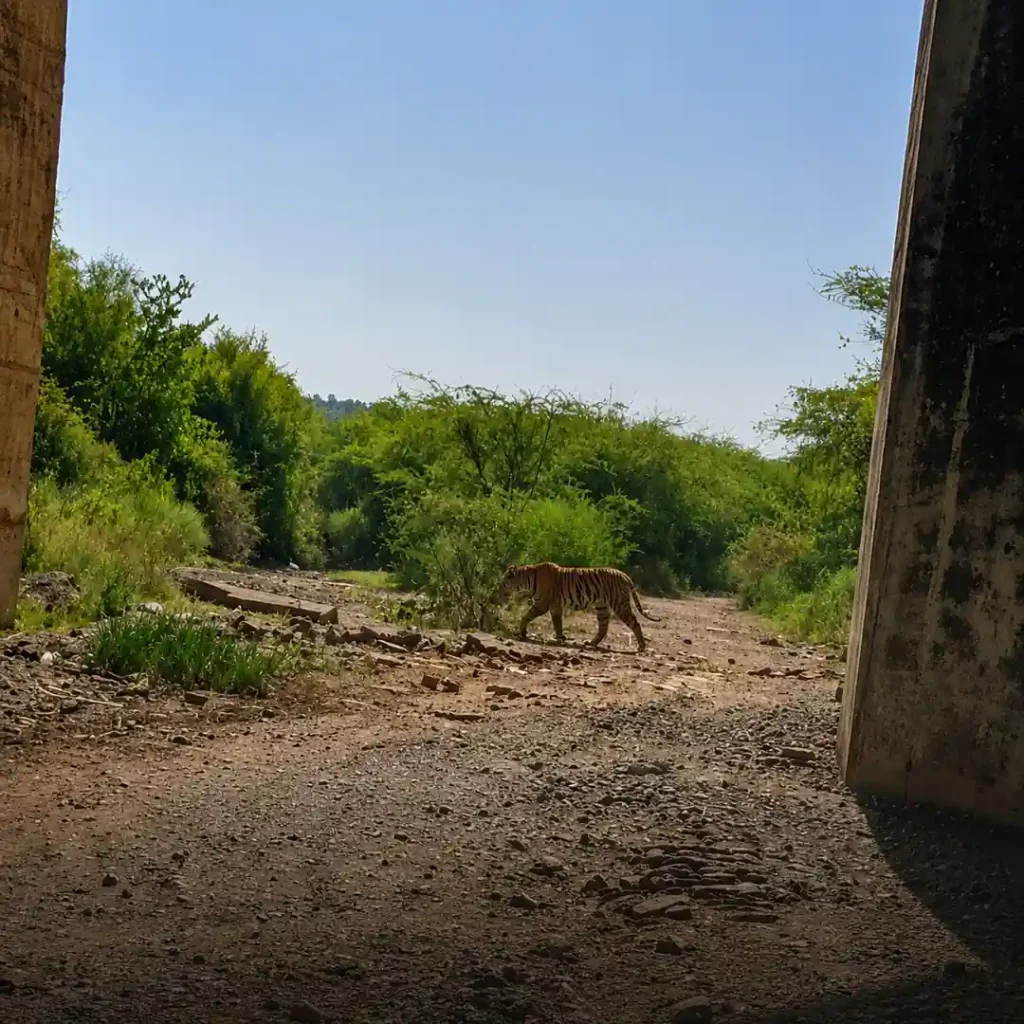

A viral “tiger sighting” near Gwalior in India’s Madhya Pradesh state triggered a forest search, but the animal at the centre of the panic was reportedly never real.
Gwalior sits in northern Madhya Pradesh, close to the Chambal region and not far from the Rajasthan and Uttar Pradesh borders. The city is known for its historic fort, rocky terrain and surrounding scrub-forest patches, where rumours of wildlife movement can spread quickly when an image appears to show a big cat near railway or rural areas.
The image, which appeared to show a tiger moving near a forested railway stretch in the Sandalpur area, spread quickly among local groups and raised concern among railway staff, nearby residents and forest officials. Because a possible big-cat movement could not be ignored, forest department teams launched a search operation.
Officials checked surrounding forest patches and nearby trackside locations for signs of tiger movement. After the search, they reportedly found no tiger, no pugmarks and no physical evidence to support the viral claim.
AI Photo Behind Gwalior Tiger Panic
Local reports said the image was allegedly created using artificial intelligence by a railway-linked worker and shared to frighten colleagues. The photo later moved beyond a private joke and reached wider local networks, turning into a public scare.
A report by The Daily Jagran said forest teams searched for around 36 hours before confirming that no tiger had been found. Other local accounts suggested the confusion continued for nearly three days before the source of the image was traced.
Key detail: The viral tiger photo was reportedly AI-generated, and officials found no signs of an actual animal in the area.
The worker reportedly admitted that the image was fake after officials looked into where it first appeared. The incident has raised concern over the misuse of realistic AI visuals, especially when they involve wildlife, public safety and official emergency response.
Authorities are expected to treat the matter seriously because the image caused alarm and led to an official search. The Gwalior case shows how a single AI-generated image can create panic, waste official resources and spread rapidly when shared as real news.

Make Swikblog your go-to source on Google for reliable updates, smart insights, and daily trends.