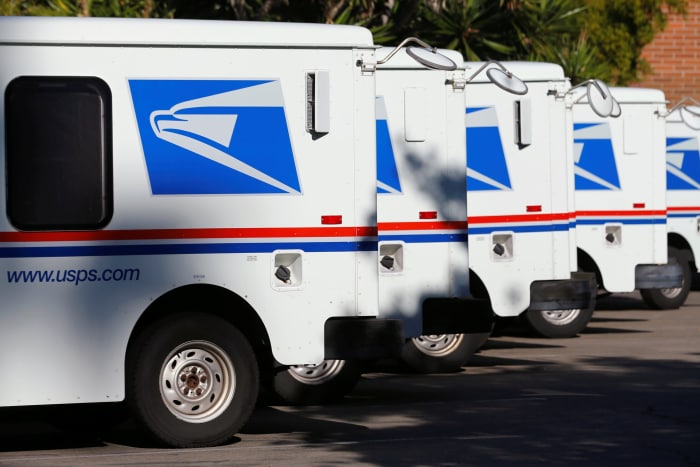

Amazon (NASDAQ: AMZN) moved higher in recent trading after striking a crucial logistics agreement with the U.S. Postal Service, easing fears of a major disruption to its delivery network. The stock closed at $212.79, up +1.44%, reflecting investor confidence in the company’s ability to maintain its massive shipping operations across the U.S.
The newly reached agreement ensures that USPS will continue handling over 1 billion Amazon packages annually, even as delivery volumes are trimmed by around 20%. This is a far smaller reduction than the previously proposed two-thirds cut, which would have significantly impacted both Amazon’s logistics network and USPS revenues.
The relationship between the two organizations remains financially critical. Amazon contributes roughly $6 billion annually to USPS, making it the agency’s largest client. For a postal system operating on an approximately $80 billion budget, this partnership remains a key revenue pillar.
Market sentiment improved as the deal removed a major uncertainty around Amazon’s last-mile delivery capabilities, especially in rural regions where USPS coverage remains unmatched. Investors had been watching closely after tensions escalated earlier this year when USPS introduced a competitive bidding process for delivery contracts.
Amazon had responded aggressively during negotiations, even preparing to cut delivery volumes sharply while expanding its own logistics network. The company has already committed over $4 billion toward building rural delivery infrastructure, aiming to strengthen its independence while still leveraging USPS for nationwide reach.
However, fully replacing USPS remains unrealistic in the near term. The postal service’s ability to deliver to every U.S. address — including remote and low-density areas — continues to give it a strategic advantage that private carriers cannot easily replicate.
For USPS, the stakes were even higher. The agency has reported $118 billion in cumulative losses since 2007 and recently warned that its cash reserves could run out by October. Losing a large portion of Amazon’s business would have deepened financial pressure significantly.
The agreement still requires approval from regulators, but the framework signals a stabilization in one of the most important logistics partnerships in the U.S. economy. According to Reuters, both sides have shifted back to direct negotiations after earlier competitive bids failed to meet financial expectations.
At the same time, USPS is exploring ways to improve its financial position, including a proposed temporary 8% surcharge on priority mail and parcel deliveries starting later this year, citing rising transportation and fuel costs.
From an investor perspective, the deal reinforces Amazon’s hybrid logistics strategy — balancing its rapidly growing in-house delivery network with strategic partnerships. This approach allows the company to scale efficiently without overextending capital in areas where existing infrastructure already performs effectively.
The broader takeaway is clear: Amazon continues to strengthen its logistics dominance while avoiding costly disruptions. With demand for e-commerce still resilient and infrastructure investments accelerating, the company remains positioned for long-term growth, even as operational complexities increase.

Make Swikblog your go-to source on Google for reliable updates, smart insights, and daily trends.