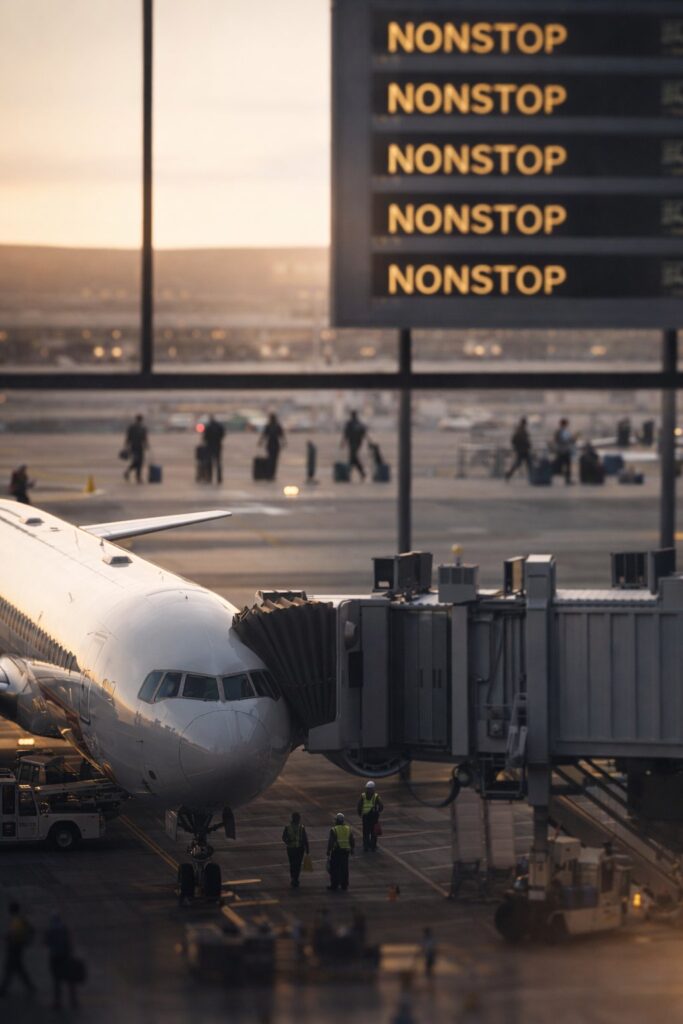

American Airlines is reshaping its domestic map for summer 2026 with a wave of new nonstop routes that lean into two things travelers consistently ask for: fewer connections and easier access to smaller, fast-growing markets. The expansion touches major hubs including Dallas-Fort Worth, Chicago, Charlotte, Miami and Phoenix, while also giving select regional airports brand-new links to the airline’s wider network.
The headline move for many flyers is what happens at Dallas Fort Worth International Airport (DFW): American is adding nonstop service from DFW to Lincoln, Nebraska (LNK) and to Roanoke–Blacksburg, Virginia (ROA), timed for the early-summer travel rush. For passengers, routes like these can be the difference between a single boarding pass and an all-day itinerary built around tight connection windows.
In plain terms, this is an airline betting that convenience still sells. If you live in a mid-sized city, a new nonstop flight isn’t just a new destination — it’s a new way to travel: faster weekend trips, easier family visits, and smoother onward connections to international flights through hub airports. And if you live in a hub city, it means more choices on the departure board as American competes for leisure-heavy summer demand.
The DFW boost: Lincoln and Roanoke join the nonstop list
DFW is already one of the busiest airports in the world — and American’s home-field advantage there matters. Adding service to Lincoln and Roanoke–Blacksburg expands the airport’s domestic reach while feeding more passengers into American’s broader hub system. For travelers, that often translates into better one-stop options to places that may not have been practical before, especially when you’re trying to connect onward to the West Coast, Florida, or even overseas.
American has framed the summer 2026 schedule as an effort to meet seasonal demand and improve regional access. You can read the airline’s official announcement and route framing directly via the American Airlines Newsroom, which outlines the broader set of additions and the thinking behind them.
What’s really happening here: an airline chasing “easy trips”
Airline route announcements can sound abstract until you map them to real-life travel habits. Summer flying isn’t just about big cities — it’s about weddings, lake weekends, national parks, beach rentals, college towns and family reunions. American’s additions point to a strategy built around “easy trips”: routes that make it simpler to go from a smaller market to a major hub, or from a major hub to a smaller market, without forcing passengers into multi-stop routings.
That matters because travel decisions are increasingly made on convenience, not loyalty. If a family can fly nonstop instead of adding an hour-long layover and a stressful sprint across terminals, they’ll often pay a little more to avoid the hassle. Airlines know that — and “one-stop friction” is one of the easiest levers to pull when demand is strong.
How to use this news if you’re planning travel
If you’re thinking about summer 2026 travel, route announcements are an early signal — not the final schedule. Airlines can still tweak frequencies, aircraft types, and launch timing as they refine the network. But these updates are useful right now for one simple reason: they hint at where the airline expects demand, and where seats may be added.
- Set fare alerts early: New routes can open with attention-grabbing prices, then climb as awareness spreads.
- Watch the hub ripple effect: When a hub adds new spokes, it can also shift prices on nearby competing routes.
- Check schedule details at the airport level: Local outlets often publish the most practical information (start dates, flight times, frequency).
For example, local reporting around the DFW additions has highlighted the Lincoln and Roanoke–Blacksburg services and how they fit into American’s broader summer push. If you want a clear, traveler-focused breakdown of those DFW route adds, see coverage from WFAA.
Why Google searches spiked: route news spreads fast
When an airline announces multiple routes at once, the online reaction tends to roll in waves. People in the newly served cities search first (“Is this real?” “When does it start?” “How much will it cost?”). Then travelers in hub cities follow, checking whether the changes affect connections, summer trip planning, or loyalty redemptions. By the time regional stations and travel outlets publish explainers, the topic becomes a broader “American Airlines new routes” trend — even if the details vary by city.
The practical takeaway: if your city is on the list, the best next step is to check the airline’s schedule pages and your airport’s announcements, then compare fares across a few different dates. New routes can be cheapest at launch, especially midweek, before peak summer demand kicks in.
You may also like: Qatar National Day Parade 2025 Highlights: What Happened, What People Watched, and Why It Mattered
Written by Swikblog Desk

Make Swikblog your go-to source on Google for reliable updates, smart insights, and daily trends.