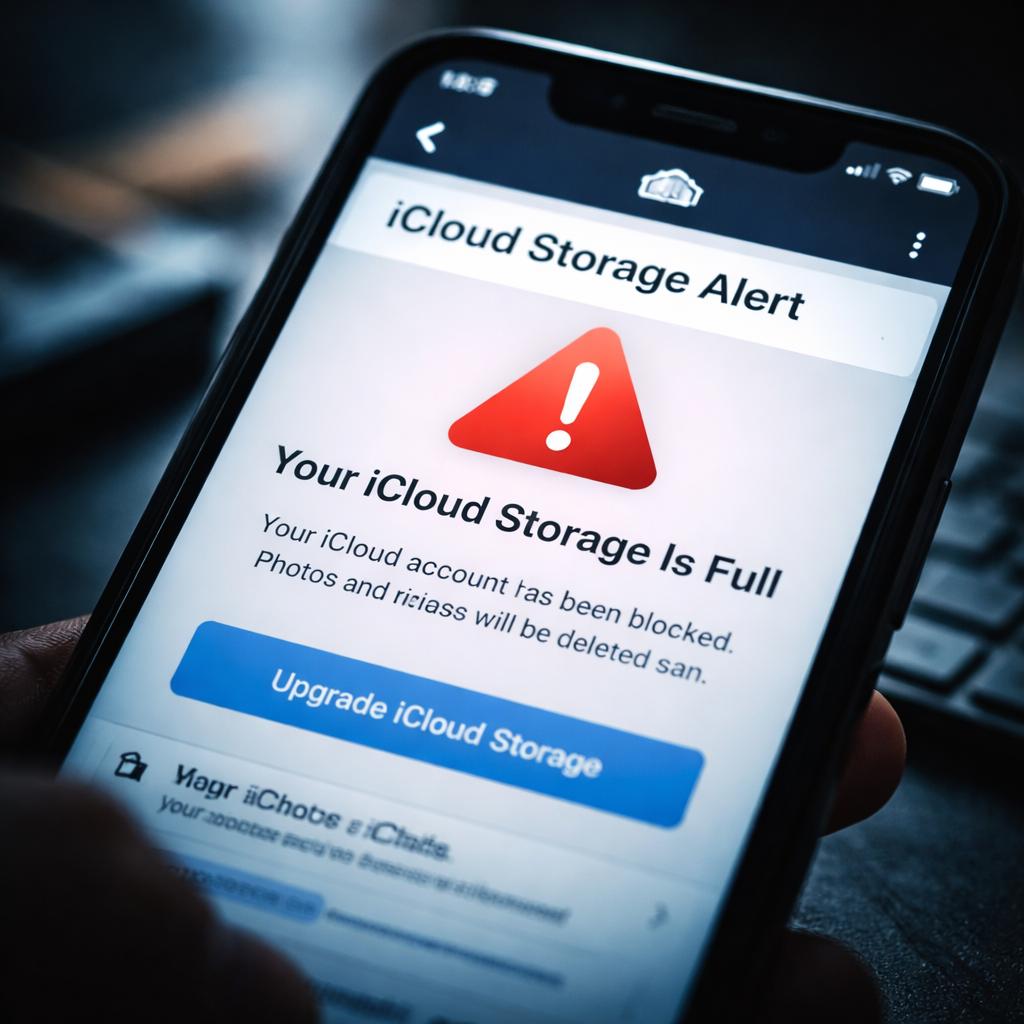

Apple users are being warned over a fast-spreading phishing scam that uses fake iCloud storage alerts to pressure people into handing over personal and financial information. The fraud centres on emails claiming an account has been blocked, storage is full, or a payment method has expired, before threatening that photos and videos will soon be deleted unless the recipient acts immediately.
The scam is gaining attention because it closely imitates a real and familiar problem. Many iPhone users already receive genuine Apple notifications when their iCloud storage is nearly full or backups stop running. Fraudsters are exploiting that routine frustration, sending messages that appear to confirm an existing issue and then escalating it into a crisis.
Some of the emails seen in circulation carry subject lines such as “We’ve blocked your account! Your photos and videos will be deleted on [date]” or “Your payment method has expired! Your cloud service has been disabled.” Others are framed more mildly, with warnings including “Payment failed for your Cloud storage renewal”, before directing users to click a button to manage storage or update billing details.
In nearly every version of the scam, the message includes a prominent link inviting the user to “upgrade”, “update” or “manage” their account. That link can send recipients to a phishing website designed to look like a genuine Apple or iCloud page, where they may be asked to enter login credentials, card details, addresses or other personal information.
The consequences can go well beyond a single payment. If bank details are submitted, criminals may attempt to steal more money, use the information for wider fraud, or pass the data on to other offenders operating through criminal marketplaces online. The scam works not because the claim is unusual, but because it feels plausible enough to trigger panic.
Why the fake emails are convincing
The strength of the fraud lies in how closely it mirrors legitimate account warnings. Apple does send authentic emails and device notifications when iCloud storage is full, documents are no longer backing up, or photos are no longer syncing. For users who have been putting off paying for extra storage, a message warning of disruption can feel like an overdue consequence rather than an obvious trick.
Scammers then intensify the pressure with follow-up emails. In some cases, users who ignore the first message receive what appears to be a final warning stating that repeated attempts have been made to contact them and that all data, including photos and videos, will be wiped on a stated date if no action is taken that day. That deadline-driven language is meant to override caution.
There are often signs that the email is not genuine. The sender’s address may look slightly wrong, sometimes using odd domains, foreign references, or unusual extensions that do not match Apple’s official communications. Grammar and spelling can also be revealing. One example circulating used the phrase “Your account may expires today”, a mistake unlikely to appear in a legitimate corporate alert.
Yet those details are easy to miss when the message lands at the same time as a real storage problem. That overlap is what gives the scam its edge. It does not invent a completely new fear; it piggybacks on an existing one that millions of users already understand.
What users should do now
The safest response is to ignore or delete any email that threatens sudden deletion of iCloud content and asks you to click through to fix the problem. Storage status can be checked manually on an iPhone through Settings and iCloud, where Apple shows exactly how much space remains and whether an upgrade is needed. Any genuine payment or storage change should be made through the device or the official account system, not through a link in an unsolicited email.
Suspicious emails can also be reported. Messages believed to be phishing attempts in the UK can be forwarded to report@phishing.gov.uk, while emails impersonating iCloud can be sent to reportphishing@apple.com or abuse@icloud.com. Anyone who has already shared account or payment details should contact their bank as soon as possible and take steps to secure affected accounts.
Apple also advises users to stay alert to scam attempts targeting their devices and accounts through its official support guidance. The latest wave of fake iCloud alerts shows how effective ordinary account anxiety can be when it is turned into a threat of permanent loss. For many users, the danger is not just the email itself, but how easily a routine storage warning can be weaponised into a convincing fraud.
You may also like: Paris Marathon 2026: Crippa wins in 2:05:18

Make Swikblog your go-to source on Google for reliable updates, smart insights, and daily trends.