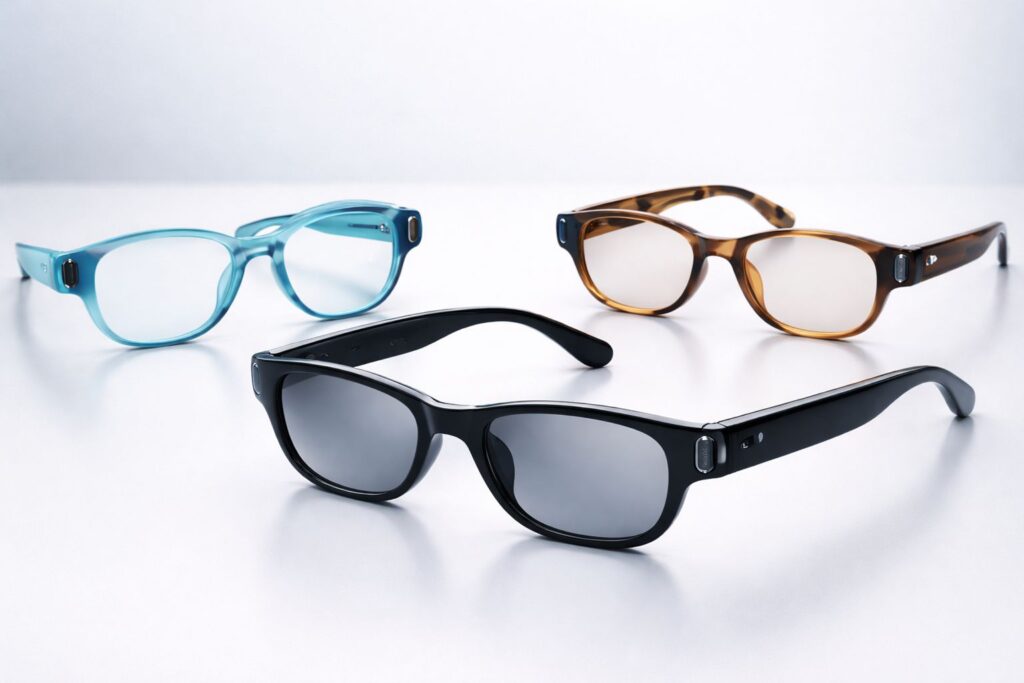

Apple is stepping up its push into wearable technology, with new reports indicating the company is actively testing smart glasses in multiple designs ahead of a potential launch around 2027. The project, internally codenamed N50, is gaining attention as Apple shifts its focus from high-end mixed reality toward more practical, everyday devices powered by artificial intelligence.
Unlike the Apple Vision Pro, these glasses are not expected to feature a display. Instead, Apple appears to be prioritising real-world usability — building a lightweight, fashion-led product designed for daily wear. The approach mirrors existing audio-first smart glasses on the market, but with deeper integration into Apple’s ecosystem.
According to details emerging from ongoing development, Apple is testing at least four frame styles. These include a large rectangular design similar to Ray-Ban Wayfarers, a slimmer rectangular version inspired by Tim Cook’s own glasses, and two oval or circular options in different sizes. The frames are reportedly being made from premium acetate, a higher-grade material aimed at improving durability and comfort.
The company is also experimenting with multiple finishes and colours, including black, ocean blue and light brown. This focus on design suggests Apple is positioning the glasses as both a technology product and a lifestyle accessory — an approach that could help overcome one of the biggest challenges in wearable tech adoption.
Functionally, the glasses are expected to rely on a combination of cameras, microphones and speakers. A distinctive feature under consideration is a vertically aligned oval camera module on the temple, surrounded by indicator lights to signal when recording is active. This marks a departure from the circular camera design used in competing products.
Rather than projecting digital overlays, the device would focus on capturing photos and short videos, handling voice calls, playing music and delivering notifications. The experience is expected to be largely voice-driven, powered by an upgraded version of Siri and closely tied to the iPhone for processing and connectivity.
Apple is also said to be exploring context-aware AI features. These could include real-time translation of text, identifying objects or landmarks in view, and answering questions based on the user’s surroundings. Such capabilities reflect the company’s broader push into what it calls Apple Intelligence — bringing AI into everyday interactions rather than confining it to screens.
A strategic shift toward practical wearables
The move represents a notable shift in Apple’s long-term vision. Earlier ambitions centred around fully immersive augmented reality glasses, but technical limitations — particularly around battery life, weight and display clarity — have slowed progress across the industry. By contrast, Apple’s current approach appears more grounded, focusing on features that are achievable today.
This aligns with a broader industry trend, where companies are prioritising incremental improvements over ambitious but impractical designs. Meta’s Ray-Ban smart glasses, for example, have found traction by offering simple, useful features rather than complex visual overlays. Apple’s entry into this space could intensify competition while raising expectations around design and ecosystem integration.
The glasses are also believed to be part of a wider “three-pronged” AI wearables strategy. In addition to smart eyewear, Apple is reportedly working on next-generation AirPods and a camera-equipped pendant, all designed to extend AI capabilities beyond traditional devices.
What happens next
While the 2027 launch window provides a rough timeline, the project remains in development and could still evolve significantly. Apple has previously shelved ambitious hardware plans, and challenges around privacy, battery efficiency and real-world usability will likely shape the final product.
Even so, the direction is becoming clearer. Rather than attempting to leap straight into futuristic augmented reality, Apple appears to be building a bridge — a device that introduces AI-powered, hands-free computing in a form people are already comfortable wearing.
That strategy could prove decisive. As interest in AI hardware grows, the company’s ability to combine design, ecosystem control and practical functionality may determine whether smart glasses remain a niche product or become the next major consumer technology category. Insights into Apple’s broader spatial computing direction have already been hinted at through devices like the Vision Pro, but these glasses could mark a far more accessible step into that future.
You may also like: Intel (INTC) Stock Rises 2% Today as Tesla and Google AI Deals Boost Growth Outlook.

Make Swikblog your go-to source on Google for reliable updates, smart insights, and daily trends.