Asian equities pushed higher on Thursday in a broad relief rally after Nvidia’s latest results and outlook helped steady nerves around the durability of the AI spending boom. The move came after weeks of choppy trading in global tech, where investors have been debating whether the scale of capital expenditure pouring into AI infrastructure can stay elevated without pressuring returns and cash flow.
Early gains were most visible in North Asia. Japan’s benchmark stocks climbed to a fresh record high in morning trade, while South Korea’s market advanced sharply as chip-linked names and other tech bellwethers drew renewed buying. A broader measure of Asia-Pacific shares outside Japan also rose, reflecting a region-wide improvement in risk appetite as investors leaned back into the AI-driven growth narrative.
Nvidia print steadies the AI capex debate
Nvidia’s earnings and forward guidance were closely watched because the company has become a central barometer for the entire AI supply chain. In recent weeks, traders have swung between optimism about explosive demand for accelerators and concern that the investment cycle could cool if cloud customers start tightening budgets or if monetisation lags the pace of spending.
This quarter’s update eased some of those worries. The company’s revenue forecast came in above market expectations, reinforcing the view that hyperscalers and enterprise customers are still prioritising AI compute. Strategists described the immediate market reaction as a “relief” bid, with the results seen as strong enough to keep the AI infrastructure cycle alive and reintroduce a modest risk-on tone across global markets.
That support translated quickly into Asian index performance. Japanese shares hit record territory early in the session, while South Korea’s market was up around 2%, helped by the perception that Nvidia’s momentum reduces near-term downside risk for the broader semiconductor and AI hardware ecosystem.
U.S. futures cool after the first reaction
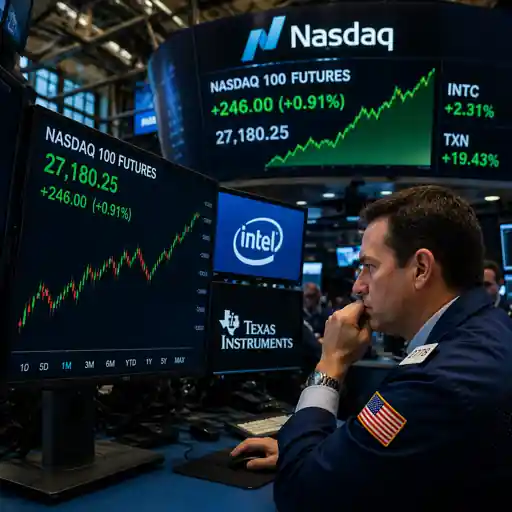
In U.S. markets, the tone was more measured. Nvidia shares initially popped in extended trading after the results but later pared gains, while major index futures edged lower. Nasdaq futures were down roughly 0.25% and S&P 500 futures slipped about 0.14% as investors weighed strong near-term demand signals against the longer-running questions that have defined the AI trade.
Those questions have been less about whether Nvidia can post another blockbuster quarter and more about the sustainability of AI capital expenditure at the scale currently being discussed across the industry. Investors have also been alert to how margins, supply commitments and competitive dynamics could evolve as spending expands.
In Europe, futures were modestly positive, with EUROSTOXX 50 futures up about 0.06%, suggesting a cautious but supportive handoff from Asia to the next trading session.
Yen in focus as BOJ outlook turns murkier
In currencies, the Japanese yen remained the main focal point. The currency sat near a two-week low after Japan’s government nominated two academics viewed by markets as leaning toward economic stimulus to join the central bank’s board. The surprise move was interpreted as a signal that policy may stay easier for longer, injecting uncertainty into the outlook for additional Bank of Japan rate hikes.
The yen was last around 156.01 per dollar, about 0.2% stronger on the day thanks to a softer U.S. dollar, though it remained down roughly 0.6% for the week. Strategists flagged that dovish-leaning board nominations could delay policy normalisation, potentially steepening the Japanese government bond curve and keeping the yen vulnerable if rate expectations are pushed further out.
Adding a counterweight, a local media report said BOJ Governor Kazuo Ueda left the door open to a near-term rate hike, offering some support to the currency even as investors remained cautious about the broader direction of policy.
Elsewhere, the dollar was generally softer. The euro rose to about $1.1824 and sterling climbed toward $1.3570, as markets assessed the mix of central bank signals and risk sentiment flowing out of the Nvidia-led shift in equities.
Oil firms on U.S.–Iran tension ahead of talks
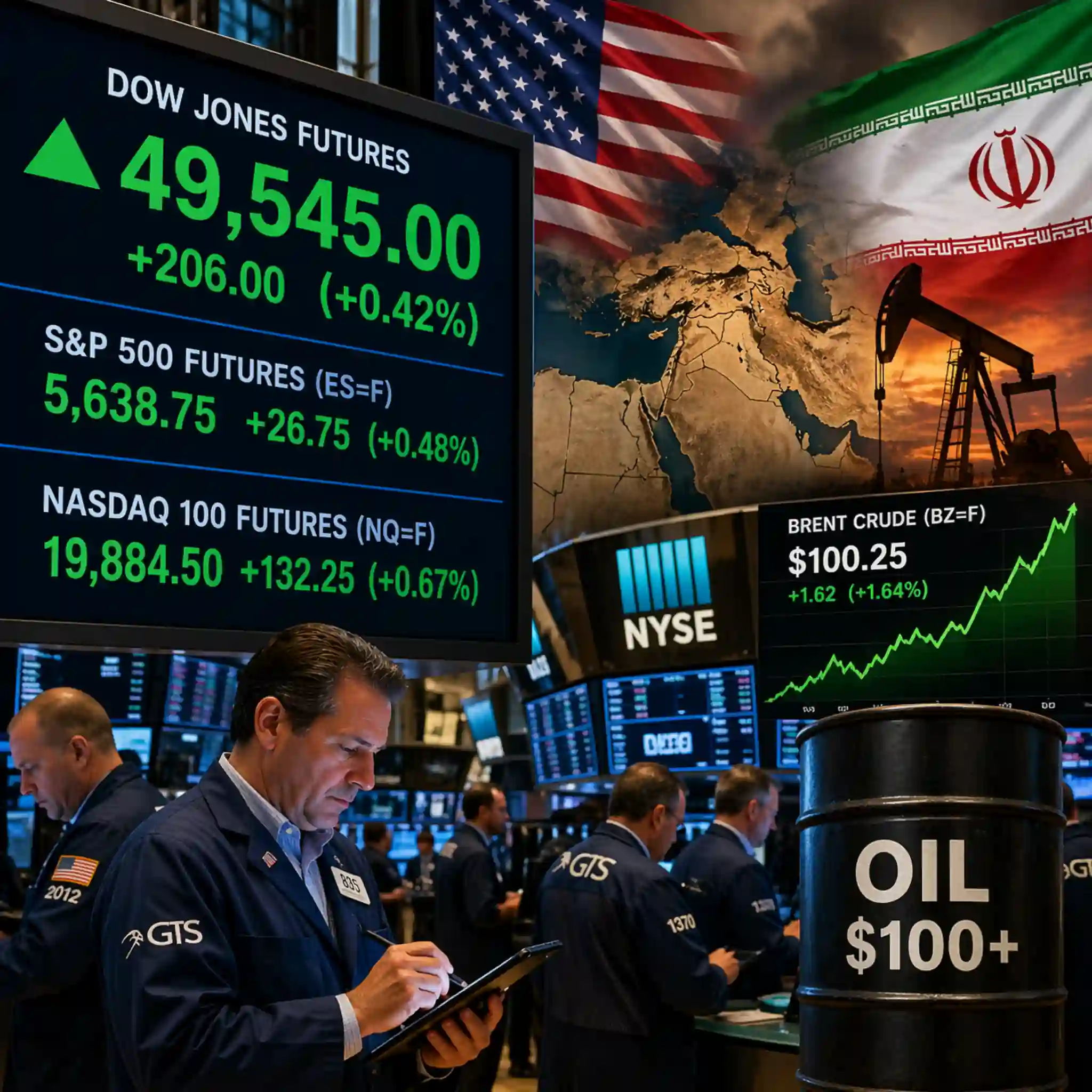
Oil prices stayed elevated amid lingering geopolitical concerns, with traders watching for any disruption risks tied to U.S.–Iran tensions. The market remained sensitive to headlines ahead of another round of talks between the two countries over Tehran’s nuclear program.
Brent crude futures were up around 0.27% at $71.04 a barrel, while U.S. crude rose roughly 0.24% to $65.55 per barrel. Senior U.S. officials made the case that Iran poses a major threat, keeping a risk premium in prices even as investors continue to weigh broader demand signals.
Gold edges up on safe-haven demand
Spot gold ticked higher as well, rising about 0.27% to $5,184.66 an ounce, supported by incremental safe-haven demand. The advance underscored that while risk appetite improved in equities, investors still see reasons to maintain hedges amid geopolitics and shifting rate expectations.
For a deeper look at the quarter’s AI-driven earnings narrative, Reuters coverage has tracked how Nvidia’s guidance is feeding into global market pricing across equities, currencies and commodities.
Heading into the rest of the trading day, the market’s near-term mood is defined by a familiar balancing act: renewed confidence that AI spending remains robust, set against a currency backdrop dominated by Japan’s policy uncertainty and a commodities complex still shaped by geopolitical risk. If Nvidia’s momentum continues to support the AI ecosystem, the next test will be whether broader risk assets can hold gains as investors refocus on rates, geopolitics and the sustainability of the capex cycle.

Make Swikblog your go-to source on Google for reliable updates, smart insights, and daily trends.