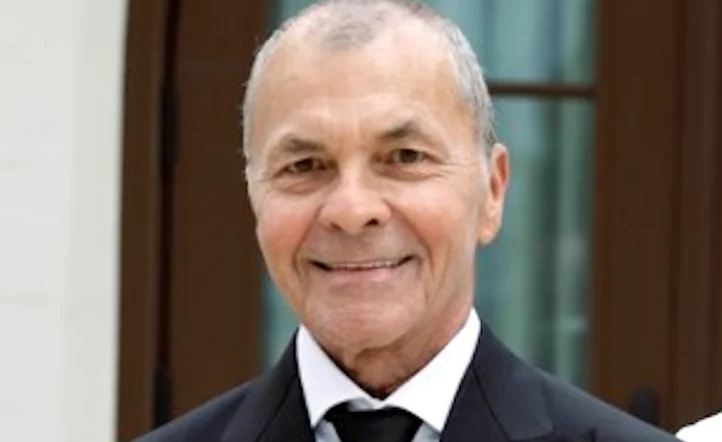
Seven years after 24-year-old Toyah Cordingley was found dead on a remote Queensland beach, a jury has convicted former nurse Rajwinder Singh of her murder, bringing a long and painful international manhunt to an end.

The case that shocked Far North Queensland
On a warm Sunday afternoon in October 2018, Toyah Cordingley took her dog for a walk along Wangetti Beach, a wild stretch of coastline between Cairns and Port Douglas. She never came home. The next morning, her father found her body half-buried in the dunes, while her dog was later discovered alive, tied to a tree further inland.
The killing rattled Far North Queensland and quickly became one of Australia’s most high-profile unsolved murders. For years, the case was defined by a single chilling fact: the man police believed was responsible had left the country within hours of Toyah’s death and vanished into another continent.
Former nurse convicted of murder after retrial
That man is Rajwinder Singh, a 41-year-old former nurse who lived in Innisfail, south of Cairns. On Monday, a Supreme Court jury in Cairns found Singh guilty of murdering Cordingley on Wangetti Beach in October 2018 after a four-week retrial. Prosecutors argued that he carried out a sudden, “violent and brutal” attack on a woman he had never met, inflicting multiple stab wounds and a deep cut to her neck before hastily burying her body in the sand.
The jury returned a unanimous verdict after hours of deliberation, ending a legal saga that had already seen one earlier trial collapse with a hung jury. On Tuesday, the judge sentenced Singh to life in prison with a 25-year non-parole period, meaning he will remain behind bars well into his late 60s. The sentence aligns with reporting from Australia’s public broadcaster, which described the attack as an “opportunistic” killing marked by extreme violence and attempts to conceal the crime.
Detailed coverage of the sentencing and the judge’s remarks has been published by ABC News Australia , while the Guardian has examined the long road to conviction.

DNA, phone data and a one-way flight to India
The case against Singh relied heavily on forensic and digital evidence. Jurors heard that DNA recovered from a stick at the beach and from under Cordingley’s fingernails was overwhelmingly likely to belong to Singh, effectively placing him at the scene during the struggle.
Investigators also reconstructed movements along the coastal road using mobile phone data and vehicle information. Cordingley’s phone activity and the movements of a car linked to Singh were found to overlap in time and place near Wangetti Beach on the evening she disappeared.
Within hours of her body being discovered, Singh booked a one-way flight to India. He left behind his wife, three children and his life in regional Queensland, disappearing into the vast sprawl of the Indian subcontinent just as the murder investigation was beginning.
Years in hiding and a record reward
For almost four years, Singh lived in India while Queensland detectives continued their investigation from the other side of the world. As public anger and frustration grew, the state government authorised an unprecedented AU$1 million reward for information leading to his capture – the largest reward ever offered by Queensland Police.
In late 2022, acting on new intelligence, Indian authorities located and arrested Singh at a Sikh temple near New Delhi. Following court proceedings in India, he agreed not to contest extradition and was flown back to Australia in early 2023 to face trial.
Outlets including news.com.au and The Economic Times have detailed how the reward, international cooperation and community pressure combined to finally bring him back before an Australian court.
‘You stole the precious life of our daughter’
Inside the Cairns courtroom, Cordingley’s parents delivered harrowing victim impact statements. Her mother described the murder as a theft of something beyond material value – the “precious life” of their only daughter – and spoke of family milestones that will now always be overshadowed by an empty chair.
Her father, who discovered Toyah’s body in the dunes the morning after she failed to return, has repeatedly spoken about the enduring trauma of that moment and the “unbearable” loss that followed. For the family, the guilty verdict is a kind of justice, but one that can never restore what was taken on that October evening.
The sentencing judge condemned Singh’s actions as shocking and sickening, highlighting his decision to flee abroad rather than help police or explain what happened. The court heard he has shown no genuine remorse and continues to deny responsibility.
What the verdict means for Cairns and beyond
In and around Cairns, Cordingley’s killing had become a grim reference point — a reminder that even everyday routines like walking a dog on the beach can end in violence. Local residents have described a collective sense of unease that lingered for years while the case remained unresolved.
The life sentence has brought what some community leaders call a “bittersweet relief”: satisfaction that the justice system has finally reached a conclusion, tempered by the knowledge that no punishment can undo the horror of the crime or the pain of the intervening years.
Legal observers note that Singh may still seek to appeal, but any such process would likely take years and face a high evidentiary bar. For now, the man who fled to India in the hours after Toyah Cordingley’s death will spend decades in an Australian prison.
Disclaimer: This article is based on information available from court proceedings and reputable news organisations at the time of publication. All individuals are entitled to the presumption of innocence in relation to any other allegations or investigations not determined by a court.

Make Swikblog your go-to source on Google for reliable updates, smart insights, and daily trends.