
AeroVironment (NASDAQ: AVAV) stock plunged 6.45% to $197.72 after the defense technology company cut its fiscal 2026 outlook, overshadowing explosive triple-digit revenue growth and fresh U.S. Army contract wins. The sharp decline reflects growing investor concern over execution challenges, even as demand for autonomous military systems remains strong.
The move adds to a broader post-earnings selloff, with shares now down more than 20% since the latest results. Despite reporting one of the fastest growth rates in the defense sector, AeroVironment has struggled to meet expectations where it matters most — forward guidance and profitability.
Revenue Surges 143% but Misses Expectations
AeroVironment reported quarterly revenue of $408 million, marking a staggering 143% year-over-year increase. However, the figure fell short of analyst expectations by 14.6%, making it one of the weakest relative performances among defense contractors this earnings season.
While growth was boosted by acquisitions and strong demand for unmanned systems, the miss highlighted operational inefficiencies and timing issues in key segments. Compared to peers, the company delivered the fastest growth but also the biggest disappointment versus estimates.
Guidance Cut Triggers Selloff
The real pressure point came from management’s revised outlook. AeroVironment lowered its fiscal 2026 revenue guidance to $1.85 billion–$1.95 billion, down from the previous $1.95 billion–$2.0 billion range. Adjusted EBITDA is now expected between $265 million and $285 million, while adjusted EPS was cut sharply to $2.75–$3.10 from $3.40–$3.55.
This downgrade signaled that recent growth may not translate smoothly into near-term profitability. Markets reacted swiftly, repricing the stock lower as expectations reset.
Segment Weakness and $151M Impairment Raise Concerns
The guidance cut was largely driven by underperformance in the Space, Cyber, and Directed Energy segment. Key issues included a stop-work order on the Space SCAR program and delays in government funding approvals, both of which impacted revenue timing and visibility.
Adding to investor concern, AeroVironment recorded a significant non-cash goodwill impairment charge of $151.3 million related to its Space business. This raised questions about the sustainability of returns from recent acquisitions and highlighted integration risks.
$134M Army Contracts Provide Support
Despite the negative headlines, AeroVironment secured more than $134 million in new U.S. Army contracts, reinforcing the strength of its core business.
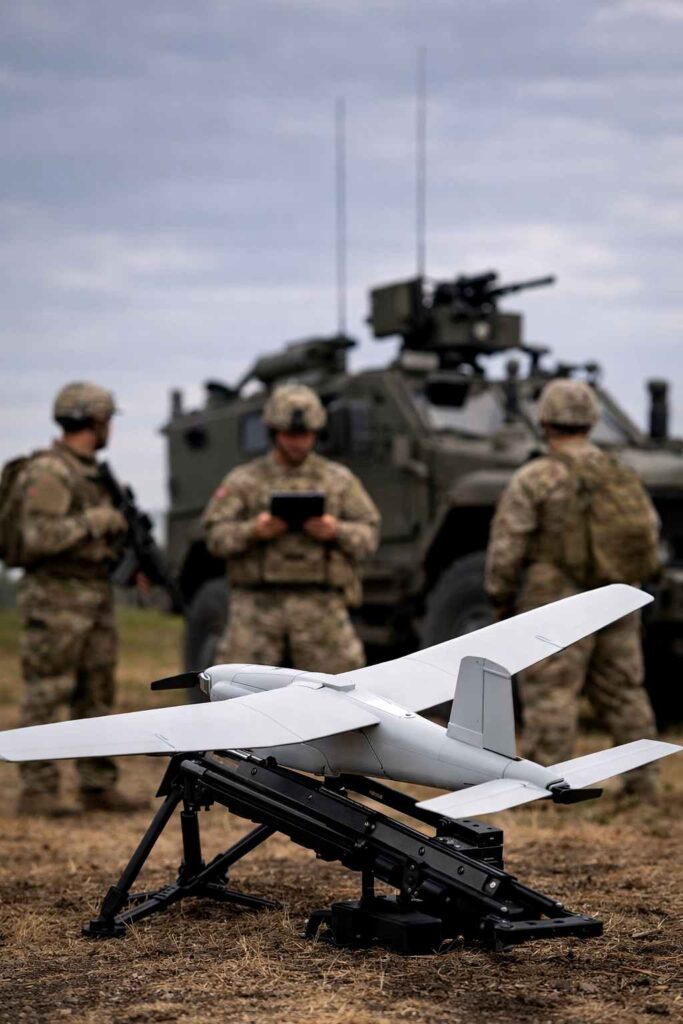
The largest award, worth approximately $117 million, covers the P550 Long Range Reconnaissance Systems, advanced unmanned aircraft designed to deliver real-time intelligence and targeting data in contested environments. A second contract valued at $17.6 million includes Red Dragon systems, such as battery chargers, control stations, and training support.
These wins strengthen the company’s funded backlog, which stood at $1.1 billion as of January 31, 2026. The backlog provides visibility into future revenue streams and confirms continued demand for AeroVironment’s technology.
Strategic ESAero Acquisition Expands Capabilities
AeroVironment also completed the acquisition of Empirical Systems Aerospace (ESAero) for approximately $200 million, with around $160 million paid in stock. The deal is aimed at expanding the company’s capabilities in unmanned aviation, propulsion systems, and aircraft design.
ESAero will operate within the Precision Strike and Defense Systems group, and management expects the acquisition to contribute positively to adjusted EBITDA within its first year. The move aligns with AeroVironment’s strategy of becoming a broader defense technology platform.
Defense Sector Mixed as Peers Outperform
The broader defense sector delivered a mixed performance this earnings season. While AeroVironment struggled, peers such as Leonardo DRS reported strong results, with revenue of $1.06 billion beating estimates and the stock rising over 20% post-earnings.
RTX also delivered a solid quarter, reporting $24.24 billion in revenue and exceeding analyst expectations. Meanwhile, Parsons posted weaker results and saw its stock decline sharply.
Overall, defense contractors exceeded revenue expectations by an average of 2.1%, but share prices across the group have declined roughly 2.1% since earnings, reflecting cautious investor sentiment.
Geopolitical Shift Driving Defense Demand
The macro backdrop continues to support long-term demand for defense companies. Rising geopolitical tensions, including U.S. conflicts in the Middle East and ongoing global security concerns, have shifted investor focus away from technology disruption toward stability and national security.
This shift has reinforced the importance of defense spending, particularly in areas like drones, surveillance, and autonomous systems — all core to AeroVironment’s portfolio.
According to recent analysis from Reuters, global defense budgets are expected to remain elevated as governments prioritize military readiness and technological superiority.
Market Outlook and Investor Focus
AeroVironment now faces a critical phase. The stock’s decline reflects a reset in expectations rather than a collapse in demand. Investors will be closely watching whether the company can stabilize its underperforming segments, execute on its backlog, and integrate recent acquisitions effectively.
While contract wins and strong growth provide a foundation, the key challenge lies in converting that demand into consistent financial performance. Until then, volatility in the stock is likely to persist.
More details on the company’s financials and outlook can be found in its latest official investor updates.
You may like: Solana Falls 3.87%: Price Prediction 2030, XRP vs SOL

Make Swikblog your go-to source on Google for reliable updates, smart insights, and daily trends.