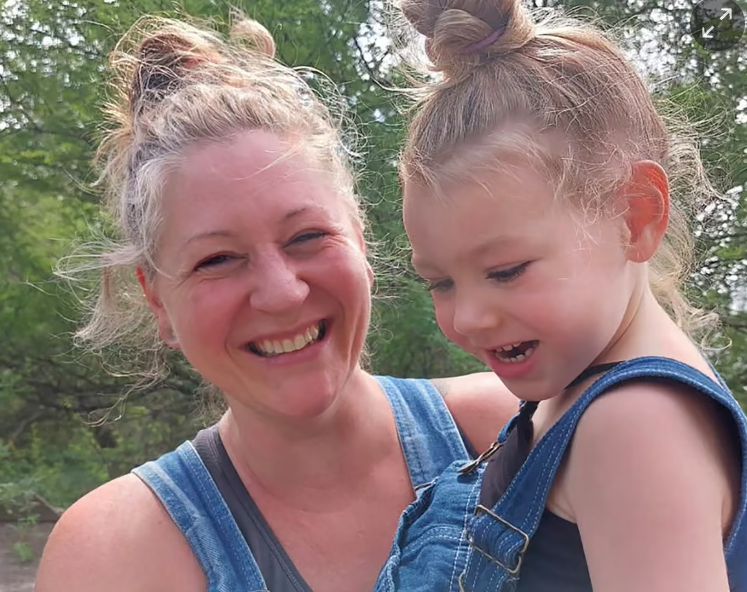

A growing international controversy has erupted after a Canadian mother and her seven-year-old daughter were detained by U.S. immigration authorities in Texas — with the child’s autism diagnosis turning the case into a deeply emotional and widely shared story. After 13 days in custody, the mother is now speaking out, describing conditions as “prison-like” and raising serious concerns about her daughter’s well-being.
Tania Warner, a British Columbia-born Canadian, says she and her daughter Ayla were stopped on March 14 at a U.S. Customs and Border Patrol checkpoint while traveling in Texas. What initially appeared to be a routine stop quickly escalated into detention, with both being taken into custody and later transferred to the South Texas Family Residential Center in Dilley.
How the 13-Day Detention Began
According to reports, Warner and her daughter had been living in Texas with her husband for nearly five years. However, after being stopped at the checkpoint, authorities determined there were issues related to Warner’s immigration status, leading to their detention and possible deportation proceedings.
Warner maintains that she has active immigration paperwork in process and should not have been detained. Reports indicate she may have a “prima facie” case and valid documentation extending into 2026, while her husband reportedly holds an employment authorization valid until 2030. Despite this, U.S. authorities have emphasized that individuals without finalized legal status can still face detention if they are considered to be overstaying or in violation of immigration rules.
This legal gray area is at the heart of the case — and one reason it has triggered such strong public reaction.
‘Prison Conditions’: Inside the Texas Facility
Warner has described the conditions inside the detention system as harsh and deeply distressing, calling it “basically a fancy prison.” Before being moved to Dilley, she says they were held in a facility where people were forced to sleep on floors under constant lighting, with little privacy and continuous monitoring.
Although the Dilley centre is considered a family residential facility, Warner says it still feels restrictive and overwhelming. While there are reports of basic amenities such as a school area and playground, she says the environment is far from suitable for a child with special needs.
“We are being subjected to prison conditions,” Warner said in a statement, emphasizing the emotional toll the experience has taken on both her and her daughter.
7-Year-Old with Autism Struggling in Detention
The most alarming aspect of the case involves Ayla, Warner’s seven-year-old daughter, who is on the autism spectrum. Warner says her daughter is struggling with overstimulation, stress, and a complete disruption of her daily routine — factors that can be particularly challenging for children with autism.
Reports indicate Ayla has experienced sensory overload due to noise, unfamiliar surroundings, and lack of structure. She has also reportedly developed a rash while in detention, requiring medical attention after repeated requests. In some accounts, she was treated with hydrocortisone cream and antihistamines.
For many observers, this detail has transformed the story from a legal immigration issue into a humanitarian concern. The idea of a neurodivergent child coping with confinement and instability has triggered widespread empathy and outrage.
Political and International Reaction Builds
The case has now drawn attention from both Canadian and U.S. officials. Global Affairs Canada has confirmed it is aware of multiple cases involving Canadians detained by U.S. Immigration and Customs Enforcement (ICE) and has received requests for assistance.
Several political figures have also weighed in. U.S. Congressman Vicente Gonzalez has reportedly intervened, while Canadian politicians, including Members of Parliament and provincial representatives from British Columbia, have raised concerns about the situation.
This growing political involvement signals that the case is no longer just a personal legal matter — it is becoming a diplomatic and policy issue.
For ongoing updates, readers can follow coverage from Global News and additional reporting from CTV News, both of which have been closely tracking developments.
The Legal Fight and Possible Release
As of the latest updates, Warner has been in detention for 13 days and is awaiting a bond hearing that could determine whether she and her daughter are released while their immigration case continues. She has indicated that bond could be set between $10,000 and $15,000.
The outcome of this hearing could be a turning point. A release would likely reduce immediate concerns about the child’s condition, but it would not resolve the underlying legal battle. If bond is denied, however, public pressure and media scrutiny are expected to intensify significantly.
Why This Story Is Going Viral
This case has gained massive traction because it sits at the intersection of immigration enforcement, child welfare, and international relations. The combination of a Canadian family, a young autistic child, and claims of harsh detention conditions has created a powerful narrative that resonates globally.
Stories involving numbers — like “13 days in detention” — combined with emotionally compelling details tend to spread rapidly across platforms like Google Discover and social media. In this case, the human angle has made it especially impactful.
More broadly, the situation highlights ongoing debates around immigration systems and how they handle vulnerable individuals. While enforcement agencies argue they are following legal procedures, critics question whether those procedures adequately account for children and special needs cases.
What Comes Next
For now, the focus remains on the upcoming bond hearing and whether Warner and her daughter will be released. But even beyond that decision, the case is likely to leave a lasting impact on public discussions around immigration enforcement and family detention policies.
As more details emerge, this story is expected to remain in the headlines — not just because of its legal complexity, but because of the emotional weight carried by a seven-year-old child caught in the middle of it all.

Make Swikblog your go-to source on Google for reliable updates, smart insights, and daily trends.