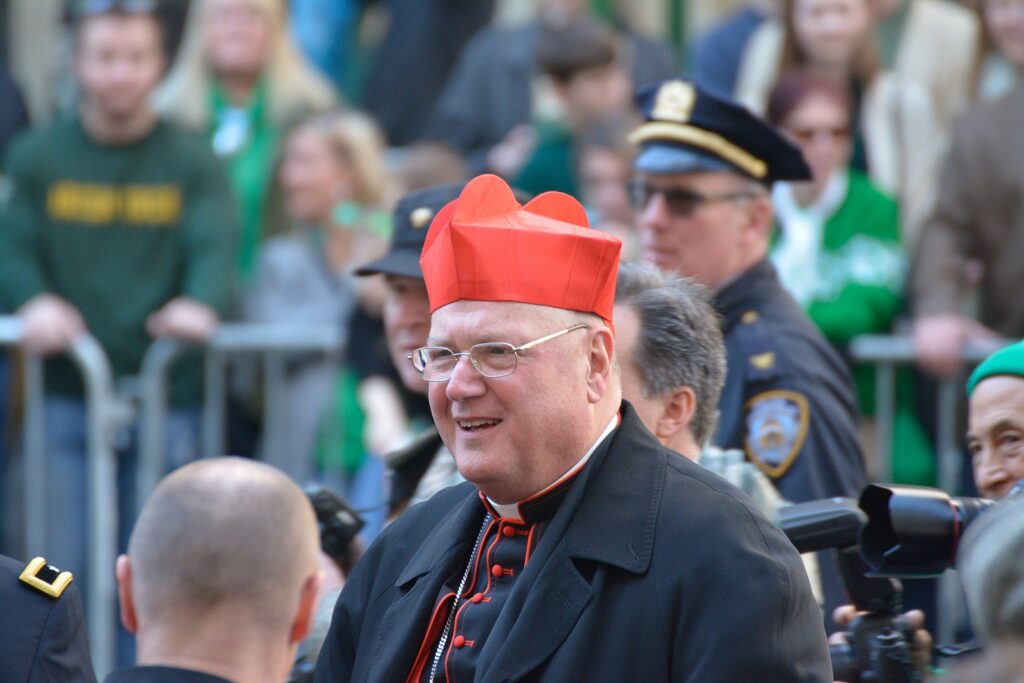

The Vatican has confirmed that Cardinal Timothy Dolan has stepped down as Archbishop of New York after reaching the mandatory retirement age of 75, bringing to a close more than a decade leading one of the most influential Catholic dioceses in the United States.
Pope Leo has accepted Dolan’s resignation and appointed Bishop Ronald Hicks, currently the Bishop of Joliet, Illinois, as the next Archbishop of New York. The transition marks a significant leadership shift for the American Catholic Church at a time of social, political, and cultural change.
Why Cardinal Timothy Dolan resigned
Under Catholic canon law, bishops are required to submit their resignation once they turn 75. While the pope may choose to delay acceptance, the rule exists to allow for orderly leadership transitions. In Dolan’s case, the resignation follows this standard process and is not connected to health issues or controversy.
Dolan turned 75 earlier this year and continued serving until the Vatican formally approved the change. His departure had been widely expected within church circles, even as he remained a highly visible public figure in New York and across the country.
A prominent voice in American Catholic life
Appointed Archbishop of New York in 2009, Dolan became one of the most recognisable Catholic leaders in the US. Known for his approachable media style and frequent appearances on national television, he often weighed in on issues ranging from religious freedom and education to immigration and public morality.
Beyond New York, Dolan served as president of the United States Conference of Catholic Bishops and acted as a key liaison between the American church and the Vatican during periods of internal reform and public scrutiny.
Who is Bishop Ronald Hicks?
At 58, Bishop Ronald Hicks represents a generational shift. He has led the Diocese of Joliet since 2020 and is known for a pastoral, community-focused approach shaped by years of parish leadership and administrative experience.
Church observers note that Hicks is seen as closely aligned with Pope Leo’s emphasis on outreach, inclusion, and engagement with urban communities — priorities that will be tested in New York’s vast and diverse archdiocese.
What this means for New York Catholics
The Archdiocese of New York oversees millions of Catholics, hundreds of parishes, schools, hospitals, and charities. Leadership changes at this level often signal shifts in tone and priorities rather than abrupt policy reversals.
Hicks is expected to focus on strengthening parish life, addressing declining church attendance, and navigating complex debates around migration, social justice, and the church’s role in public life.
A transition watched beyond New York
Because New York is one of the most influential dioceses in the United States, the appointment is being closely followed by church leaders nationwide. Analysts see the move as part of a broader effort by the Vatican to reshape American Catholic leadership for the next generation.
According to Reuters, the change reflects Pope Leo’s intention to emphasize pastoral leadership over institutional prominence as the US church adapts to shifting demographics and expectations.
What happens next
Cardinal Dolan will retain his title but step away from daily governance, while Bishop Hicks will prepare for his formal installation in New York in early 2026. Until then, administrative arrangements will ensure continuity across the archdiocese.
For American Catholics, the transition marks the end of a familiar public figure’s tenure — and the beginning of a new chapter for the nation’s most high-profile archdiocese.
Written by Swikblog Desk | About Swikblog

Make Swikblog your go-to source on Google for reliable updates, smart insights, and daily trends.