
A quiet Christchurch suburb turned into the centre of an emergency response on Thursday afternoon after authorities discovered what police described as a “concerning substance” believed to pose a potential explosive risk in Burnside.
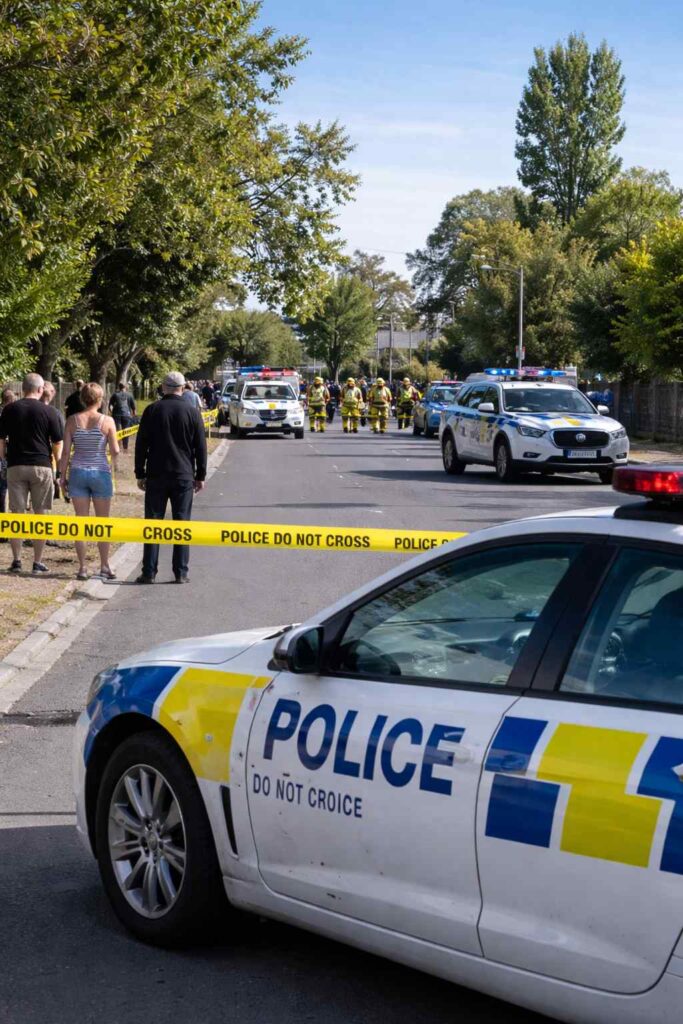
Emergency services were called to Sheffield Crest at approximately 2:20 pm after reports of the suspicious material. Within minutes, police established cordons around the street and warned residents and motorists to stay away while specialist teams prepared to deal with the substance.
The discovery quickly triggered a large public safety operation in the Canterbury city, with officials prioritising precautionary measures including evacuations and restricted access until the material could be safely assessed and removed.
Police alerted to concerning substance in Burnside
Senior Sergeant Craig Ellison confirmed that police were notified about the substance in the vicinity of Sheffield Crest shortly after mid-afternoon.
“People are asked to avoid the area,” Ellison said in a statement following the initial response.
Authorities also warned that an increased police presence would remain in place while arrangements were made to safely remove the material. According to police, the cordons will stay until specialists determine the area is secure.
The response was designed to limit any potential danger to residents and members of the public while emergency crews evaluate the situation.
Evacuation warnings issued as safety operation expands
Early reports indicated that nearby residents were told to evacuate as the incident was treated as a possible explosive hazard. Emergency alerts and public warnings were issued while officers secured the surrounding streets.
The use of evacuation orders and cordons reflects the seriousness with which authorities handle suspected explosive materials. Even if the substance later proves harmless, the initial assumption is to treat it as high risk until specialists can confirm otherwise.
That precautionary approach is standard protocol across New Zealand emergency services. Establishing a controlled perimeter ensures that bomb-disposal or hazardous-materials teams can investigate the substance without interference or risk to the public.
Specialist teams arranged to remove substance
Police confirmed that safe removal of the substance was being arranged after the discovery. Although the exact nature of the material had not been publicly identified in early updates, authorities indicated that trained specialists would be responsible for handling it.
In incidents involving suspected explosives or hazardous materials, specialist teams are typically tasked with identifying the object, assessing the threat level and either removing or safely disposing of the item.
These operations can take time, particularly if authorities need to transport the substance or neutralise it in a controlled environment.
Until that process is completed, the police cordon remains in place and access to the affected street is restricted.
Burnside residents caught in sudden disruption
For residents living near Sheffield Crest, the emergency response turned an ordinary afternoon into a tense situation. Police vehicles, cordons and warnings to avoid the area created visible disruption as authorities worked through safety procedures.
While no injuries or explosions were reported in the early stages of the incident, the presence of multiple emergency units underscored the seriousness of the discovery.
Situations involving suspected explosives are treated with extreme caution because even a small device or unstable substance can cause significant damage in residential areas.
That reality explains why police immediately moved to isolate the area once the report was received.
Why authorities act quickly in suspected explosive incidents
Explosive-related incidents require rapid response because of the unpredictable nature of hazardous materials. Even trained responders must follow strict procedures to reduce the risk of accidental detonation or chemical reaction.
For the public, this often means road closures, evacuations and extended cordons until authorities complete their assessment.
Although these measures may appear disruptive, they are designed to prevent far greater harm.
Authorities typically release limited information during the early stages of these incidents because confirming the nature of a substance requires specialist analysis.
Once that process is complete, police can provide clearer details about what was found and whether any further investigation is required.
What happens next in the Christchurch incident
Police indicated that the cordons surrounding Sheffield Crest would remain until the substance is safely removed and the area is confirmed to be secure.
After specialists finish their assessment, authorities are expected to determine whether the substance posed a genuine explosive risk and whether any further investigation is necessary.
Residents and commuters have been advised to continue avoiding the area until police formally lift the restrictions.
Updates on the situation are expected as emergency crews complete the safety operation. Readers can follow developments through NZ Herald coverage of the Burnside evacuation and official updates from New Zealand Police.
For now, the Burnside incident remains one of Christchurch’s most closely watched public safety situations, highlighting how a single report of a suspicious substance can trigger a full emergency response across a residential neighbourhood.

Make Swikblog your go-to source on Google for reliable updates, smart insights, and daily trends.