
By Swikblog
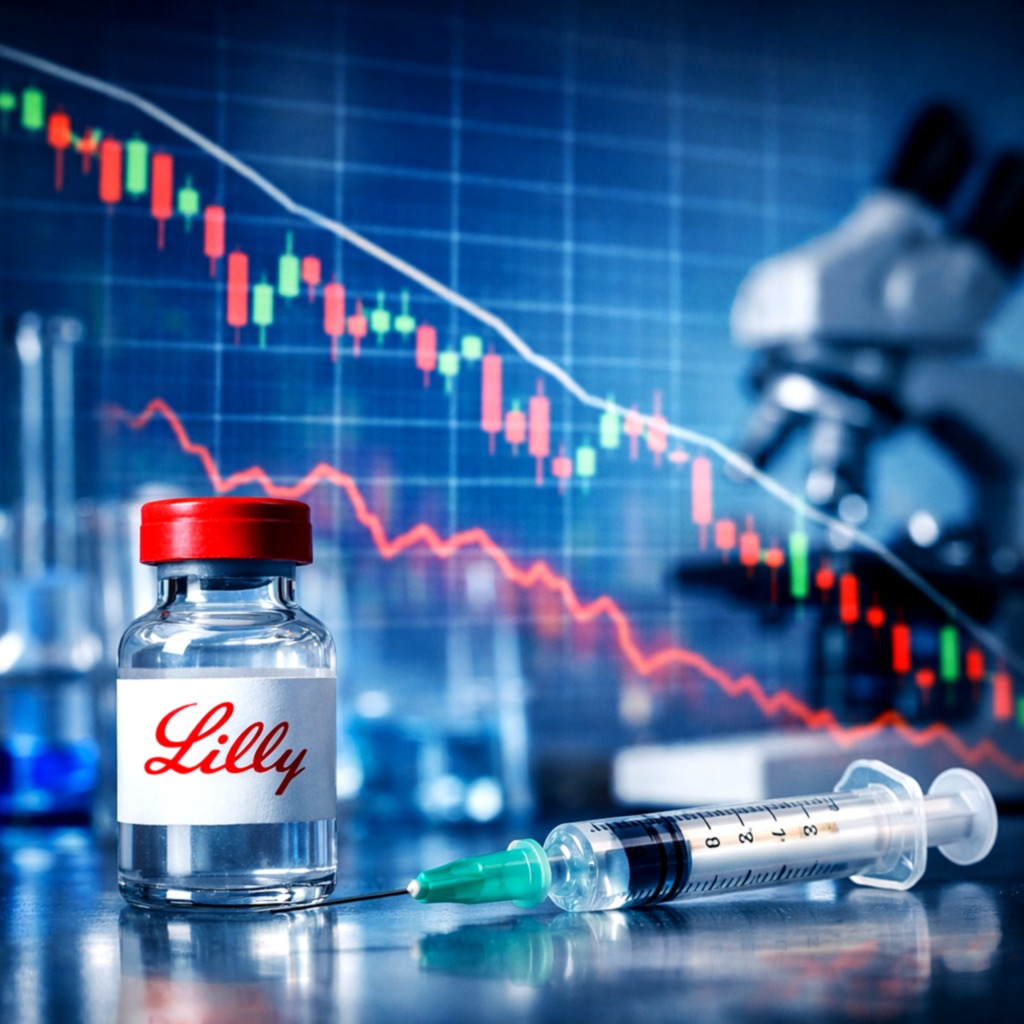
Eli Lilly (NYSE: LLY) is back under the spotlight after its stock slipped 2% to $878, leaving it nearly 23% below its 52-week high. The recent decline adds to a broader 2026 correction, with shares down close to 18% year-to-date, raising questions about whether the pharmaceutical giant is losing momentum or simply cooling off after a massive run.
Despite the pressure, the underlying business tells a more complex story—one that still includes strong growth drivers, improving profitability, and long-term bets that could reshape the company’s future.
Stock Pressure Builds Despite Strong Demand
Eli Lilly’s recent stock weakness comes even as demand for its blockbuster drugs—Mounjaro and Zepbound—remains robust. These GLP-1-based treatments for diabetes and obesity have transformed the company’s growth trajectory and positioned it at the center of one of the fastest-growing markets in healthcare.
However, the market is beginning to shift its focus from pure growth to sustainability. With competition intensifying and pricing pressures emerging, investors are reassessing how much of Lilly’s future success is already reflected in its valuation.
Margin Expansion Is a Key Strength
One of the most important, yet often overlooked, aspects of Lilly’s story is its expanding margins. Since 2020, the company has steadily improved both gross and operating margins, indicating that revenue is growing faster than costs.
This trend suggests more than just strong sales. It reflects improved manufacturing efficiency, better cost control, and scaling benefits as demand rises. In recent earnings calls, management has pointed to lower production costs as a key contributor to these gains.
Even as some products face pricing pressure, Lilly’s ability to grow profits faster than revenue could remain a critical advantage over the medium term.
$55 Billion Manufacturing Bet Could Pay Off
Since 2020, Eli Lilly has invested roughly $55 billion into expanding its manufacturing capacity. While these investments may weigh on short-term profitability, they are designed to unlock long-term growth.
The goal is clear: increase production, reduce costs, and capture economies of scale in a market where supply constraints have been a major bottleneck. If executed well, this strategy could help Lilly maintain leadership in obesity and diabetes treatments while protecting margins.
AI Push With Nvidia Adds a New Layer
Beyond manufacturing, Lilly is also making a significant push into artificial intelligence. The company has built what it describes as the largest supercomputer in the pharmaceutical industry with the help of Nvidia.
This system is designed to accelerate drug discovery, optimize clinical trial design, and reduce the time it takes to bring new treatments to market. Even small efficiency gains—such as cutting development time or costs by 5%—can have a meaningful impact across a large pharmaceutical pipeline.
For investors, this represents a longer-term catalyst that goes beyond current blockbuster drugs.
EBGLYSS Data Highlights Pipeline Strength
While much of the focus remains on obesity treatments, Lilly’s broader pipeline is starting to gain attention. Recent four-year data on EBGLYSS, a drug for moderate to severe atopic dermatitis, showed sustained skin clearance, reduced itching, and a favorable safety profile.
The treatment’s once-monthly dosing and effectiveness as a monotherapy could make it a competitive option in a market already served by major players like Sanofi and Regeneron.
This development reinforces the idea that Lilly is not solely dependent on GLP-1 drugs. A diversified pipeline can help balance risk and support long-term growth.
Risks Investors Should Watch
Despite these strengths, there are clear risks. Pricing pressure is already emerging in parts of Lilly’s portfolio, and increased competition in the obesity market could intensify that trend.
There are also concerns around capital allocation. Heavy investments in manufacturing, AI, and pipeline expansion require significant funding, and analysts have flagged rising debt levels and non-cash earnings as areas to monitor.
Additionally, execution risk remains high. With multiple large-scale initiatives underway, any delays or missteps could weigh on both sentiment and financial performance.
Looking ahead, investors will be watching several key factors: demand trends for Mounjaro and Zepbound, progress on manufacturing expansion, and adoption rates for newer therapies like EBGLYSS.
The company’s ability to maintain high margins while navigating pricing pressures will also be crucial. Updates on AI-driven efficiencies and pipeline progress could further shape the long-term narrative.
For more details on Lilly’s business and updates, investors can explore the company’s official investor relations page.
Eli Lilly’s recent stock decline reflects a shift in market sentiment rather than a collapse in fundamentals. The company continues to operate from a position of strength, supported by strong demand, improving efficiency, and a deep pipeline.
At the same time, expectations remain high, and that leaves little room for error. The stock may continue to face volatility in the near term, but the long-term story—driven by innovation, scale, and strategic investment—remains firmly in place.
For investors, the key question is not whether Lilly is growing, but whether it can sustain that growth while defending its margins in an increasingly competitive environment.
You May Also Like
Nvidia (NVDA) Stock Drops 2.17% to $167 as Tech Selloff Hits AI Stocks

Make Swikblog your go-to source on Google for reliable updates, smart insights, and daily trends.