
Written by Swikblog Research Team
🔴 Ethiopia Volcano Eruption – Travel & Flight Update
Latest update: Airlines operating over the Red Sea and Gulf of Aden have begun cancelling or rerouting some flights as the ash cloud from the Ethiopia volcano eruption continues to drift toward key air corridors.
Aviation authorities say safety is the priority, with crews advised to avoid visible ash and follow updated routing guidance. Passengers travelling through affected hubs are being urged to check their flight status and allow extra time at the airport in case of schedule changes.
This is a developing situation and more changes are possible as the ash plume evolves. Travellers should monitor official airline and aviation advisories for the latest information.
Written by Swikblog Science & Weather Desk
Last updated: 25 November 2025 at 14:45 UTC
The Ethiopia volcano eruption 2025 has turned a long-quiet volcanic field into a global talking point, as the Hayli Gubbi volcano in the Afar region erupted for the first time in around 12,000 years. A tall ash plume has risen into the atmosphere and drifted toward the Red Sea, triggering fresh concern for aviation routes linking Africa, the Middle East and Europe.
Satellite images show a dense column of ash and gas rising from the remote cone and spreading eastwards in a fan-shaped cloud. While the affected area on the ground is sparsely populated, the eruption is now having knock-on effects well beyond Ethiopia’s borders as airlines review routes over the Red Sea and Gulf of Aden.
🔴 Live: Ethiopia Volcano Eruption 2025 Updates
Latest: Volcanic ash from the Hayli Gubbi eruption continues to drift toward the Red Sea, with aviation authorities advising flights to avoid visible ash and follow updated routing guidance.
This is a developing story. Information in this article may be updated as satellite data, ground reports and aviation advisories change.
✈ Travel & Flight Disruption After Ethiopia Volcano Eruption
Airlines operating over the Red Sea and Gulf of Aden have begun cancelling or rerouting some flights as a precaution, following ash advisories linked to the Ethiopia volcano eruption 2025. Routes that normally pass close to the eruption plume are being adjusted to avoid any risk of ash ingestion by jet engines.
Passengers are being urged to check flight status regularly, allow extra time at airports and watch for notifications from their airline or booking app. Even when airports remain open, minor delays and longer flight times are possible as aircraft take longer diversion paths around the affected airspace.
For official guidance, travellers should follow updates from airlines, national aviation regulators and volcanic ash advisory centres.
Where Is the Hayli Gubbi Volcano and What Happened?
The Hayli Gubbi volcano sits in Ethiopia’s Afar region, a geologically active area where three tectonic plates are slowly pulling apart. This so-called “triple junction” is part of the wider East African Rift, one of the few places on Earth where a new ocean basin is gradually forming.
Until this week, there were no recorded historical eruptions from Hayli Gubbi. Geological studies suggested the volcano last erupted thousands of years ago, making the sudden awakening a rare chance for scientists to watch a dormant system re-activate in real time.
Ash Cloud Drifting Toward the Red Sea, Yemen and Oman
Since the initial blast, the ash cloud has climbed high into the atmosphere and begun to drift northeast, aided by strong upper-level winds. Forecast models suggest the plume could affect air corridors over parts of the Red Sea, western Yemen and potentially Oman, depending on how long the eruption continues and how winds evolve.
Volcanic ash is a known hazard for aviation, capable of damaging engines and cockpit windows. That is why volcanic ash advisory centres, working with organisations such as the International Civil Aviation Organization (ICAO) and national weather services, issue guidance whenever eruptions affect flight paths.
So far, there have been no large-scale shutdowns of airports, but a growing number of flights have been adjusted or rerouted to keep a safe distance from the plume. This cautious approach mirrors responses to previous major eruptions, even when the ash concentrations are patchy or localised.
Impact on Local Communities in Afar
Closer to the volcano, communities in the Afar region have reported a low rumble, light ashfall and occasional reduced visibility. The area around Hayli Gubbi is relatively remote and sparsely populated, which has helped limit immediate risks to villages and infrastructure.
Local authorities are monitoring for any escalation that might require evacuations, including new fissures, lava flows or heavier ashfall. Health officials also advise people to avoid unnecessary exposure to ash, protect eyes and lungs where possible and keep livestock away from heavy deposits on the ground.
What Scientists Are Watching Next
For geologists and volcanologists, the Ethiopia volcano eruption 2025 is an important case study in how long-dormant systems come back to life. Satellite missions operated by agencies such as ESA and NASA are tracking the height of the ash plume, ground deformation and heat signatures around the crater.
On the ground, researchers are looking at seismic records and gas emissions to work out whether this is likely to be a short, sharp event or the beginning of a longer eruptive episode. The Afar Rift has produced other significant eruptions in recent decades, and scientists are keen to understand how this latest event fits into the broader rift-zone pattern.
Watch: Eruption Footage and Satellite Views
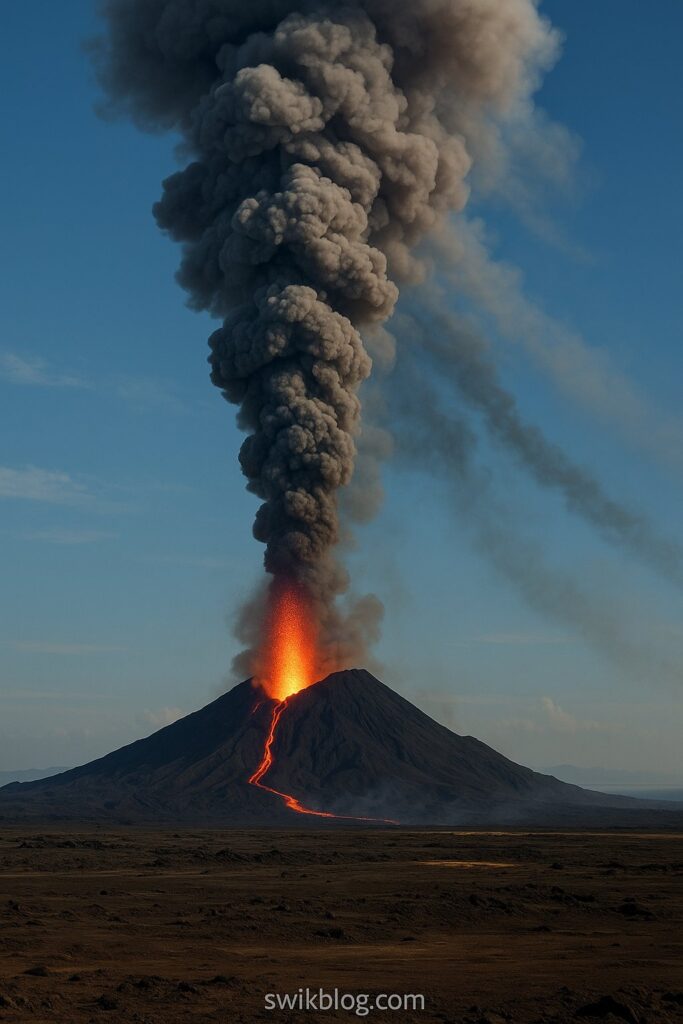
Early footage and satellite imagery from the region show a stark contrast between the glowing vent and the stark desert landscape around it. Where agencies and broadcasters have shared verified clips, they help to illustrate the scale of the eruption and the height of the ash column.
As always, viewers are encouraged to rely on credible sources rather than unverified clips circulating on social media. Official updates from meteorological agencies and observatories remain the best guide to current conditions.
Why the Ethiopia Volcano Eruption 2025 Matters Globally
Beyond the dramatic images, the Ethiopia volcano eruption 2025 raises wider questions about how climate, air travel and infrastructure cope with sudden natural events. Even a remote eruption can affect global transport if ash drifts into busy flight corridors, as seen during the 2010 Eyjafjallajökull eruption in Iceland.
The East African Rift is also a long-term laboratory for plate tectonics. Eruptions like this help researchers understand how continents thin, fracture and eventually split over millions of years. That knowledge feeds back into hazard planning, early-warning systems and risk assessments for communities living near other rift-zone volcanoes.
Related Coverage on Swikblog
Swikblog regularly covers weather, travel and major live events across Tier-1 countries. Readers interested in how natural events collide with public life can explore:
- Santa Claus Parade Canada 2025 — Route, Weather and What to Expect
- North London Derby 2025 — Why This Football Fixture Keeps Trending
Together, these stories show how Swikblog tracks big moments — from festive parades and major matches to the rare awakening of a volcano that has slept for thousands of years.
Updated by Swikblog

Make Swikblog your go-to source on Google for reliable updates, smart insights, and daily trends.