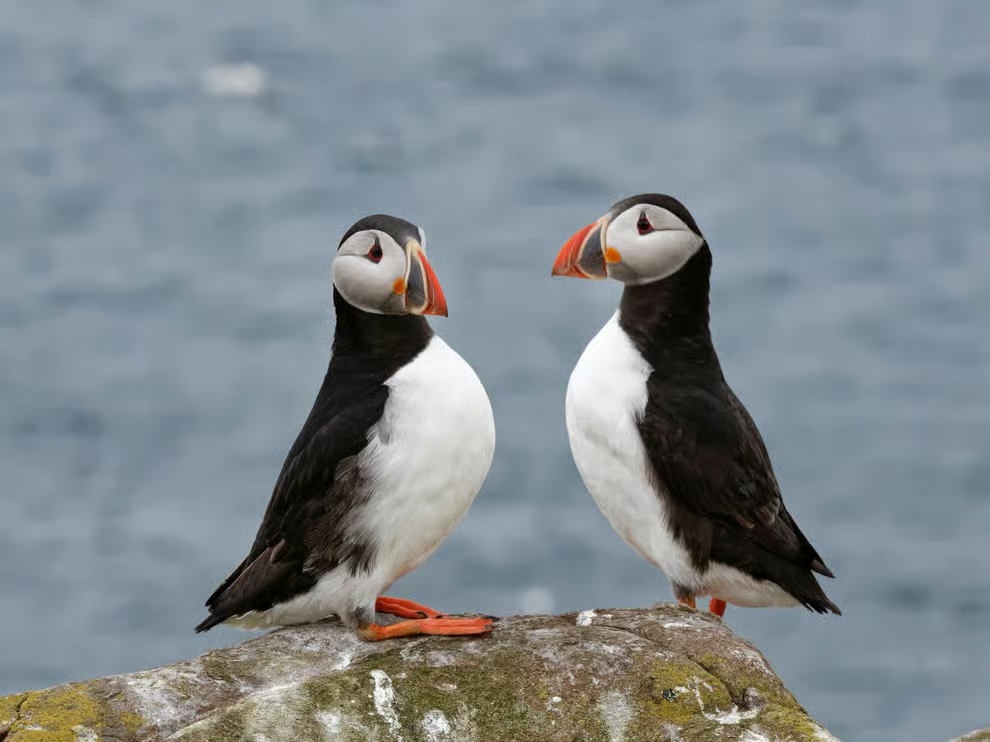

The return of Puffin Cam to the Farne Islands is more than a seasonal wildlife update. It marks a hopeful moment for one of Britain’s most treasured seabird colonies after years of losses linked to bird flu, severe storms and mounting pressure from climate change.
The National Trust has switched its live cameras back on for the 2026 breeding season, giving viewers a close look at puffins and guillemots as they return to the islands off the Northumberland coast. The remote cameras are now streaming again for a second year, offering a bird’s-eye view of life on the Farnes as thousands of seabirds settle into their nesting sites.
For wildlife watchers, the livestream is a chance to see puffins gathering around grassy burrows, preparing for breeding and moving across the island landscape in real time. For conservationists, however, the cameras also arrive during an important monitoring period that could reveal how well the colony is recovering after one of the most difficult spells in recent memory.
The Farne Islands are home to around 200,000 seabirds during the breeding season, making them one of the UK’s most important coastal wildlife sites. Puffins are the star attraction for many viewers, but the islands also support guillemots, Arctic terns, razorbills, kittiwakes and other seabirds that rely on the rocky cliffs and grass-covered nesting areas each spring and summer.
The National Trust said a second camera has also been trained on guillemots, which nest and roost in dense groups along the island cliffs. Their cliffside colonies provide a very different view from the puffin burrows, showing how varied and fragile the Farne Islands’ seabird ecosystem is.
The launch follows the success of last year’s livestream, which attracted more than a quarter of a million views from people around the world. Many viewers used the cameras as a way to connect with the islands from home, especially those who may never be able to visit the remote reserve in person.
Laura Knowles, visitor operations manager for the National Trust, said the breeding season is always a special period for ranger teams as they begin daily monitoring across the islands. She said the response to last year’s Puffin Cam showed how strongly people connected with the seabirds and the wider story of the Farnes.
That wider story has not been easy. The islands were badly affected by avian influenza in 2022 and 2023, when rangers recorded heavy losses across the seabird population. More than 6,000 dead birds were recorded in 2022, followed by more than 3,500 in 2023. Across those two years, nearly 10,000 birds were lost on the islands.
The situation appeared less severe in 2025, when fewer than ten confirmed bird flu deaths were recorded. Conservationists have welcomed that sharp fall, but they remain careful not to describe it as a full recovery. Seabird colonies can take years to rebuild, and the long-term impact of disease outbreaks may only become clear through repeated annual monitoring.
Sophia Jackson, area ranger for the National Trust on the Farne Islands, said teams have continued to monitor bird flu as part of international research into the disease. She said the comparison between the deaths recorded in 2022 and 2023 and the much lower figure in 2025 offers some hope, but also warned that rangers cannot let their guard down.
Read More
The next major test will come in June, when annual seabird counts are expected to take place. These surveys will help conservation teams understand how puffins and other species have fared after bird flu and after a stormy start to the year.
The islands were affected by the wider impact of storms Goretti, Ingrid and Chandra, which battered parts of the UK and Europe earlier in 2026. Severe weather can be dangerous for seabirds because it disrupts feeding, weakens birds and can lead to so-called wrecks, where exhausted birds are washed ashore dead or dying.
Ben McCarthy, head of nature conservation at the National Trust, said long-term monitoring through the Seabird Monitoring Programme has shown how stormy weather can affect seabirds’ ability to feed. He said this year’s counts will be especially important because conservationists do not yet know what the recent storms will mean for puffins and other seabirds returning to breed on the Farnes.
The issue is closely linked to climate change. More extreme weather, warming seas and shifting fish populations are all placing additional stress on seabirds. Puffins depend heavily on small fish such as sand eels to feed their chicks, and changes in sea temperature can affect how easily those food sources are found.
According to the RSPB, puffins face growing pressure from climate change and food shortages, making long-term monitoring of colonies such as the Farne Islands increasingly important.
The National Trust is also continuing its colour-ringing work with puffins. Rangers will be looking out for birds ringed last year to help assess survival rates and understand how individuals move between seasons. This kind of tracking can provide valuable insight into whether young and adult birds are returning successfully after migration.
The Farne Islands have now reopened for the visitor season, with boat trips once again landing on the islands. Sail-around tours are also continuing for people who want to experience the seabird spectacle from the water rather than going ashore.
For readers following more environment and wildlife updates, Swikblog continues to cover major nature, climate and conservation stories with clear context on why they matter.
The return of Puffin Cam gives the public a rare window into a dramatic and delicate breeding season. It also gives conservationists another way to keep attention on the challenges facing seabirds at a time when disease, storms and climate change are reshaping life around Britain’s coast.
Viewers can watch the live Farne Islands cameras through the National Trust Farne Islands webcam.

Make Swikblog your go-to source on Google for reliable updates, smart insights, and daily trends.