

Alicia Hempleman-Adams has secured a place in British aviation history after becoming the first British woman to cross the Atlantic Ocean in a gas balloon, completing a demanding 70-hour journey that tested endurance, navigation skills and resilience against challenging weather conditions.
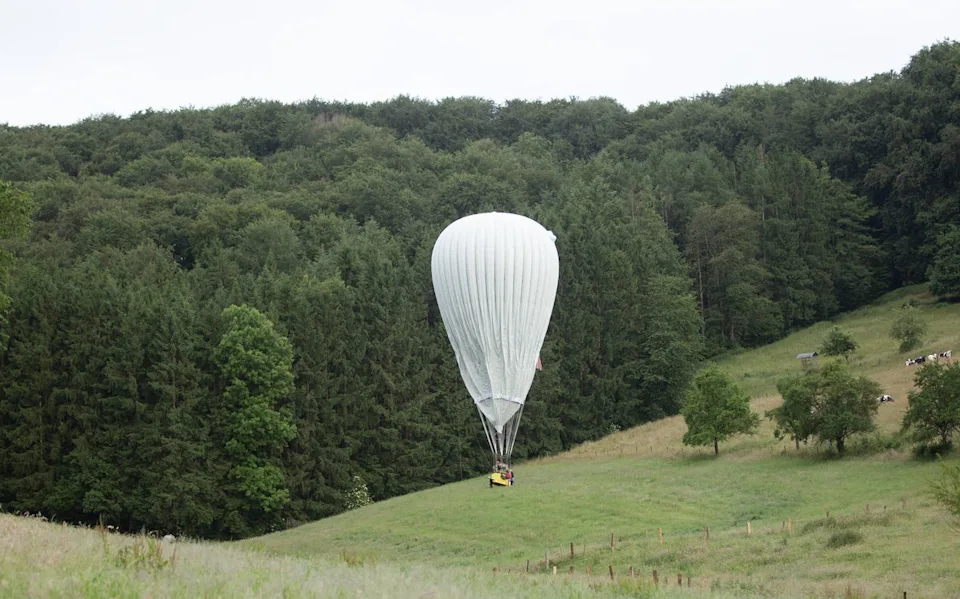
The adventurer from Bath landed safely in Bastendorf, Luxembourg, at 5.58am UTC on Sunday alongside fellow pilots Bert Padelt and Peter Cuneo. Their aircraft, the Atlantic Explorer, had launched from Presque Isle, Maine, at 6.08am UTC on Thursday, setting off on an ambitious transatlantic mission powered entirely by hydrogen gas.
While modern aviation routinely connects North America and Europe, crossing the Atlantic in an open-basket gas balloon remains one of the most demanding challenges in the sport. The crew spent nearly three days exposed to the elements, relying on changing wind currents and careful altitude management to guide their route across thousands of miles of ocean.
A rare achievement in modern ballooning
The successful flight marks a significant milestone in ballooning history. Hempleman-Adams is only the second woman ever to complete an Atlantic crossing by gas balloon and the first from the United Kingdom to achieve the feat.
Throughout the journey, the balloon travelled at an average altitude of approximately 14,000 feet and reached speeds of up to 100 kilometres per hour. Unlike hot-air balloon flights that typically last a few hours, long-distance gas balloon expeditions require pilots to remain airborne for days while continuously monitoring weather systems and adjusting their altitude to find favourable winds.
The challenge became even greater after the crew passed Newfoundland. Beyond that point, emergency landing options effectively disappeared. If conditions had deteriorated significantly, the Atlantic Ocean would have been the only alternative landing location.
Speaking after touching down in Luxembourg, Hempleman-Adams described the crossing as one of the most demanding experiences of her life. She revealed that periods of rain caused ice to build up on the balloon, increasing weight and creating difficult flying conditions.
The dangers associated with ballooning in changing weather are well documented. Rapid shifts in wind, temperature and precipitation can create serious challenges for pilots, as demonstrated by a hot-air balloon emergency landing that highlighted how quickly conditions can change during flight operations.
Following a family tradition of exploration
The achievement also carries personal significance. Alicia is the daughter of renowned explorer Sir David Hempleman-Adams, who previously completed a solo Atlantic crossing in an open basket. His experience provides a unique understanding of the physical and mental demands involved in such a journey.
Following the successful landing, Sir David praised his daughter’s determination and ability to overcome difficult conditions. He noted that completing an Atlantic crossing in an open basket requires exceptional judgement and persistence, particularly when weather conditions become unpredictable.
Beyond the latest record, Hempleman-Adams has already established herself within the ballooning community. She was appointed an MBE in the King’s Birthday Honours in 2024 for services to hot air ballooning, recognition that reflected years of involvement in the sport.
Read More
According to ITV News, the Atlantic Explorer mission aimed to complete a manned transoceanic flight using hydrogen gas as the sole onboard source of lift, adding another layer of significance to the accomplishment.
The successful journey from Maine to Luxembourg stands as a reminder that even in an era dominated by advanced aircraft and satellite navigation, some of aviation’s greatest achievements still depend on human judgement, teamwork and the ability to adapt to nature’s unpredictability. For Hempleman-Adams, the landing marked not only the end of a 70-hour flight but also the beginning of a new chapter in British ballooning history.

Make Swikblog your go-to source on Google for reliable updates, smart insights, and daily trends.