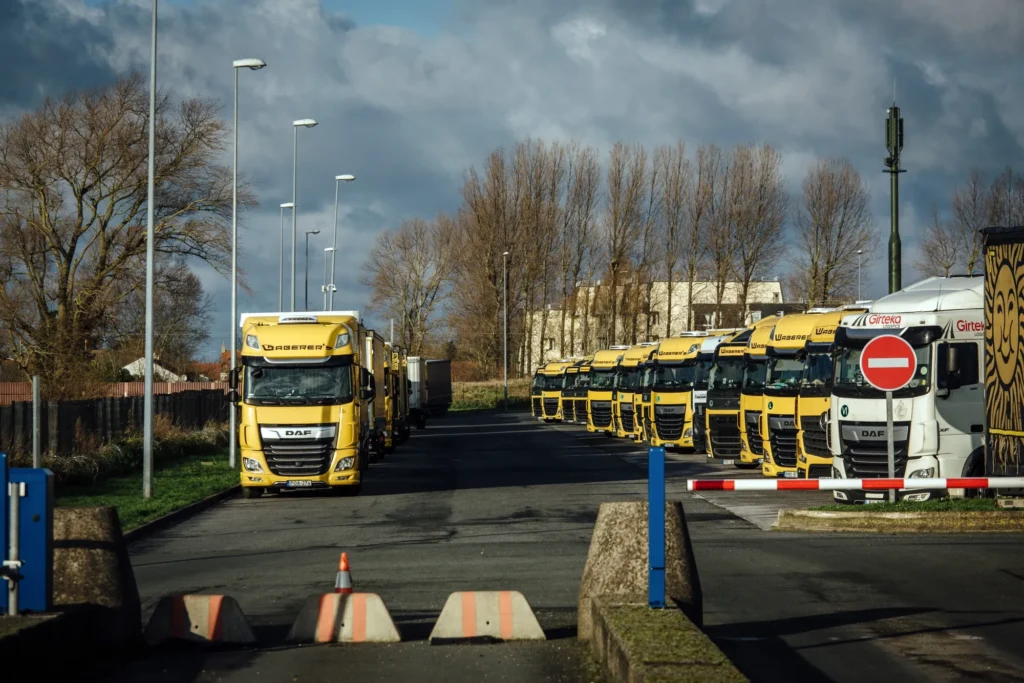

France has stepped in with targeted financial support for small businesses as fuel prices surge again, announcing a loan scheme of up to €50,000 for companies most exposed to rising energy costs. The move is aimed at sectors where fuel is not optional but essential — including transportation, fishing and agriculture.
The timing is critical. Fuel prices have climbed sharply in recent weeks, driven in part by global tensions linked to the Iran war. For businesses that rely on daily fuel consumption to operate, the increase is not just a temporary inconvenience — it directly hits margins, pricing and survival.
Under the newly announced plan, small businesses will be able to access loans of up to €50,000 with a repayment period of 36 months. The loans will carry an interest rate of 3.8% and, in a significant relief for smaller operators, will not require any guarantees from borrowers. Applications will open from April 13 through an online platform managed by France’s public investment bank.
The eligibility criteria are clearly defined. The scheme is limited to companies in transportation, fishing and agriculture that spend at least 5% of their revenue on fuel. This condition ensures that the support is directed toward businesses where rising fuel costs pose a serious operational risk rather than a marginal expense.
For many small firms, this targeted approach could make the difference between managing short-term pressure and facing deeper financial strain. Trucking companies, for instance, are seeing immediate increases in delivery costs. Fishing businesses are dealing with higher expenses just to leave port. Farmers are facing elevated costs across machinery use, irrigation and product transportation.
However, France’s approach also reflects a cautious fiscal strategy. The government has already rolled out limited fuel subsidies for certain sectors and expanded energy support for low-income households. But it has stopped short of introducing broader, large-scale relief measures.
This restraint is not accidental. Previous widespread spending in 2022 helped cushion the energy crisis but significantly widened the country’s budget deficit — a gap the government is still trying to reduce. Instead of repeating that approach, policymakers are now focusing on targeted aid that limits public spending while still addressing urgent needs.
The loan scheme is part of that shift. Unlike subsidies or tax cuts, loans provide immediate liquidity without creating a long-term burden on public finances. At the same time, they place responsibility on businesses to manage repayment, making this more of a financial bridge than a direct bailout.
Still, the move has not been without criticism. Opposition leaders, including Marine Le Pen, have pushed for deeper interventions such as cuts to fuel taxes. They argue that the government is benefiting from increased tax revenues as fuel prices rise, while businesses and households carry the cost burden.
The debate highlights a broader tension in France’s economic policy — balancing financial discipline with public and business support. While loans offer immediate relief, some argue they may not be enough if fuel prices remain elevated over a longer period.
The government appears aware of the wider impact. Just days before the announcement, Prime Minister Sebastien Lecornu asked ministers to prepare additional measures to support individuals who depend heavily on cars, signaling that pressure from rising fuel costs is spreading beyond businesses to households.
For small businesses, the immediate question is practical: will this support be enough? A €50,000 loan can provide breathing room, helping companies manage cash flow and maintain operations during a period of volatility. But it does not remove the underlying issue of high fuel costs, nor does it replace lost margins.
In reality, the effectiveness of the scheme will depend on how fuel prices evolve in the coming weeks. If prices stabilize, the loans could serve as a timely cushion. If they continue to rise, the pressure on businesses may intensify, potentially forcing the government to consider broader measures.
France’s decision to prioritize targeted loans over sweeping subsidies signals a clear policy direction — support where needed, but avoid large-scale spending that could strain public finances. It is a more measured response compared to past crises, reflecting both economic caution and political calculation.
For now, small businesses in fuel-dependent sectors have a new option on the table. It may not solve every challenge, but it offers immediate access to funds at a time when costs are rising fast and certainty remains in short supply.
More details on eligibility and application can be accessed through the official platform of Bpifrance.

Make Swikblog your go-to source on Google for reliable updates, smart insights, and daily trends.