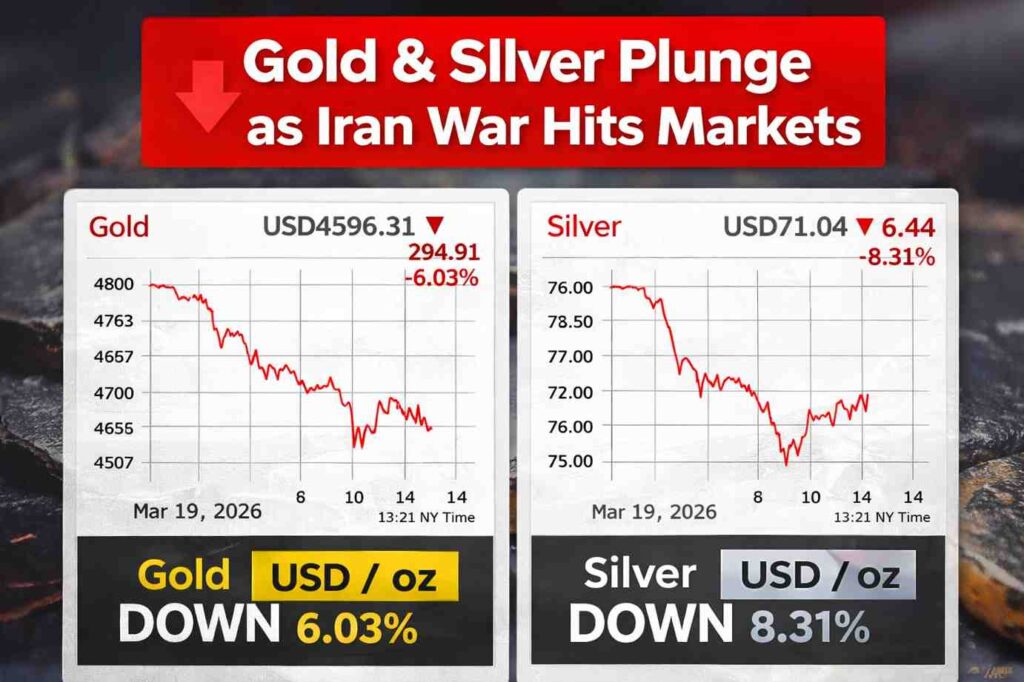

Gold and silver prices plunged sharply as markets reacted to the escalating Iran war, but instead of acting as safe-haven assets, both metals came under intense pressure. The surprising selloff has been driven by rising oil prices, inflation fears, and fading expectations of interest-rate cuts, creating a powerful combination that is weighing heavily on bullion.
Gold has now fallen for seven consecutive sessions, marking its longest losing streak since 2023. Prices dropped as much as 6.6% during the latest slide, while silver saw an even steeper decline, plunging over 13% in a short span. The sharp correction has caught many investors off guard, especially given the ongoing geopolitical tensions in the Middle East.
Iran war triggers oil surge and shifts market focus
The core reason behind the decline lies in the surge in energy prices. The Iran war has disrupted key energy infrastructure and raised fears of supply shortages, pushing crude oil prices significantly higher. As oil climbs, it fuels global inflation concerns, which in turn reshapes expectations for central bank policy.
Instead of boosting gold demand as a safe haven, the war has strengthened the inflation narrative. Higher inflation reduces the likelihood of near-term interest-rate cuts by the US Federal Reserve and other central banks, and that has become a major negative factor for gold and silver.
According to the latest Federal Reserve policy update, rates were held steady, with policymakers signaling only limited scope for cuts this year. Chairman Jerome Powell also emphasized that any rate reduction would depend on clear evidence of easing inflation.
Why higher interest rates are hurting gold
Gold is a non-yielding asset, meaning it does not offer interest or dividends. When interest rates remain high, investors tend to shift towards assets like bonds that provide returns. This reduces demand for gold and puts downward pressure on prices.
The current market environment is being described by analysts as both an “interest rate story” and an “oil story.” Rising yields and persistent inflation expectations are outweighing the traditional safe-haven appeal of gold. As a result, even during a major geopolitical conflict, bullion is struggling to find support.
Silver hit harder due to industrial exposure
Silver has fallen more sharply than gold because of its dual role as both a precious and industrial metal. While gold primarily reacts to monetary policy and investor sentiment, silver is also heavily influenced by industrial demand.
With concerns growing about slower economic growth alongside high inflation, silver faces a double blow. Investors are not only pulling back from safe-haven assets but are also worried about weakening industrial demand, making silver more volatile and prone to sharper declines.
Investor liquidation and ETF outflows add pressure
Another key factor behind the selloff is investor behavior during periods of market stress. As global stocks and bonds declined amid rising energy prices and geopolitical risks, many investors were forced to sell their gold holdings to raise cash.
This wave of liquidation has been particularly visible in gold-backed exchange-traded funds (ETFs), which have seen consistent outflows in recent weeks. ETF demand is highly sensitive to interest-rate expectations, and the shift toward a “higher-for-longer” rate outlook has triggered sustained selling pressure.
The selling has not been limited to bullion alone. Shares of gold mining companies have also dropped significantly, with major mining ETFs erasing their gains for the year. This reflects broader weakness in the sector and declining investor confidence in the near-term outlook.
Comparison with 2022 energy shock
The current trend mirrors what happened in 2022 after Russia’s invasion of Ukraine. At that time, a sharp rise in energy prices triggered inflation fears, leading to tighter monetary policy and a decline in gold prices.
Similarly, the Iran war is now creating an energy-driven inflation shock that is rippling through global markets. While geopolitical tensions usually support gold, the macroeconomic response to those tensions is proving to be a stronger force this time.
Physical demand remains strong despite price fall
Interestingly, the decline in prices has triggered a rise in retail demand for physical gold and silver. Buyers are taking advantage of lower prices to accumulate coins and bars, especially in markets like India and parts of Asia.
This suggests that while institutional investors are selling due to macroeconomic concerns, long-term retail demand for precious metals remains intact. Physical buying could provide some support to prices if the decline continues.
Current price trends in India
In India, gold prices have also seen a noticeable drop following the global trend. MCX gold fell by more than ₹3,600 in a single session, reflecting the sharp correction in international markets.
Current price ranges include:
- 24K Gold: ₹1,49,000 – ₹1,50,000 per 10 grams
- 22K Gold: ₹1,36,500 – ₹1,37,500 per 10 grams
- 18K Gold: ₹1,11,500 – ₹1,12,500 per 10 grams
The fall has provided some relief to buyers but has also increased uncertainty among investors regarding the future direction of prices.
Market outlook: volatility likely to continue
The outlook for gold and silver remains uncertain in the near term. Much will depend on how oil prices behave, whether inflation continues to rise, and how central banks respond to these developments.
If inflation stays elevated and interest rates remain high, precious metals could continue to face pressure. However, any escalation in geopolitical tensions or signs of financial instability could revive safe-haven demand.
Recent global coverage highlights how energy shocks and geopolitical risks are reshaping investor sentiment across markets, including commodities and equities. A broader perspective on this trend can be seen in ongoing reporting on oil price movements and global market reactions.
What should investors do now?
Investors should avoid making decisions based on short-term panic. The current decline is driven largely by macroeconomic factors rather than a fundamental collapse in the long-term value of gold and silver.
A balanced approach is recommended. Instead of investing large amounts at once, gradual accumulation can help manage risk during periods of volatility. Diversification across asset classes is also important, especially in an uncertain economic environment.
Monitoring key indicators such as inflation data, interest-rate signals, oil prices, and currency movements will be crucial in determining the next direction for precious metals.
While the current selloff may appear alarming, it reflects a complex interplay of global factors. Gold and silver are not losing relevance, but they are being reshaped by a market that is increasingly driven by inflation dynamics and central bank policy expectations.

Make Swikblog your go-to source on Google for reliable updates, smart insights, and daily trends.