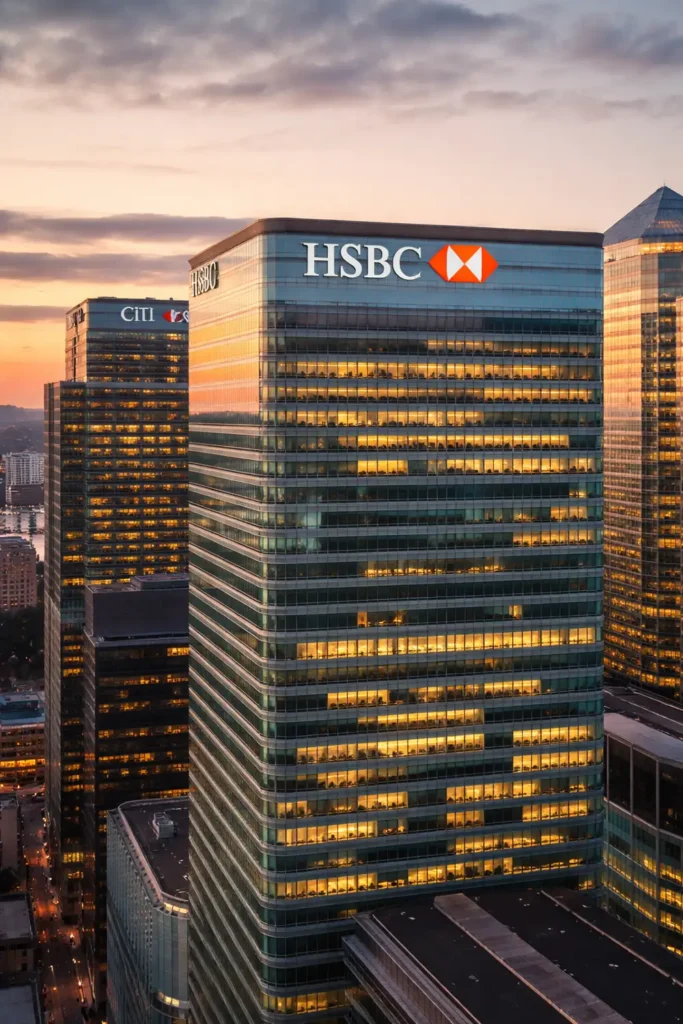

HSBC shares slid more than 5% in early trading after the bank disclosed a $400 million exposure tied to a fraud-linked collapse in the UK’s shadow lending space, rattling investor confidence and putting the spotlight on risks building inside private credit markets.
The decline came despite otherwise solid headline numbers. HSBC reported first-quarter profit of $9.4 billion, down 4% year-on-year, while revenue rose 6% to $18.6 billion. However, the market reaction showed that investors were far more focused on rising credit risks than on top-line growth.
At the center of the concern is a complex chain of lending linked to a now-collapsed mortgage lender widely reported to be Mortgage Financial Solutions (MFS). While HSBC has not formally confirmed the name, the bank acknowledged that the loss came from a “fraud-related” exposure embedded within structured financing arrangements rather than direct lending.
This distinction matters. It suggests HSBC was not the original lender to the failed entity but became exposed through layered transactions — a common feature of private credit markets where loans are bundled, repackaged and financed through multiple counterparties.
Hidden Risks in a Growing Market
Private credit has expanded rapidly over the past decade, filling gaps left by traditional banks after stricter post-crisis regulations. Asset managers, private equity firms and specialist lenders have stepped in to provide financing, often at higher yields. But with that growth has come complexity.
HSBC’s latest charge highlights how those risks can surface unexpectedly. When one link in the chain breaks — especially in cases involving alleged fraud — the impact can spread across institutions that may only have indirect exposure.
In this case, the bank’s involvement appears to have been through financing extended to an intermediary entity connected to private credit loans. When those underlying assets deteriorated, HSBC was forced to recognize losses despite not being directly tied to the original borrower.
The situation has also affected other lenders. Barclays recently disclosed a separate hit tied to the same collapse, reinforcing concerns that the issue is not isolated to a single institution but reflects broader vulnerabilities in the system.
Read More
Pressure Builds from Multiple Fronts
The fraud-linked exposure is only part of the story. HSBC also set aside $300 million to account for potential losses tied to geopolitical tensions, particularly the economic impact of conflict in the Middle East. Combined with the fraud charge, total expected credit losses rose to $1.3 billion for the quarter.
This sharp increase in provisions weighed heavily on earnings and overshadowed otherwise steady operating performance. It also underscores how quickly external shocks — whether financial or geopolitical — can influence bank profitability.
HSBC’s finance chief has described the fraud-related exposure as an isolated case and emphasized that the bank’s overall exposure to private credit remains limited, estimated at around $6 billion compared with a balance sheet approaching $1 trillion. The bank has also indicated it is reviewing its risk assessment processes to strengthen oversight of similar transactions.
Still, the market response suggests investors are cautious. A single loss may be manageable, but uncertainty around the scale and visibility of risks in private credit markets is prompting closer scrutiny of how banks interact with these structures.
The issue has also drawn regulatory attention. UK authorities have begun examining the collapse of the lender at the center of the case, raising the possibility of tighter oversight for parts of the financial system that have historically operated with less transparency.
According to The Guardian, the incident has intensified debate over how exposures in securitised and secondary lending markets are monitored, particularly when fraud risks are involved.
The official HSBC investor updates show that the bank continues to maintain strong capital levels and diversified income streams. However, the latest developments highlight a shift in what investors are prioritizing: clarity over risk exposure is becoming just as important as growth.
HSBC remains one of the world’s largest and most resilient financial institutions, but the reaction to this disclosure shows how sensitive markets are to uncertainty. As more details emerge and regulators continue their investigations, investors will be watching closely for signs of whether this is truly an isolated event — or part of a deeper issue within private credit markets.

Make Swikblog your go-to source on Google for reliable updates, smart insights, and daily trends.