
What Is Ina Garten’s Mezze Platter — and Why It Feels So Perfect for Christmas Hosting
Across the US this Christmas season, one holiday food idea keeps resurfacing — not a roast turkey or an elaborate centerpiece, but a relaxed mezze platter popularized by Ina Garten. Instead of hours in the kitchen, hosts are choosing a table filled with small dishes meant to be shared, inviting guests to eat, talk, and settle in at their own pace. The question many are asking isn’t how to make it, but why this simple spread feels so right for the holidays.
The answer is partly practical and partly emotional. A mezze platter looks festive without demanding perfection. It gives people something to gather around right away. And it quietly shifts the mood from “hosting a meal” to “hosting a moment.”
So, what exactly is a mezze platter?
Mezze is a style of eating built around small dishes and bites that are designed to be shared. Think of it as the friendliest kind of food: nothing precious, nothing complicated, and nothing that requires everyone to sit down at the same time. It can be an appetizer, a light meal, or a full evening of grazing — depending on how you build it.
At its core, a mezze board usually balances a few essentials: creamy dips, salty or tangy elements, crisp vegetables, something briny, and plenty of bread or crackers for scooping. It’s less about strict rules and more about a feeling of abundance.
Ina Garten’s version is about “good store-bought” — made to look like you tried
If you’ve followed Ina Garten for any length of time, you know one of her most beloved ideas is also one of her simplest: start with excellent ingredients, then do a few small things to make them feel special. Her mezze platter is a perfect example.
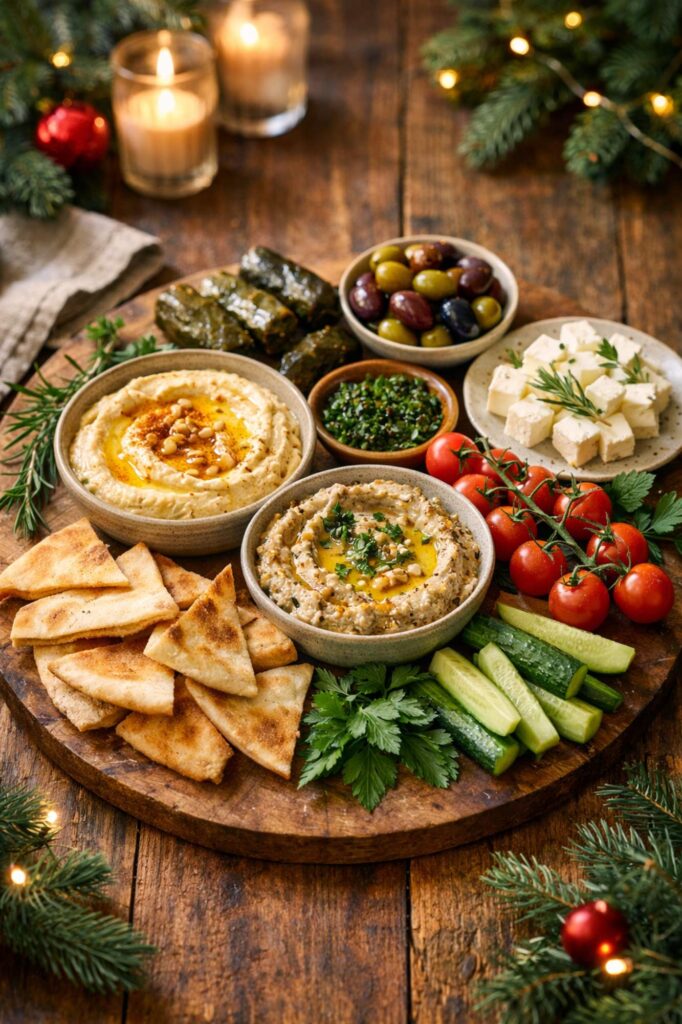
In her own write-up about testing a Mediterranean mezze platter, she describes starting with high-quality store-bought hummus, baba ganoush, and feta, then dressing them up so they don’t look store-bought — and filling out the board with olives, toasted pita triangles, cucumber spears, stuffed grape leaves, and cherry tomatoes on the vine. You can read her original version on the Barefoot Contessa site here: Testing out a Mediterranean Mezze Platter.
That’s the magic: it’s not “cook all day” hosting. It’s “assemble beautifully” hosting — the kind that makes guests feel cared for without making the host feel trapped in the kitchen.
Why it works so well for Christmas gatherings
Traditional holiday hosting has a rhythm: the oven’s full, timing is tight, and the host disappears at the exact moment everyone arrives. A mezze platter flips that. It’s ready before the first guest knocks, and it stays welcoming even if people arrive in waves.
It’s also forgiving. Someone’s late? No problem. Kids are hungry early? They can snack. A friend doesn’t eat meat? They won’t feel like the “difficult” guest. Instead of one central dish with high stakes, the table becomes a choose-your-own comfort zone.
And visually, it delivers. A mezze platter looks generous: bowls, boards, herbs, bright vegetables, glossy olives, toasted pita — it’s naturally photogenic in a way that doesn’t require fancy styling. It looks like celebration even when it’s incredibly easy.
The secret is in the “little upgrades”
Part of why Ina’s approach lands is that she doesn’t ask you to reinvent the wheel. She asks you to make small upgrades that shift the whole impression:
- Decant dips into bowls (even if you bought them) and add a drizzle of good olive oil.
- Finish with texture — toasted nuts, herbs, seeds, or a sprinkle of spice.
- Add freshness — tomatoes on the vine, crisp cucumbers, or something citrusy to brighten the board.
- Warm one element — toasted pita triangles or warmed flatbread makes the whole platter feel more “hosted.”
These touches don’t just improve flavor — they change how people experience the food. Guests feel like it was made for them, even if it was assembled in 20 minutes.
A platter that invites conversation
There’s something quietly social about a mezze platter. People lean in. They ask, “What’s this?” and “Have you tried that?” They trade recommendations across the table. They build their own perfect bite and then build another one.
That matters at Christmas, when the best gatherings aren’t always the most elaborate — they’re the ones where everyone feels comfortable enough to stay longer. A mezze table naturally slows the pace. It gives hands something to do and creates small moments of connection without anyone needing to “perform” hosting.
If you’re not a confident cook, this is the holiday move
Not everyone wants to roast a bird, bake bread, or time five side dishes. A mezze platter is a way to host without pretending you’re someone you’re not. It’s a genuinely hospitable solution for people who don’t enjoy complicated cooking — and it still feels celebratory.
It also scales easily. For a smaller gathering, you might keep it simple: two dips, one cheese, one olive, a vegetable, and pita. For a larger crowd, you can add variety: stuffed grape leaves, roasted peppers, marinated artichokes, nuts, fruit, and a second bread option. The structure stays the same, even as the platter grows.
For a practical breakdown of what Ina includes — and why it works — this helpful explainer from EatingWell covers the idea and the components in a straightforward way: Ina Garten’s No-Cook Appetizer Board.
Why it feels “modern” without being trendy
Christmas food can come with a lot of pressure: tradition, expectations, and the sense that the table has to look a certain way. A mezze platter keeps the warmth of holiday hosting while letting go of the stress. It’s still festive. It’s still abundant. But it’s flexible — and flexibility is what many people actually need during the holidays.
In the end, Ina Garten’s mezze platter isn’t just a board of snacks. It’s a hosting philosophy: keep it simple, make it beautiful, and spend your time where it matters — with the people you invited.
You may also like:
Kate Winslet’s Candid Desert Island Discs Moment: “A Good Meal and a Good Poo”
Written by Swikblog Desk

Make Swikblog your go-to source on Google for reliable updates, smart insights, and daily trends.