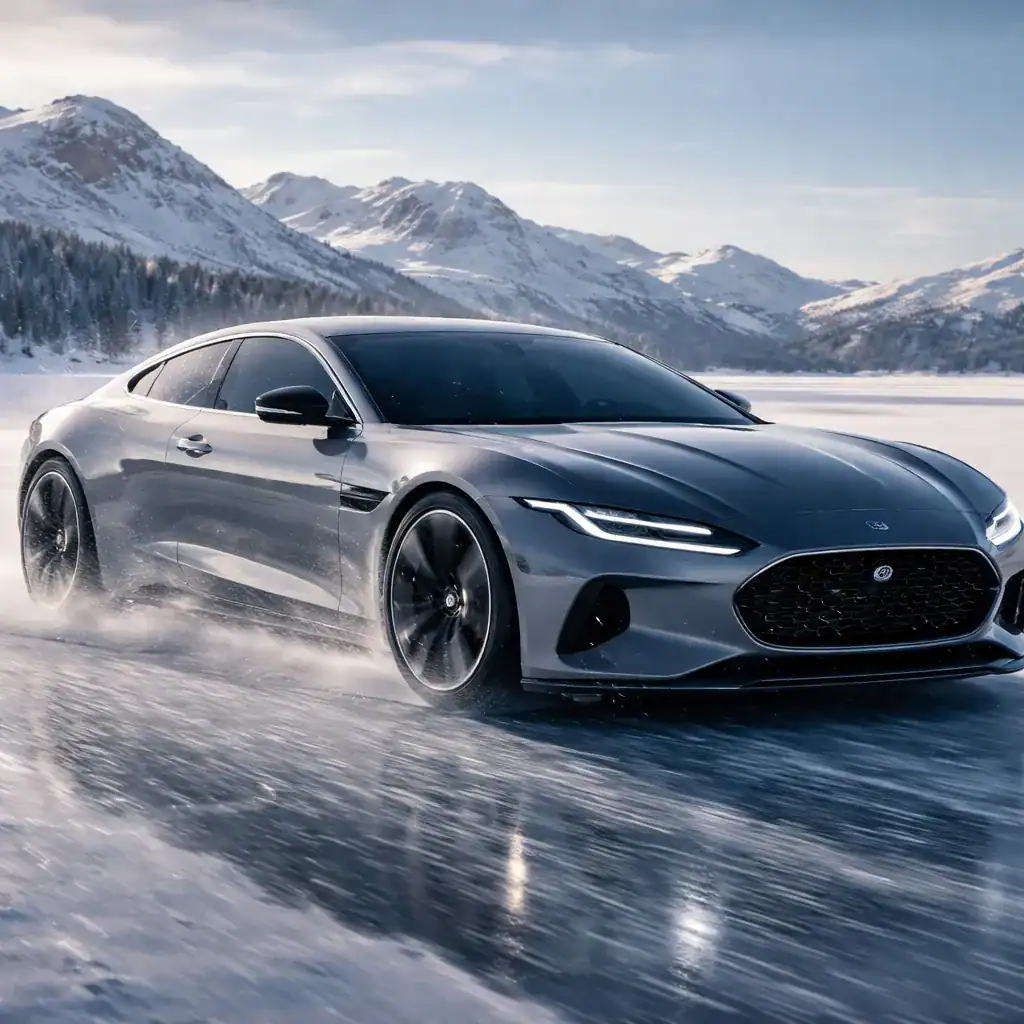

Jaguar is back in the headlines, but this time the buzz is not about branding missteps or internet backlash. The British luxury carmaker is regaining attention for a very different reason — a new all-electric four-door GT that is shaping up to be its most ambitious car in decades. With more than 1000PS on tap, Arctic testing underway, and a clear shift toward high-performance EV engineering, Jaguar’s comeback story in 2026 is starting to look real.
What is driving this renewed interest is not just raw power figures, but the scale of development behind the car. Jaguar has deployed around 150 prototypes across extreme environments, from frozen lakes in Sweden to desert heat and advanced virtual simulations. This is the brand’s most extensive validation program to date, a sign that the company is treating this model as a turning point rather than just another product launch.
Extreme testing, big numbers and serious engineering focus
The new electric GT is currently undergoing cold-weather validation in Arjeplog, Sweden, where temperatures drop as low as minus 40°C. These conditions allow engineers to fine-tune everything from traction control to battery efficiency and cabin comfort. On frozen lakes, the car’s tri-motor all-wheel-drive system is being pushed to its limits, with intelligent torque vectoring constantly adjusting power delivery across all four wheels.
Jaguar has confirmed that the GT will produce more than 1000PS (around 735kW) and over 1300Nm of torque. Power is managed by software capable of reacting in milliseconds, ensuring stability and precision even when grip levels change rapidly. This is not just about speed — it is about control, consistency, and delivering a driving experience that feels natural rather than overly digital.
One of the standout technologies being tested is Jaguar’s ThermAssist thermal management system. In cold climates, EVs often lose efficiency as energy is diverted to heating the cabin and battery. Jaguar claims its system can reduce heating energy consumption by up to 40 per cent by recovering and redistributing waste heat. That could make a meaningful difference to real-world range, especially in colder markets where EV performance often comes under scrutiny.
The chassis setup is equally significant. Engineers are finalising a package that includes all-wheel steering, dynamic air suspension, active twin-valve dampers, and bespoke 23-inch winter tyres. All of these systems are being tuned together with the propulsion software to balance ride comfort with sharp handling — a combination Jaguar has historically been known for.
Early indications suggest the car will also feature a large 120kWh battery, targeting up to 700km of range and supported by an 800-volt architecture for rapid charging. In practical terms, that could mean a 10 to 80 per cent charge in under 20 minutes, putting Jaguar firmly in line with the fastest-charging luxury EVs on the market.
A return to Jaguar’s roots with a modern EV twist
Beyond the technical details, what makes this GT especially important is how Jaguar is shaping its identity through the car. Internally, the development program has been influenced by what engineers call the “Spirit of Jaguar Drive”. Teams revisited iconic models such as the XK120, E-Type and XJ to understand what made them special — not just in terms of performance, but in how they felt to drive.
The result is a car designed to deliver what Jaguar describes as “two personalities in one”. On one hand, it offers deep reserves of performance and instant power. On the other, it is engineered to provide refinement, comfort and composure for long-distance driving. This dual character is a deliberate move to stand apart from many modern EVs, which often prioritise outright acceleration over overall driving balance.
Design plays a role in this identity shift as well. Unlike many electric vehicles that adopt upright, SUV-like proportions, Jaguar is sticking to a long bonnet, low roofline silhouette. It is a nod to classic grand tourers, aimed at buyers who still value elegance and presence alongside cutting-edge technology.
This approach also helps explain why sentiment around Jaguar is starting to change. Not long ago, the brand faced widespread criticism for its controversial rebranding campaign, which many felt missed the mark. The conversation was dominated by questions about identity rather than product. Now, the focus is moving back to engineering, performance and design — areas where Jaguar historically built its reputation.
Early prototype drives suggest the shift may be working. Reports indicate the GT delivers smooth, refined acceleration, strong ride comfort and a sense of balance that feels closer to traditional luxury cars than to aggressive, tech-heavy EVs. That positioning could prove important as the luxury electric segment becomes increasingly crowded.
For investors and industry watchers, the bigger picture is clear. Jaguar is attempting a high-risk, high-reward transition into a fully electric luxury brand. Success will depend not just on this GT, but on how it sets the tone for future models. If the car delivers on its promises, it could redefine how Jaguar is perceived — not as a struggling legacy name, but as a serious contender in the next generation of premium EVs.
The official unveiling is expected later this year, with the model forming the foundation of Jaguar’s future lineup. For now, the buzz is building for a reason. The combination of extreme testing, ambitious performance targets, and a clear attempt to reconnect with its heritage is giving Jaguar something it has not had in a while — genuine momentum.
For more details on Jaguar’s electric future, visit Jaguar’s official website.
Readers interested in the latest WNBA Draft news can also check out Kiki Rice drafted No. 6 by Toronto Tempo in the 2026 WNBA Draft.

Make Swikblog your go-to source on Google for reliable updates, smart insights, and daily trends.