
Motorists travelling through Somerset faced a difficult start to the day after a crash involving a car and a fuel tanker forced the closure of a key stretch of the M5, triggering long delays and widespread disruption during the morning rush.
The incident occurred shortly after 4:30am on Tuesday between Junction 22 near Burnham-on-Sea and Junction 23 near Bridgwater. While emergency services confirmed there were no serious injuries, the situation escalated due to a diesel leak from the tanker, turning what could have been a routine motorway collision into a prolonged recovery operation.
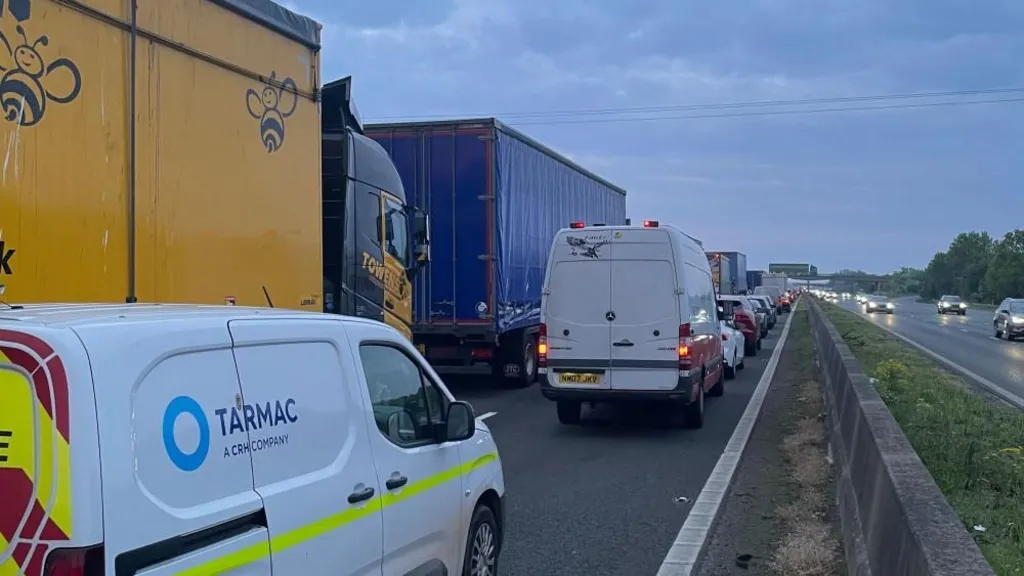
According to early traffic updates and reports followed , congestion quickly built up as the southbound carriageway was shut, leaving drivers facing delays of up to 90 minutes at peak times.
Diesel spill creates safety risk and delays reopening
The key factor behind the extended closure was not the crash itself, but the diesel spillage that followed. Fuel leaks on motorways pose a serious hazard because they reduce traction, increasing the risk of skidding and secondary accidents, particularly at higher speeds.
Because of this, emergency crews cannot simply reopen the road after clearing damaged vehicles. Instead, specialist teams must assess the contamination, manage the tanker safely, and carry out a thorough clean-up of the affected lanes.
Fire crews from Taunton, Bridgwater and Burnham-on-Sea were among those sent to the scene, supported by a hazardous materials officer who remained on-site as operations continued. Police confirmed that no one was trapped in the vehicles, allowing initial rescue efforts to conclude quickly, but the clean-up phase proved more time-consuming.
Guidance from National Highways highlights how even small amounts of diesel can compromise road safety, which explains why closures like this can last for several hours despite relatively minor collisions.
Traffic diverted as congestion spreads across local roads
With the motorway shut southbound, drivers were diverted off the M5 at Junction 22 and redirected along the A38 before reconnecting via the A39 and rejoining the motorway at Junction 23. The diversion route, while clearly marked, quickly became congested as traffic volumes increased.
Local roads around Burnham-on-Sea and Bridgwater experienced heavier-than-usual traffic, with commuters facing longer journey times as they navigated unfamiliar or overloaded routes. For many drivers, the delays were compounded by the timing of the crash, which occurred just before the morning peak.
Read More
Traffic monitoring updates showed queues stretching for several miles, with earlier delays of around 30 minutes rising steadily to 45 minutes and eventually reaching up to 90 minutes as conditions worsened.
Some vehicles that had been caught within the closure were gradually released past the scene using one open lane under controlled conditions. Once this backlog cleared, however, the road remained closed to allow recovery crews to continue their work safely.
Northbound traffic continued to move, although slower speeds were reported as drivers passed the incident and congestion built up nearby.
The disruption highlights how incidents involving heavy goods vehicles, particularly fuel tankers, can have a wider impact on the road network. Even without serious injuries, the presence of hazardous materials requires a more cautious and time-intensive response.
For regular users of the M5, the closure served as a reminder of how dependent regional travel is on a limited number of major routes. When one section is blocked, the effects are quickly felt across surrounding roads and communities.
Authorities worked through the morning to clear the scene, recover the vehicles and ensure the carriageway was safe for reopening. Drivers were advised to allow extra time for their journeys, follow official diversion routes and check live traffic updates before setting out.
Although conditions were expected to improve later in the morning, residual delays often continue even after a motorway reopens, as traffic flow takes time to return to normal levels.
In this case, the absence of serious injuries was a positive outcome, but the diesel spill turned the incident into a significant disruption for Somerset’s road network, affecting thousands of drivers during one of the busiest travel periods of the day.

Make Swikblog your go-to source on Google for reliable updates, smart insights, and daily trends.