
Five Italian divers have died in the Maldives after an underwater cave expedition in Vaavu Atoll ended in one of the country’s most serious diving tragedies in recent years.
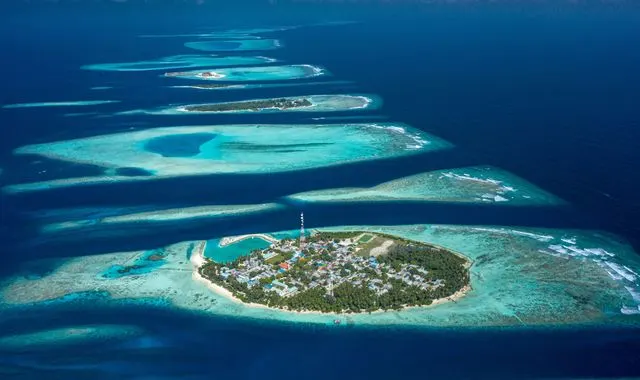
The group was diving on Thursday at a depth of around 50 metres, or about 165 feet, when they failed to return to the surface. The incident happened in the Vaavu Atoll area, a well-known diving region south of Malé that attracts experienced scuba divers for its channels, reefs and cave-like underwater formations.
Italy’s foreign ministry confirmed that all five victims were Italian nationals. Officials said the divers had been exploring underwater caves when the accident occurred, but the precise cause has not yet been established. A formal investigation is now underway in the Maldives.
The victims have been identified in Italian and international reports as Monica Montefalcone, a marine biology professor at the University of Genoa; her daughter Giorgia Sommacal; Muriel Oddenino; Gianluca Benedetti; and Federico Gualtieri. Several of those involved had links to marine science and the University of Genoa, making the tragedy especially painful for Italy’s academic and research community.
The University of Genoa issued a message of condolence after learning of the deaths, saying the loss had deeply affected the institution. Montefalcone was known for her work in marine ecology and scientific diving, areas closely connected to the environment in which the accident occurred.
According to reports, the divers had travelled aboard a liveaboard diving vessel, the Duke of York, before entering the water near the Alimatha area of Vaavu Atoll. Crew members raised the alarm at about 1:45pm after the group did not resurface as expected.
A major search operation was then launched by the Maldives National Defence Force and the Maldivian Coast Guard. Local emergency teams used boats, speedboats and aircraft as they searched the area. Early reports said one body was recovered from inside an underwater cave system believed to reach depths of around 60 metres, before authorities later confirmed the deaths of all five divers.
The Italian Embassy in Sri Lanka, which also handles consular matters involving the Maldives, is assisting the victims’ families and coordinating with local authorities. Italy’s foreign ministry said consular support was being provided while investigators work to determine what went wrong.
The Maldives is among the world’s most popular destinations for scuba diving, with thousands of visitors arriving each year to explore coral reefs, channels and marine wildlife. Vaavu Atoll is particularly known among divers for its strong currents, shark encounters and dramatic underwater landscapes. Its beauty, however, also means some sites are suitable only for experienced or technically trained divers.
Deep diving at 50 metres is far more demanding than a typical holiday scuba dive. At that depth, the body is exposed to greater pressure, breathing gas is used much faster, and divers may face nitrogen narcosis, decompression obligations and limited time to solve emergencies. If a dive takes place inside an overhead cave environment, the risk increases further because a direct ascent to the surface may not be possible.
Investigators are expected to review several key factors, including the group’s dive plan, equipment, gas mixture, weather conditions, underwater visibility, currents and emergency procedures. Authorities have not confirmed whether weather, equipment failure, oxygen toxicity, disorientation or any other specific factor caused the accident.
Some reports said conditions in parts of the Maldives were unsettled around the time of the dive, with strong winds and weather warnings mentioned in local coverage. However, officials have not publicly linked those conditions to the deaths, and any conclusion about the cause remains premature.
Technical and cave-style dives normally require specialist training, careful gas planning and backup systems. Divers may need redundant breathing equipment, guideline reels, strict turnaround points and decompression stops before reaching the surface. In a cave or confined underwater passage, even a small delay, loss of visibility or navigation error can quickly become life-threatening.
For travellers, the incident is a grim reminder that not every dive marketed in a paradise destination carries the same level of risk. Shallow reef dives and deep cave explorations are very different activities. Visitors booking advanced dives should check operator credentials, ask about emergency plans, confirm their own certification limits and avoid dives that exceed their training or comfort level.
Read More
Professional diving organisation PADI describes Vaavu Atoll as a major Maldives diving destination, known for its marine life and challenging dive environments. That popularity is part of the region’s appeal, but it also places responsibility on operators and divers to treat advanced sites with caution.
The deaths are likely to bring renewed scrutiny to deep-dive tourism in the Maldives, especially liveaboard trips that take guests to remote or more technically challenging sites. While serious diving accidents remain uncommon compared with the scale of global scuba tourism, incidents involving multiple deaths often lead to closer questions about supervision, planning and rescue readiness.
The tragedy also comes as tourist safety in popular coastal destinations faces fresh attention worldwide. Swikblog recently reported on another holiday danger after tourists were swept away by a giant wave in Tenerife, showing how quickly natural environments can turn dangerous even in well-known vacation spots.
In the Maldives case, the final answers will depend on the official investigation. What is already clear is that five people entered the water for what should have been an extraordinary dive and never returned safely. For their families, colleagues and the wider diving community, the loss is profound.
As authorities continue piecing together the final moments of the expedition, the accident stands as a warning about the unforgiving nature of deep underwater environments. The Maldives will remain a dream destination for divers, but this tragedy shows why experience, planning and strict safety limits matter most when the dive moves beyond the open reef and into deep cave systems.

Make Swikblog your go-to source on Google for reliable updates, smart insights, and daily trends.