
A fast-growing measles outbreak in Canada has taken a more alarming turn after public health officials confirmed exposure linked to multiple flights and busy public locations. The latest alert centres around a traveler who passed through Winnipeg Richardson International Airport on March 28 before flying to Toronto and later Orlando, raising concerns about how easily the virus is spreading across regions.
The Northwestern Health Unit issued the warning on April 10, noting that many residents in Northwestern Ontario frequently travel through Winnipeg’s airport. Officials said the infected individual was present at the airport between 10 a.m. and 2 p.m. before boarding WestJet Flight WS968 to Toronto at 11:52 a.m. The exposure risk did not end there. The traveler later stayed at the Toronto Airport Hyatt Place Hotel from approximately 3 p.m. on March 28 until 6 a.m. the following day, before boarding WestJet Flight WS1032 from Toronto Pearson to Orlando International Airport at 7:03 a.m.
Because measles is highly contagious and can remain in the air for up to two hours after an infected person leaves an area, health officials are urging anyone who may have been at these locations during those times to monitor for symptoms until at least April 19–20. The warning highlights how a single case can quickly lead to widespread exposure across cities and even countries.
Cases surge as Manitoba becomes outbreak hotspot
The travel-related alert comes as Manitoba continues to report the highest number of measles cases in Canada in 2026. According to provincial data, there have already been 429 confirmed cases and 63 probable cases this year — surpassing the total reported in all of 2025.
In just one week between March 29 and April 4, the province recorded 36 new confirmed cases and two additional probable cases. Overall, March alone saw 156 confirmed cases and 24 probable cases, while early April has already added 17 confirmed infections. As of late March, Manitoba accounted for roughly 60 per cent of all confirmed measles cases across Canada.
The impact has been significant. So far, 42 people have been hospitalized due to measles, including 23 children under the age of 10. Four patients required intensive care. Health officials noted that the vast majority of those hospitalized were either unvaccinated or had unknown immunization status, reinforcing ongoing concerns about vaccine coverage.
Despite the severity of the outbreak, no deaths have been reported so far.
Multiple exposure sites across Winnipeg
In addition to the airport and flight-related alert, Manitoba health officials have identified several exposure locations in Winnipeg visited by infected individuals in early April. These include:
• Ray of Hope Medical Centre on Henderson Highway on April 4 between 10:30 a.m. and 1:30 p.m.
• St. Boniface Hospital emergency department between 10:30 p.m. on April 4 and 4:30 a.m. on April 5
• Shoppers Drug Mart at 1128 Henderson Highway on April 5 between 3 p.m. and 5:20 p.m.
• Concordia Hospital’s extended hours primary care clinic on April 5 from 12:45 p.m. to 4:30 p.m.
• Concordia Hospital urgent care from April 5 at 10:30 p.m. until April 6 at 3 p.m.
Additional possible exposure sites have also been reported, including the University of Manitoba’s Investors Group Athletic Centre during a basketball tournament and a quick care clinic in Selkirk. Officials warn that more locations could be added as investigations continue.
People who visited these sites during the listed times are being asked to monitor for symptoms for up to 21 days and check their vaccination records.
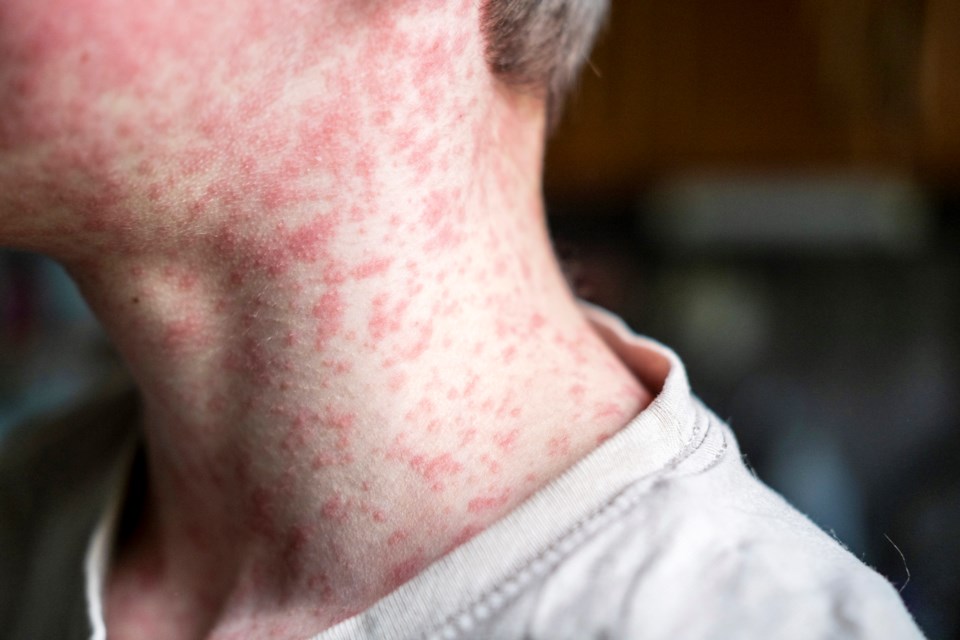
Measles typically begins with symptoms such as fever, cough, runny nose, fatigue, and red, watery eyes. Within a few days, small white spots may appear inside the mouth, followed by a red rash that starts on the face and spreads downward across the body. Individuals are considered infectious from four days before the rash appears to four days after.
Health experts emphasize that there is no specific cure for measles, and treatment focuses on managing symptoms. However, complications can include ear infections, pneumonia, diarrhea, and in rare cases, brain inflammation.
Public health officials say the best protection remains vaccination. Individuals are considered protected if they have received two doses of a measles-containing vaccine such as MMR, have laboratory-confirmed immunity, or have previously had the disease. Those born before 1970 may also have natural immunity, with some exceptions.
Anyone who develops symptoms is advised to isolate immediately and contact a healthcare provider before visiting a medical facility, to prevent further spread.
The latest updates, exposure sites, and vaccination guidance can be found through the Government of Canada’s measles information page.
With cases continuing to rise and exposure alerts now linked to flights, hospitals, and public spaces, health officials warn that controlling the spread will depend on early detection, awareness, and ensuring vaccination coverage remains strong across communities.
You may like: Maple Syrup Exports Jump 16% in Canada in 2026

Make Swikblog your go-to source on Google for reliable updates, smart insights, and daily trends.