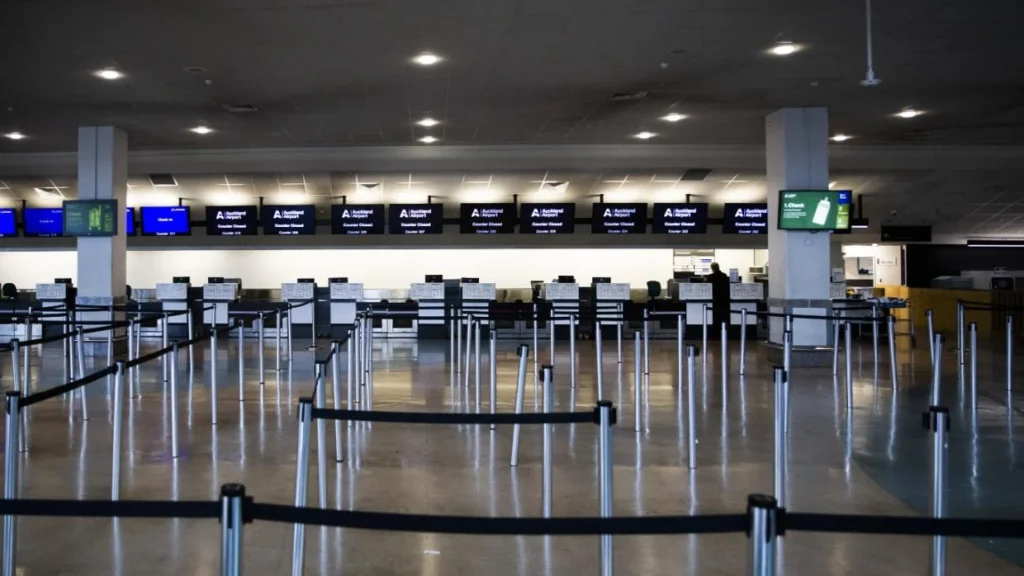

New Zealand’s tourism industry is facing a sharp late-season disruption after a surge in cancellations from visitors in the United Kingdom and Europe, as global travel routes continue to be affected by the ongoing Middle East conflict. A fresh industry survey reveals that the issue is not declining interest in New Zealand itself, but growing instability in airline connectivity — a critical lifeline for long-haul destinations.
A rapid snapshot survey conducted by the Tourism Export Council, covering around 70 tourism operators across accommodation, transport, attractions, and guided experiences, found that 77% reported cancellations from UK and European travelers for March and April 2026. The cancellations are being directly linked to airline disruptions, particularly across key transit hubs in the Middle East.
Flight disruptions, not demand, driving cancellations
Tourism operators say the problem is clear: travelers are still willing to visit New Zealand, but many are unable or unwilling to navigate increasingly uncertain flight routes. Major global aviation hubs such as Dubai, Doha, and Abu Dhabi — essential transit points for European travelers — have seen disruptions, reduced flight availability, and cancellations.
As a result, many travelers are choosing to cancel or delay their trips rather than risk complex rerouting or last-minute travel uncertainty. This highlights a critical vulnerability for New Zealand’s tourism sector, which depends heavily on seamless long-haul connectivity.
Importantly, the survey noted that visitors from regions outside the UK and Europe have not yet been significantly affected, suggesting the issue is geographically concentrated rather than a widespread drop in global demand.
Industry relief: impact limited to final weeks of peak season
Tourism Export Council Chief Executive Lynda Keene acknowledged the situation is “not good news,” but emphasized that timing has helped reduce the overall impact. New Zealand’s peak international tourism season runs from October to March, meaning the current disruption has hit only at the tail end.
“We’ve only lost three weeks, really, of the season,” Keene said, offering some reassurance to operators concerned about revenue losses.
She added that if the same disruption had occurred earlier — particularly in October or November — the consequences would have been far more severe, potentially threatening the financial stability of many tourism businesses during their most critical trading period.
This timing buffer means that while the impact is real, it remains contained for now. However, the situation could quickly escalate if disruptions persist into the next tourism cycle.
Future bookings stable, but uncertainty remains
Despite the current wave of cancellations, bookings for the next tourism season are largely unaffected at this stage. This suggests that traveler intent remains strong, and confidence in New Zealand as a destination has not been fundamentally shaken.
However, industry leaders warn that this stability could change if airline disruptions through the Middle East continue for an extended period. Persistent uncertainty in key transit routes could begin to influence forward planning, especially among European travelers who typically book long-haul trips well in advance.
Maintaining strong communication with international travel partners will be essential. Organizations such as Tourism New Zealand play a key role in ensuring the country remains visible and attractive to travelers who may be reconsidering their plans.
Unexpected opportunity: New Zealand seen as a safe haven
While the current disruption presents clear challenges, there may also be an unexpected upside. Keene noted that New Zealand could benefit from being perceived as a safe and stable destination during a period of global uncertainty.
Travelers from markets such as the United States or Canada may shift their plans, choosing destinations that are far removed from geopolitical tensions. New Zealand’s reputation for safety, natural beauty, and high-quality travel experiences could position it as an attractive alternative.
“There’s always some form of opportunity that crops up when travellers still wish to travel,” Keene said, pointing out that many travelers still have the financial means and desire to explore — they are simply adjusting where they go.
This shift in travel patterns could help offset some of the losses from Europe, particularly if airlines maintain stable routes from other regions.
Regional impact deepens, West Coast under pressure
Beyond national trends, regional tourism operators are already feeling the strain. On the West Coast, where tourism had been experiencing steady growth, early signs of decline are becoming visible.
Development West Coast Chief Executive Heath Milne said international visitor numbers are already dropping, with more cancellations expected in the coming months. He noted that the issue goes beyond fuel prices, pointing instead to declining traveler confidence driven by global geopolitical tensions.
“It’s about confidence in geopolitics and what’s going on around the world,” Milne explained.
The region is also facing an additional setback. Westport is set to lose its only air service, operated by Originair, from May. The airline has struggled to maintain profitability, and the current travel disruption appears to have accelerated its decision to withdraw.
This combination of international uncertainty and reduced domestic connectivity creates a challenging environment for regional tourism businesses that rely heavily on smooth, end-to-end travel access.
Connectivity remains the biggest risk for tourism
The current situation underscores a broader reality: New Zealand’s tourism sector is highly resilient in terms of demand, but deeply dependent on global aviation networks. When those networks are disrupted, even temporarily, the impact can be immediate.
Industry stakeholders are closely monitoring developments through global aviation bodies such as the International Air Transport Association, as the duration of disruptions in Middle East transit routes will likely determine how long the current pressure lasts.
For now, the industry is navigating a short-term shock rather than a structural downturn. But if disruptions persist, the risk could shift from temporary cancellations to broader hesitation in international travel planning.
Outlook: short-term disruption, long-term resilience
New Zealand’s tourism sector is no stranger to global challenges, and early signs suggest it remains fundamentally strong. The current wave of cancellations is driven by logistics rather than lack of demand — a crucial distinction that supports a faster recovery once flight routes stabilize.
In the short term, operators will need to remain agile, strengthen communication with global partners, and adapt to shifting traveler behavior. In the longer term, the industry’s ability to maintain strong connectivity and diversify source markets will be key to sustaining growth.
For now, the message is clear: travelers still want to visit New Zealand. The challenge is ensuring they can get there.
Markets remain highly reactive to fast-moving headlines, similar to how breaking developments can rapidly dominate attention, as highlighted in this RCMP emergency alert update on missing Colchester County man Jason Lorette.

Make Swikblog your go-to source on Google for reliable updates, smart insights, and daily trends.