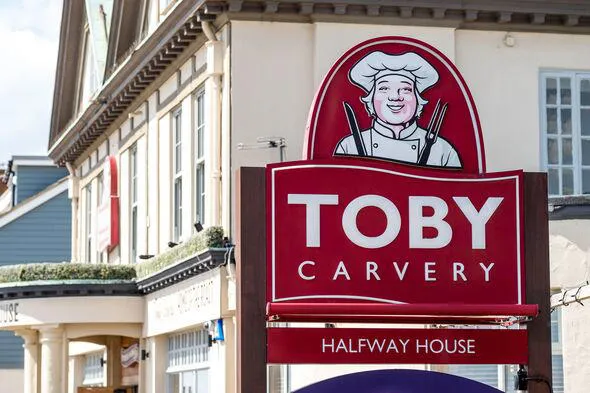

Toby Carvery has shut its Romford restaurant for good, bringing an end to the roast dinner chain’s run at The Brewery Shopping Centre and raising fresh questions about how much pressure Britain’s casual dining market can absorb in 2026.
The branch served customers for the final time on May 10 before being returned to the landlord. While Toby Carvery remains a major national name with more than 150 restaurants across the UK, the Romford closure shows how even familiar, high-footfall dining brands are becoming more selective about where they operate.
The company said the decision came after “careful consideration” and forms part of an ongoing review of its estate. Staff at the Romford restaurant are being consulted, with the business hoping to move as many employees as possible into nearby sites rather than lose experienced team members.
Customers who regularly used the Romford branch have been pointed toward Toby Carvery restaurants in Chadwell Heath and Brentwood. The company has also left the door open for a possible return to Romford in the future, saying it hopes to bring back its salad bar and fresh rotisserie once the right site is found.
The move is another blow for The Brewery Shopping Centre. Frankie & Benny’s also recently left the same complex after its lease came to an end, adding to signs that large restaurant units in shopping and leisure centres are facing a tougher commercial reality.
According to Daily Express reporting on the Toby Carvery closure, the company confirmed that the Romford site would close after service and be handed back to the landlord.
Why this closure matters beyond Romford
On the surface, this is one restaurant closing in one Essex town. But the wider picture is more important. Toby Carvery’s exit from Romford reflects the difficult choices now facing UK hospitality operators as they balance customer demand against rent, wages, energy bills, food costs and changing shopping habits.
Restaurant chains once expanded heavily into shopping centres, retail parks and leisure complexes because those locations delivered steady footfall. Families could shop, watch a film, eat out and head home without travelling elsewhere. That model still works in some places, but it has become less reliable as consumer behaviour changes.
More people now split their spending between delivery apps, quick-service restaurants, supermarkets and independent food venues. At the same time, many households are more careful with non-essential spending after several years of higher living costs. For operators, that means a restaurant can still look busy at peak times while struggling to justify its long-term cost base.
Lease terms are also a major factor. When a lease ends, restaurant groups often reassess whether the site still fits their strategy. If the rent, service charges or expected investment no longer match future returns, closing the branch can become the most realistic option.
Read More
- Visit Swikblog Homepage
- CSL Hit by $7 Billion Blow After Cutting Earnings Forecasts
- Spring & Mulberry Chocolate Bars Recall Over Salmonella Risk
- Victoria Offers Free Meningococcal B Vaccines for Year 10 Students
- Stephen Perofeta Set for Japan Move
- Food Allergy Awareness Week 2026 Highlights Rising Cases
That appears to be the backdrop to several recent closures across the casual dining sector. Frankie & Benny’s has already reduced its estate heavily in recent years, shutting around 120 restaurants between 2020 and 2021 before further closures were announced in 2023. Its departure from The Brewery Shopping Centre makes Toby Carvery’s exit feel less like an isolated decision and more like part of a wider reset.
For Romford customers, the loss is practical as well as emotional. Toby Carvery restaurants often serve a broad mix of diners, including families, older customers and people looking for a familiar meal at a predictable price. Its roast dinner format has remained popular because it offers something many customers associate with comfort, routine and value.
The closure also affects the local centre around it. Large restaurant units help keep shopping destinations active beyond retail hours. When established dining names leave, landlords must find replacement operators at a time when many hospitality businesses are cautious about expansion.
This pressure is not limited to national chains. Across the UK, pubs, restaurants and independent venues have been hit by higher rents and operating costs. Swikblog recently covered a similar squeeze in the pub sector, where a long-running venue closed after a sharp rent increase. Read more here: Historic Lake District Pub Closes After Rent Doubles as UK Pub Crisis Deepens.
Toby Carvery’s Romford closure does not suggest the brand itself is in retreat. The chain still has a large national footprint and continues to trade across the country. But it does show that restaurant groups are now looking more carefully at individual sites rather than keeping branches open simply because they are well known or long established.
The company’s suggestion that it could return to Romford if a better location becomes available is also important. It points to a strategy many operators are now following: fewer weak sites, stronger locations and more discipline around property costs.
For shoppers and diners, the change may feel gradual until a familiar name disappears. Then the shift becomes obvious. The closure of Toby Carvery in Romford is another reminder that Britain’s dining landscape is being reshaped branch by branch, lease by lease and town by town.
As 2026 continues, more restaurant groups are likely to review their estates in the same way. The strongest locations may survive and even benefit from consolidation, but sites tied to expensive leases or weaker footfall will remain vulnerable. For Romford, Toby Carvery’s departure leaves a gap in a busy shopping centre and another sign that the UK hospitality sector is still under heavy strain.

Make Swikblog your go-to source on Google for reliable updates, smart insights, and daily trends.