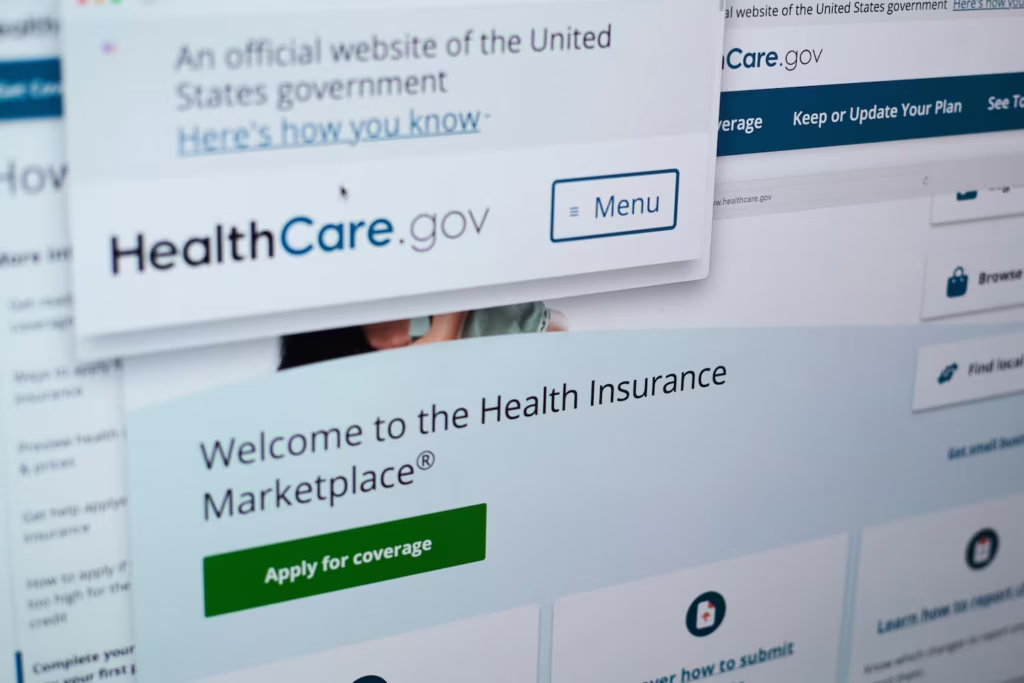

Questions about the integrity of Obamacare enrollment are back in the spotlight after a new analysis claimed that millions of Americans may be receiving Affordable Care Act (ACA) coverage they are not actually eligible for. The findings are likely to fuel a broader debate over healthcare spending, government oversight and the future of the ACA as policymakers head toward another election cycle.
The report, produced by the conservative Paragon Health Institute, estimates that approximately 6.2 million people enrolled in ACA marketplace plans this year may have obtained coverage improperly. If the estimate proves accurate, it would represent roughly one-quarter of all marketplace enrollees and could account for as much as $25 billion in federal subsidy spending.
Rather than focusing on individual cases, Paragon examined nationwide enrollment figures alongside Census Bureau income data. The organization argues that the number of people reporting incomes that qualify for ACA subsidies appears significantly larger than demographic data would suggest. According to the group’s analysis, the mismatch points to widespread enrollment inaccuracies that may have accumulated during years of rapid marketplace growth.
The issue has gained attention because ACA enrollment expanded dramatically over the past several years. Enhanced subsidies introduced during the Biden administration made coverage more affordable and helped push marketplace participation to record highs. However, critics have long argued that federal and state regulators prioritized enrollment growth while paying insufficient attention to eligibility verification.
Paragon founder Brian Blase, who previously served as an economic adviser during Trump’s first administration, believes the problem is concentrated in states that chose not to expand Medicaid. In states such as Florida and Texas, adults with very low incomes can face a coverage gap. The report argues that this creates incentives for some applicants to estimate income levels in ways that make them eligible for subsidized marketplace plans.
The debate extends beyond enrollment numbers. The Trump administration has increasingly emphasized program integrity across federal benefit systems, and ACA marketplaces have become part of that conversation. Several former Paragon officials now hold positions within the administration, and the Centers for Medicare and Medicaid Services (CMS) has cited the organization’s work while implementing tighter enrollment requirements.
CMS Administrator Mehmet Oz has publicly supported stronger anti-fraud efforts, arguing that weaknesses in the system have allowed improper enrollments to persist. The administration’s fraud task force is also reportedly evaluating ACA marketplace practices as part of a wider review of government spending programs.
Concerns about abuse are not entirely theoretical. The Government Accountability Office has repeatedly warned about vulnerabilities within ACA enrollment systems. In a recent review, investigators were able to obtain subsidized health insurance using fabricated identities, highlighting weaknesses in eligibility verification procedures. Federal officials have also acknowledged problems involving rogue insurance brokers who enrolled consumers without consent or switched existing coverage without authorization.
At the same time, healthcare policy experts caution against assuming that every questionable enrollment reflects intentional fraud. Many consumer advocates argue that enrollment data can be difficult to interpret and that broad estimates may overstate the scale of abuse. They warn that stricter verification requirements could unintentionally create barriers for low-income families who legitimately qualify for coverage but struggle with paperwork or documentation requests.
The outcome of this debate could have significant implications for insurers participating in ACA exchanges. Marketplace carriers depend on stable enrollment and predictable subsidy funding. Recent developments have already demonstrated how changing market conditions can influence insurer decisions. For example, Cigna’s decision to leave several ACA exchange markets beginning in 2027 highlighted the growing pressures facing insurers operating within the marketplace system.
For consumers, the controversy raises an important question: how can regulators reduce fraud without making health coverage harder to obtain for eligible Americans? Supporters of stronger oversight believe additional verification checks, income reviews and enrollment safeguards could protect taxpayer dollars. Critics counter that excessive scrutiny may discourage participation and leave qualified individuals uninsured.
Read More
As federal agencies, lawmakers and policy groups continue to examine the issue, the future direction of Obamacare may depend less on enrollment growth and more on proving that marketplace coverage is reaching the people it was designed to serve. Whether the reported figures ultimately withstand scrutiny or not, the debate has already become a central part of the national conversation about healthcare affordability, government spending and public trust in federal programs.

Make Swikblog your go-to source on Google for reliable updates, smart insights, and daily trends.