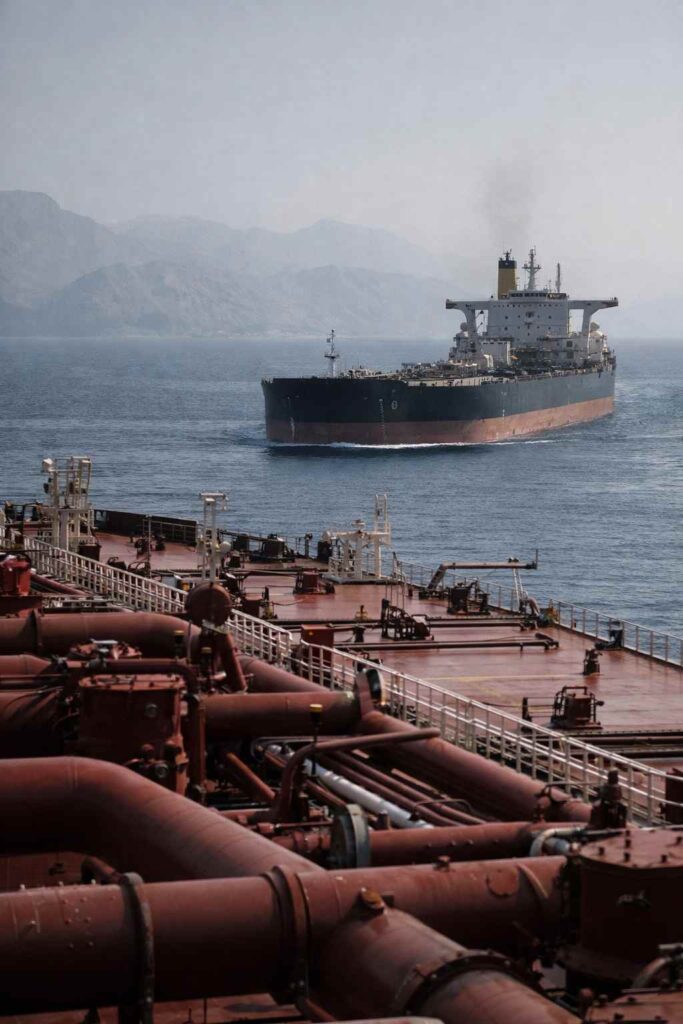

Oil prices are surging sharply as the escalating Middle East conflict disrupts one of the world’s most critical energy routes. Brent crude briefly climbed above $106 a barrel, extending a dramatic rally that has pushed global oil prices up more than 40% since the war between Israel and Iran began in late February.
The latest jump reflects growing fears that the Strait of Hormuz — a narrow waterway responsible for transporting about one-fifth of the world’s oil supply — could remain effectively closed as military tensions intensify. Traders across global energy markets are now pricing in the possibility of a prolonged disruption to oil flows, a scenario that could ripple across economies already struggling with inflation and slowing growth.
Shipping through the Strait of Hormuz nearly grinds to a halt
The Strait of Hormuz is widely regarded as the most important chokepoint in global energy trade. Tankers carrying crude oil from major producers including Saudi Arabia, Iraq, the United Arab Emirates and Kuwait must pass through the narrow channel between Iran and Oman before reaching global markets.
But traffic through the strait has collapsed since the conflict intensified. According to the United Kingdom Maritime Trade Operations (UKMTO), fewer than five commercial ships are currently passing through the waterway each day, compared with a historical average of about 138 daily transits.
At least 16 commercial vessels have reportedly been attacked in the region since the war began on February 28, further heightening fears among shipping companies and insurers. The dramatic slowdown in tanker traffic has already been described by the International Energy Agency as one of the largest disruptions to global energy supplies in history.
The disruption has quickly pushed benchmark oil prices higher. Brent crude rose roughly 3% during weekend trading and remained above $104 in early Monday trading as markets continued to react to the escalating crisis. Real-time Brent benchmark prices can be monitored through global crude futures data.
Trump calls for naval coalition to reopen the vital oil route
US President Donald Trump has urged several major economies to join a multinational effort to reopen the Strait of Hormuz and escort commercial tankers through the waterway. Trump has repeatedly suggested deploying US naval forces to protect shipping lanes but said broader international participation would be necessary.
The White House has reportedly approached countries including China, Japan, the United Kingdom, France and South Korea to contribute naval forces.
So far, however, the response from many allies has been cautious. Japan and Australia both said they currently have no plans to send ships to the region, while European governments remain divided about how far they should become involved militarily.
Trump warned that NATO could face a “very bad future” if allied countries decline to assist the United States in reopening the strait. Despite the pressure, officials in several capitals fear that deploying warships could escalate the crisis further rather than stabilise the region.
Military escalation spreads across the region
The conflict continues to expand beyond the waterway itself. Reports indicate the United States has begun moving more than 2,000 Marines from Okinawa in Japan to the Middle East aboard the amphibious assault ship USS Tripoli. The vessel, which carries F-35 fighter jets, could take one to two weeks to reach the region.
Meanwhile, tensions are rising across multiple fronts in the Middle East. Israel has said it still has thousands of potential targets inside Iran as military operations continue. Tehran has warned neighboring countries not to support US-led military actions.
Additional instability emerged when Dubai temporarily suspended flights at its international airport following a drone-related incident that ignited a fire near a fuel storage facility. Authorities later confirmed the blaze had been extinguished and no injuries were reported.
Governments begin releasing strategic oil reserves
Governments are already preparing emergency measures to cushion the shock to global energy markets. Japan announced it has started releasing part of its strategic petroleum reserves after the International Energy Agency signaled a coordinated global response.
The Japanese government said it would release around 15 days’ worth of privately held petroleum reserves in an effort to stabilize domestic fuel markets.
Japan is particularly vulnerable to disruptions in Middle Eastern oil supply because the region accounts for roughly 95% of the country’s crude imports. Officials in Tokyo say the decision to release reserves reflects the seriousness of the current supply shock.
China faces a difficult geopolitical balancing act
China is another country closely watching the crisis unfold. The world’s largest crude importer sources roughly half of its seaborne oil imports — about 5.4 million barrels per day — from the Middle East, much of which travels through the Strait of Hormuz.
Despite its dependence on the route, analysts say Beijing is unlikely to send naval forces to escort tankers. China has historically avoided direct military involvement in overseas conflicts and instead relies on diplomacy and economic partnerships.
Experts believe Beijing will attempt to ensure its energy supply through negotiations or special arrangements rather than joining a US-led military coalition.
Global economic risks begin to emerge
The surge in oil prices is already raising concerns about broader economic consequences. Higher crude prices typically translate into higher gasoline, diesel and aviation fuel costs, which can push up inflation and reduce consumer spending.
Energy analysts warn that if the Strait of Hormuz remains disrupted for an extended period, oil prices could climb significantly higher. Even partial disruptions to the route can tighten global supply because of the sheer volume of crude transported through the channel.
The strategic importance of the waterway has long been recognized by policymakers and economists. According to the US Energy Information Administration, roughly 20% of global petroleum liquids consumption flows through the strait each day.
For now, energy markets remain on edge as traders monitor developments across the Middle East. Until shipping flows return to normal levels, the Strait of Hormuz crisis is likely to remain one of the biggest drivers of volatility in global oil prices.
You may also like: Alibaba (BABA) Stock Gains as Enterprise AI Agent Qwen Boosts Investor Focus

Make Swikblog your go-to source on Google for reliable updates, smart insights, and daily trends.