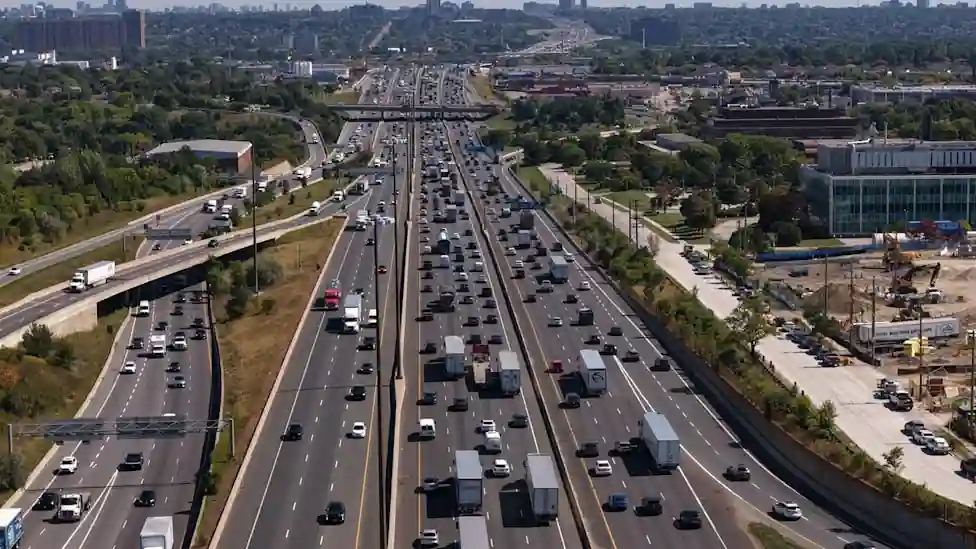

Ontario is expanding its 110 km/h highway network by another 938 kilometres, bringing higher speed limits to additional sections of some of the province’s busiest transportation routes. The move affects stretches of Highway 401, Highway 402, Highway 403, Highway 416, Highway 417 and the Queen Elizabeth Way (QEW), with the first changes taking effect this week and the remainder scheduled to be completed by September 30.
The announcement represents one of the largest speed-limit expansions in Ontario’s history and continues a policy shift that has gradually transformed how speed limits are set on major freeways. Provincial officials say the changes are intended to improve travel efficiency while reflecting the design standards of modern highway infrastructure.
For drivers, the expansion could mean shorter journeys across long-distance corridors. For policymakers, it marks another step toward making 110 km/h the standard speed limit on highways that can safely accommodate higher speeds.
Full list of Ontario highways receiving 110 km/h speed limits
The latest expansion includes selected sections of the following highways:
- Highway 401
- Highway 402
- Highway 403
- Highway 416
- Highway 417
- Queen Elizabeth Way (QEW)
Sections of Highway 401 and Highway 416 in eastern Ontario will be among the first to transition to the higher limit. Additional sections across the affected routes are expected to receive new signage before September 30.
Ontario has emphasized that the higher speed limit does not automatically apply to every section of these highways. Instead, only stretches that meet specific engineering, safety and infrastructure requirements have been approved.
Drivers can review official route details and updates through the Ontario government’s information page on raising speed limits on Ontario highways.
Why Ontario is increasing speed limits
The province says the expansion follows extensive technical reviews of highway conditions and roadway design. According to Ontario, many of the affected highways were originally engineered to safely support speeds higher than the traditional 100 km/h limit.
The latest rollout builds on earlier increases introduced across several highway sections in 2022 and 2024. Before this announcement, Ontario had already raised speed limits on approximately 876 kilometres of provincial highways.
Premier Doug Ford previously directed transportation officials to examine whether more 400-series highways could safely accommodate higher limits. The latest expansion is a direct result of that review process.
Once the rollout is completed, the province expects nearly 89% of Ontario highways to carry a 110 km/h speed limit.
Potential benefits for commuters and businesses
Transportation Minister Prabmeet Sarkaria said the higher limits could reduce travel times by approximately 20 minutes between Sarnia and Toronto and nearly 30 minutes between Toronto and Ottawa.
While shorter urban commutes may see little difference due to congestion, long-distance travellers could experience measurable time savings. The policy may also benefit trucking companies and businesses that rely on efficient transportation links between Ontario’s major economic centres.
Supporters argue that improving travel efficiency can help reduce delays for workers, commercial operators and families travelling across the province.
Read More
What drivers should know about safety
Although higher speed limits may improve travel times, they remain a subject of debate among transportation experts. Higher speeds generally reduce reaction time and increase stopping distances, which can influence collision severity.
Ontario maintains that safety remains the primary consideration behind the expansion. Officials say only highways capable of safely supporting the higher limit are included in the program.
Drivers should also remember that posted speed limits represent the maximum speed under ideal conditions. Weather, visibility, traffic congestion and construction zones may require motorists to travel well below the posted limit.
Traffic enforcement rules remain unchanged, and penalties for dangerous or excessive speeding continue to apply.
Future highways are expected to follow the same approach
The province says future freeway projects, including Highway 413, Highway 425, Highway 7 and Highway 69, will incorporate 110 km/h speed limits where appropriate.
The expansion comes as Ontario continues investing in transportation infrastructure and highway improvements. Recent projects, including the work highlighted during Highway 17 emergency repairs, demonstrate how roadway capacity, safety and reliability remain major priorities for transportation planners.
As the latest speed-limit rollout moves forward, Ontario drivers will need to pay close attention to new signage and route-specific changes. While the province is embracing faster travel on suitable highways, the higher limits will apply only to designated sections approved through the review process.

Make Swikblog your go-to source on Google for reliable updates, smart insights, and daily trends.