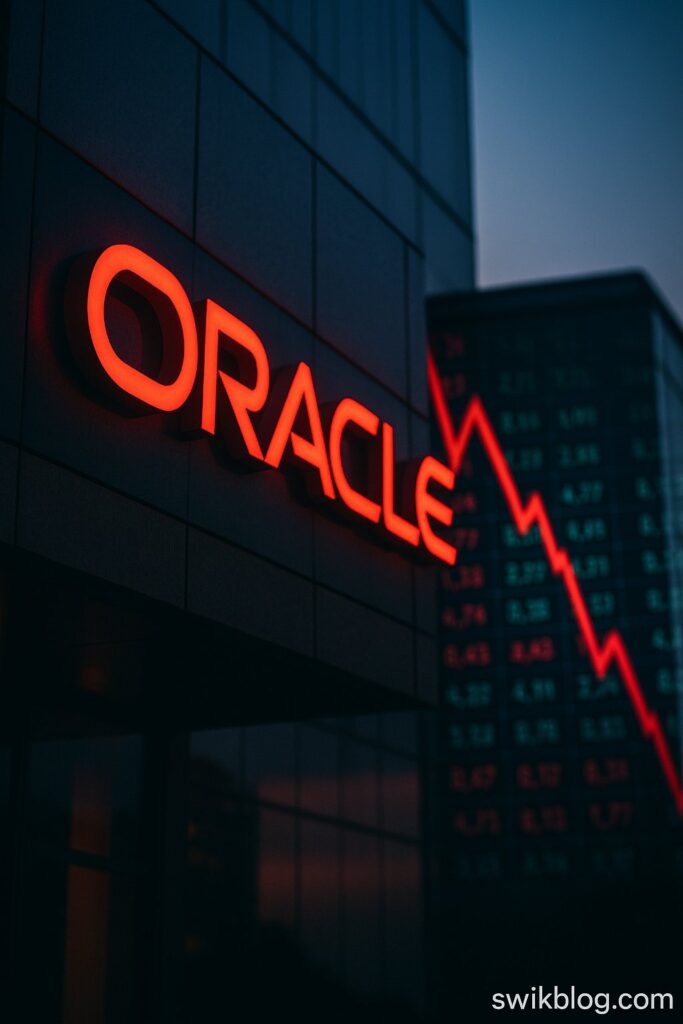

Oracle Corporation (NYSE: ORCL) shares slipped after a report revealed that the Trump administration is set to receive a massive $10 billion “brokerage” fee tied to the restructuring of TikTok’s U.S. operations. Oracle stock fell to $155.11, down 2.54%, as investors reacted to the unusual financial structure behind the deal and the potential implications for the companies involved.
The report indicates that the payment is being made by a consortium of investors that recently took control of TikTok’s U.S. operations. Oracle is one of the key members of this group, alongside private equity firm Silver Lake and Abu Dhabi–based investment firm MGX. The payment has been described by President Donald Trump as a “fee-plus,” representing compensation to the U.S. government for facilitating the complex deal that allows TikTok to continue operating in the United States.
$10 billion government payment structure
According to people familiar with the matter, the Treasury Department has already received an initial payment of about $2.5 billion when the deal officially closed in January. The remaining payments are expected to be made in installments until the total reaches approximately $10 billion.
Importantly, the payment is separate from the capital required to establish the newly created TikTok U.S. entity. Vice President JD Vance recently estimated the value of that entity at around $14 billion. However, some technology analysts argue that valuation significantly undervalues the platform given TikTok’s enormous reach and influence in the global social media ecosystem.
For Oracle investors, the central concern is whether the company’s participation in the investor group could translate into a significant financial obligation as the remaining payments are made.
Oracle’s role in the TikTok deal
Oracle has long been linked to TikTok through its cloud infrastructure services and its role in addressing U.S. data security concerns surrounding the platform. In the new ownership structure, Oracle is expected to play a key technology role in supporting the U.S. operations of the app while helping ensure compliance with American data security requirements.
The investor consortium that took control of TikTok’s U.S. operations includes several administration-aligned investors. While the exact contribution from each participant has not been publicly disclosed, Oracle’s involvement has drawn significant market attention because the company’s brand and technology infrastructure are closely tied to the platform’s operations.
That connection is one reason Oracle shares reacted quickly to the news. Even though the company’s broader business is dominated by cloud services, enterprise software, and database technologies, markets tend to react sharply when a company becomes involved in politically sensitive transactions.
A highly unusual government role in a private deal
The reported payment has sparked debate because it represents a significant departure from how governments typically interact with corporate transactions. Normally, regulatory authorities review deals for antitrust or national security concerns but do not receive large direct payments for facilitating them.
In comparison, advisory fees for major corporate mergers are typically paid to investment banks and financial advisors rather than governments. Even in the largest deals, those fees are usually only a fraction of the percentage reportedly associated with the TikTok arrangement.
For example, advisory fees linked to major mergers—such as Union Pacific’s $71.5 billion acquisition of Norfolk Southern—are far smaller relative to the size of the deal than the government fee reportedly tied to the TikTok transaction.
This unusual structure has raised concerns among investors who worry it could create new precedents for government involvement in large technology transactions.
Security negotiations with China
Administration officials have defended the payment, arguing that it reflects the complexity of negotiations required to resolve security concerns surrounding TikTok’s Chinese parent company, ByteDance.
Under the agreement, TikTok’s proprietary algorithm will remain licensed from ByteDance rather than fully transferred to the new U.S. entity. The licensing arrangement was reportedly one of the key compromises that allowed the deal to move forward while addressing U.S. national security concerns related to data access and content distribution algorithms.
Supporters of the arrangement argue that the administration played a crucial role in navigating those negotiations with China while ensuring compliance with U.S. divestiture laws.
Part of a broader government intervention trend
The TikTok transaction is also being viewed in the context of a broader pattern of unconventional government involvement in technology and semiconductor deals.
Recent reports suggest that the administration has taken a 10% stake in Intel and negotiated profit-sharing agreements tied to NVIDIA chip sales to China. These moves reflect a more interventionist approach toward technology companies operating in sectors viewed as strategically important.
For investors, this raises questions about whether other major technology transactions could face similar conditions in the future.
What investors are watching next
The key issue for Oracle shareholders is how the structure of the TikTok deal ultimately affects the company’s financial exposure and long-term strategic positioning.
If Oracle’s financial obligations within the investor consortium remain limited, the market reaction may prove temporary. However, if the company ends up shouldering a larger share of the payments tied to the $10 billion fee, investors could begin factoring additional costs into their valuation models.
More clarity is expected as additional details about the ownership structure and funding arrangements become public in the coming months.
For now, Oracle shares trading at $155.11, down 2.54%, reflect investor caution as markets attempt to assess the financial and political implications of one of the most unusual technology deals in recent years. Investors looking for further updates can follow coverage from The Wall Street Journal and market data updates on Investing.com.
You may also like: IBM Stock Falls 0.40% as Quantum Cybersecurity and Bain Partnership Stay in Focus

Make Swikblog your go-to source on Google for reliable updates, smart insights, and daily trends.