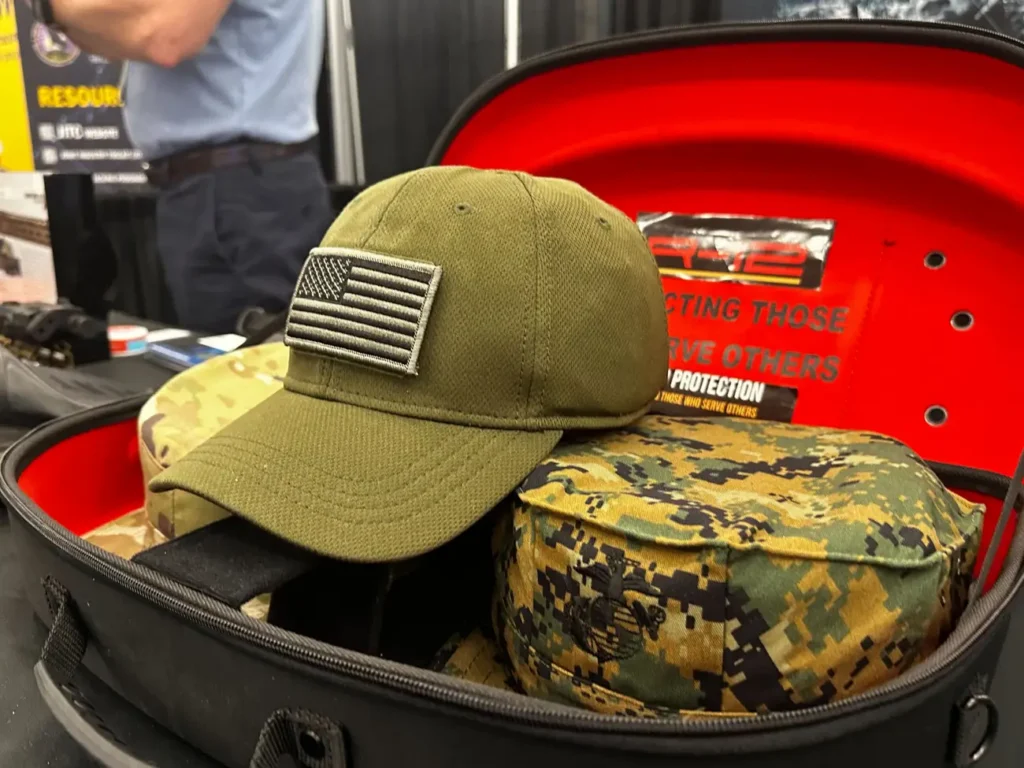

The Pentagon is studying a new piece of protective gear that could bring ballistic protection into a form troops already know well: the everyday cap. Instead of a heavy combat helmet, the product looks like a slightly thicker baseball cap or patrol cover, but it is built to reduce the force of certain handgun rounds in high-risk situations.
The headwear, made by R-12, is being considered for testing by some US Army and Marine Corps units through the Department of Defense’s Sustainable Technology Evaluation and Demonstration Program. The program reviews off-the-shelf commercial equipment before the military or federal agencies decide whether a product deserves wider use.
The caps were displayed at SOF Week 2026 in Tampa, Florida, where special operations members, defense contractors and military technology companies gathered to showcase new equipment. According to Business Insider, Kevin Kelly, a Department of Defense contractor connected with the evaluation program, said the caps may soon be tested by selected Army and Marine Corps personnel.
The idea is not to replace battlefield helmets. It is to give service members a lighter option for missions where a helmet may be too bulky, too visible or impractical for long periods. That could include domestic security duties, base protection, recruiting environments, public events, transport assignments or other roles where troops may still face sudden violence.
R-12 says its ballistic cap was developed by a trauma surgeon and is designed to slow the energy of NIJ Level IIIA threats. The National Institute of Justice publishes ballistic protection specifications used to classify armor threats across law enforcement and protective equipment. Level IIIA is associated with handgun threats, not rifle fire.
That limitation is important for readers to understand. A ballistic ball cap is not the same as a full helmet, and it does not make a wearer immune from serious injury. R-12 has said that in a shooting, the energy of a bullet may still damage the skull or cause bruising, bleeding or swelling in the brain. The company’s argument is that slowing the round’s energy could turn some otherwise fatal injuries into wounds that may be survivable with fast surgical care.
Interest in the gear has grown after a deadly attack involving West Virginia National Guard members in Washington, DC, last November. Specialist Sarah Beckstrom died after being shot in the back of the head, while Staff Sgt. Andrew Wolfe was also shot in the head and seriously wounded. Kelly said National Guard units, including the West Virginia National Guard, have shown particular interest in the caps since the attack.
The product line includes patrol-cap-style covers worn with camouflage uniforms as well as neutral-colored ball caps often favored by special operations personnel. That low-profile design may be one reason the Pentagon is looking closely at the equipment. In many real-world assignments, troops are not always operating in full combat gear, but they may still be exposed to targeted attacks or sudden close-range gunfire.
Each cap weighs around 11 ounces, costs about $365 and should be replaced every two years, according to R-12. Those details will likely matter during testing because military procurement is not based only on whether a product works once. Evaluators also look at comfort, durability, heat, long-term wear, training needs, replacement cycles and whether personnel will actually use the item consistently.
The caps may also have potential beyond military units. Kelly said law enforcement officers and other federal personnel could be possible users in roles where workers may face threats but cannot reasonably wear full ballistic helmets during routine duties.
Read More
- Visit Swikblog Homepage
- Hawaii Earthquake Today: 6.0 Big Island, No Tsunami
- Meta Forum: Facebook Groups App Takes Aim at Reddit and Discord
- Everest Crowding Fears Rise After Record 274 Climbers Summit in One Day
- Auckland FC Historic A-League Grand Final Win Over Sydney FC
- 40,000 Californians Evacuated After Orange County Chemical Tank Explosion Risk
The Pentagon team is also reviewing other technology shown at SOF Week, including suppressors intended to reduce weapon heat signatures and biometric systems designed to help prevent military swim deaths. Together, the products show how defense planners are looking beyond traditional weapons and armor toward equipment that reduces risk in specific operational scenarios.
The wider issue is force protection. US troops are increasingly asked to operate in settings that are not conventional battlefields but still carry real danger. Swikblog has previously covered the legal and security debate around domestic military deployments in its explainer on the Insurrection Act and presidential troop powers inside the United States.
For now, the ballistic cap remains a test item rather than standard-issue gear. But the Pentagon’s interest suggests that future protective equipment may not always look like traditional armor. In some missions, a cap that appears ordinary but offers limited ballistic protection could become a practical layer between no protection and a full combat helmet.

Make Swikblog your go-to source on Google for reliable updates, smart insights, and daily trends.