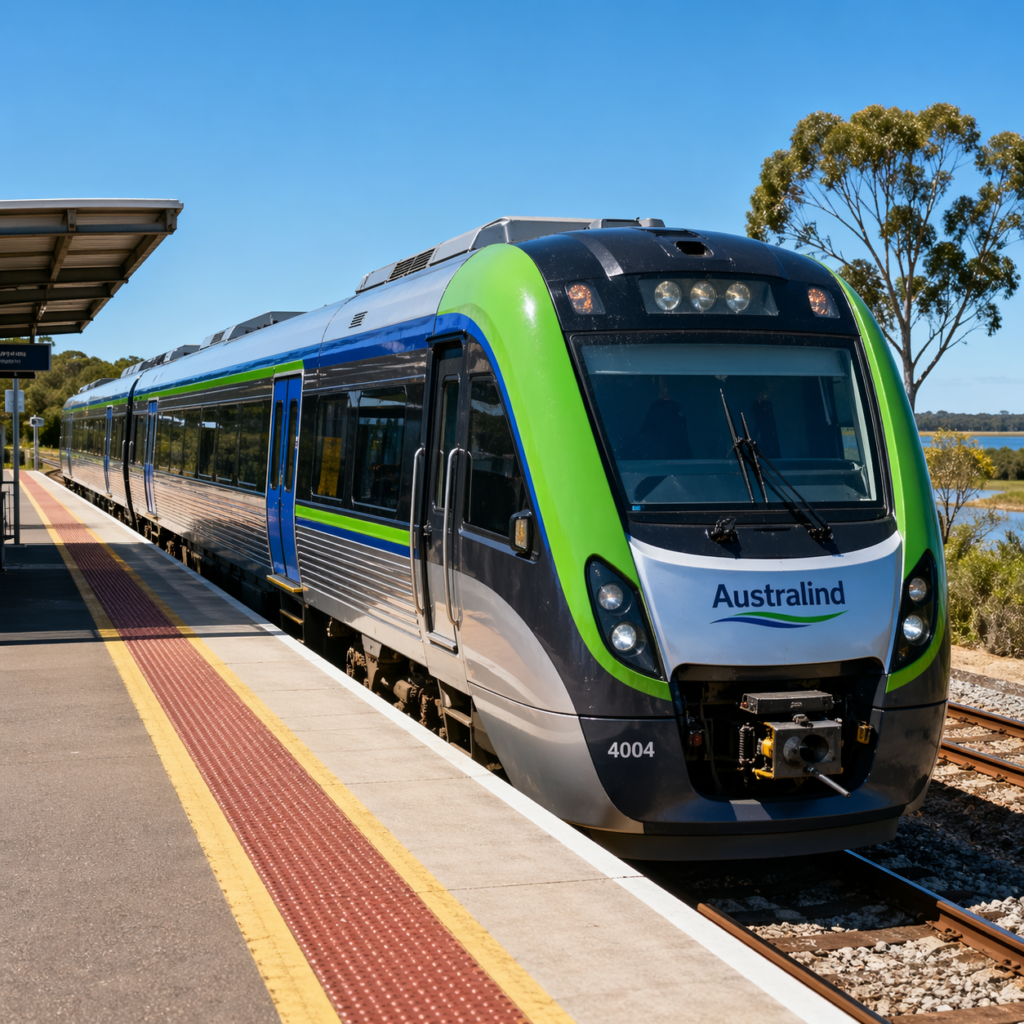

Regional rail in Western Australia is about to get a major reset. After a long break that forced passengers onto replacement coaches, the Australind service linking Perth and Bunbury is scheduled to return on June 29. For people in the South West, that is more than a timetable update. It restores one of the state’s most recognisable regional public transport links and reopens a route that has long connected workers, students, families and visitors with the capital.
The service has been out of action for almost three years, leaving a noticeable gap in travel options between Perth and WA’s biggest regional city. During that period, the line’s closure became a regular point of frustration in Bunbury and across the wider South West, especially as reopening targets shifted and replacement buses became the only option for many passengers. The restart date now gives commuters something they have not had for a long time: certainty.
The WA government says the relaunch is being backed by a $160 million investment and a completely refreshed fleet. Four new trains are being introduced for the route, replacing an older diesel service that had increasingly become associated with mechanical issues, breakdowns and delays. Instead of bringing everything back at once, the government is taking a phased approach, beginning with one three-car train entering service at the end of June and the remaining units being rolled out over the following months.
That staged return matters because it sets expectations early. Passengers will not see a full daily schedule from day one. The service will initially run four return trips each week on Monday, Wednesday, Friday and Sunday. From early August, the plan is to increase operations to two return services a day. If the rollout stays on track, the government hopes to move to four return services daily from January, which would mark the most complete restoration of the route since it was taken offline.
Why the Australind return matters for Bunbury and the South West
For Bunbury, this is not simply about adding another travel option. The rail link plays a practical role in regional life. It helps connect residents with Perth for business, appointments, study, tourism and family travel, while also making Bunbury more accessible to visitors coming south. In regional areas, transport decisions often carry wider economic and social weight, and that is part of why the prolonged absence of the Australind drew so much attention.
There is also a deeper local attachment to the service itself. Over the years, the Perth-Bunbury line has become a familiar part of the region’s identity, not just a means of getting from one station to another. That helps explain why the reopening announcement has landed as a bigger story than a routine operations update. In communities where rail services are limited, losing one is felt quickly. Getting it back, even in stages, can signal renewed confidence in regional infrastructure.
The closure originally came against the backdrop of wider network works and long-running concerns about the condition of the older fleet. While passengers had hoped the disruption would be relatively short, the project timeline stretched out. First came expectations of a 2025 return, then a revised window in early 2026, and then another delay linked to testing. That sequence created the kind of fatigue that often follows transport projects when promised dates continue to move.
The state government’s argument has been that the extra time was necessary. Transport Minister Rita Saffioti has framed the delay around safety, quality checks and the decision to support local assembly rather than rush in an off-the-shelf solution from overseas. That position may not erase commuter frustration, but it does reflect a broader infrastructure trade-off: reopening sooner with compromises, or waiting longer for a fleet intended to serve the route more reliably over the years ahead. Information on WA’s broader transport planning and public infrastructure priorities is available through the Western Australian Government.
What passengers can expect from the new trains
The upgraded Australind trains are designed to offer a noticeably better onboard experience than the service they replace. According to the government, the new fleet will include contemporary interiors, LED lighting, in-seat USB charging, an onboard buffet and dedicated space for up to 14 bicycles per train. Those details may sound simple, but they matter on a regional route where comfort and convenience play a big role in whether passengers choose rail over road travel.
Travel time is expected to be about two hours and 25 minutes between Perth and Bunbury. That will remain a key issue for frequent travellers, especially those comparing the train with private car use. The government has said it is in discussions with the railway operator about making the route more efficient, suggesting there may still be room for performance improvements once services are fully underway.
The stopping pattern will stay the same, preserving access for communities along the corridor. Stops will continue at Brunswick Junction, Harvey, Cookernup, Yarloop, Waroona, Pinjarra, North Dandalup, Serpentine, Mundijong, Byford and Armadale. Keeping those stations on the route is important because the Australind is not only about the two endpoints. It also serves smaller centres that rely on dependable regional transport links.
Not every part of the transition will be complete in June. Some bus services are expected to continue until all four new trains are in operation, meaning the return will be gradual rather than immediate. Even so, the June 29 start date marks a clear shift from uncertainty to delivery. After years of delays, testing and political pressure, the conversation can finally move from when the train will come back to how well it performs once passengers are onboard again.
For South West travellers, that may be the most important change of all. Reliability, frequency and passenger confidence will ultimately determine whether the new Australind meets expectations. But the restart alone is a significant moment for regional WA, and for Bunbury in particular, because it restores a connection that many locals never stopped seeing as essential.
For more transport, infrastructure and regional development stories in a reader-first format, explore the latest news on Swikblog.
You may like: EU Pet Travel Rules 2026: UK Passport Ban Explained for Pet Owners

Make Swikblog your go-to source on Google for reliable updates, smart insights, and daily trends.