
Rolex arrived at Watches and Wonders 2026 with the kind of attention most luxury brands can only dream about. The Geneva showcase had all the ingredients for a major moment: one of the world’s most powerful watch names, an audience of collectors waiting for something unforgettable, and a market that still treats many Rolex releases like instant trophies. But when the new lineup finally landed, the first reaction from many corners of the watch world was not amazement. It was disappointment.
That reaction, though, tells only half the story. The bigger truth is that Rolex is now operating in a market where even an underwhelming release can still become a commercial success. The 2026 collection did not introduce a radically new watch, and it did not reinvent the brand’s formula. Instead, Rolex leaned into updated materials, subtle styling shifts, anniversary messaging, and a carefully managed sense of scarcity. For critics, that felt flat. For the market, it may not matter at all.
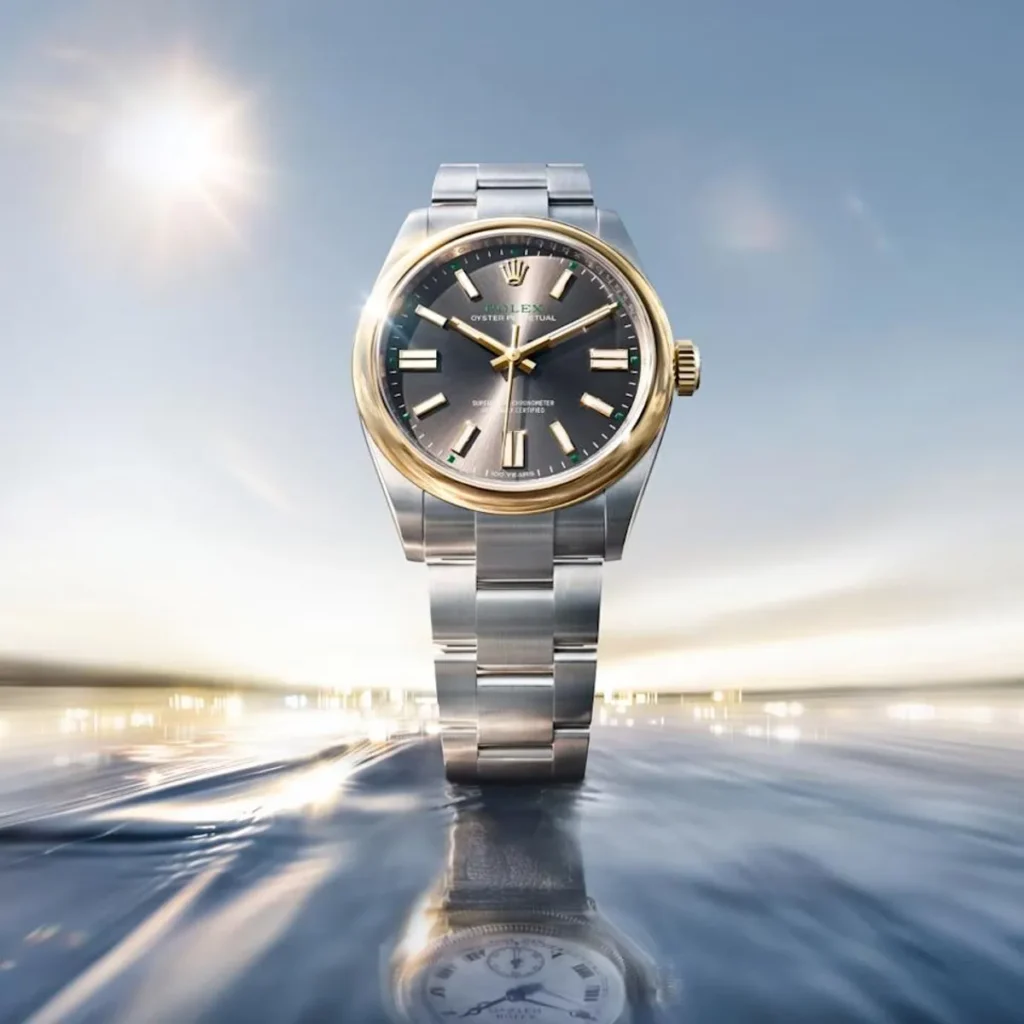
The most talked-about reveal was the Oyster Perpetual 41 centenary model, created to mark 100 years of the movement. Rolex said the bezel and crown use Rolesor, described here as a new blend of yellow gold and steel, while the case and bracelet remain steel. The brand also replaced the familiar “Swiss Made” marking at 6 o’clock with “100 years”, a small detail that turns the watch into a celebration piece rather than just another variation in the line. That sounds meaningful on paper, but the styling split opinion almost instantly. Some saw heritage and subtlety. Others saw a watch that simply did not look special enough for the occasion.
That divide ran through the rest of the launch too. One expert reaction called the anniversary Oyster Perpetual in steel and gold ugly and unappealing, while another industry voice argued that the slate dial, green accents, and yellow Rolesor details made it one of Rolex’s clearest heritage statements in years. That sharp difference in taste is exactly what kept the conversation alive after the unveil. Even when the watches failed to wow everyone, they still gave the luxury market something it loves: debate, exclusivity, and the sense that these pieces will be hard to get anyway.
Rolex also revived some of its recent hype language with the new Oyster Perpetual 36 Jubilee Dial. The multicolored dial immediately reminded many collectors of the brand’s headline-grabbing 2023 “emoji watch,” which arrived during the feverish post-pandemic watch boom. The new Jubilee Dial does not bring back that same playful complication, but the design clearly taps into that earlier buzz. It is Rolex looking backward at one of its most talked-about modern moments and trying to bottle some of that energy again.
Then there is the new Cosmograph Daytona, a model that almost never needs help drawing attention. Rolex gave it a white dial and introduced Rolesium, a combination of steel and platinum. In this version, most of the watch remains steel, while the bezel ring and rear caseback ring use the platinum-heavy material mix. The most eye-catching number attached to this update is the price. According to the reporting around the launch, the new Daytona lands at more than $57,000, a striking figure for a watch that is still mostly steel. That number says a lot about where Rolex believes the market is right now. The brand appears increasingly comfortable pricing closer to the reality of resale hype instead of pretending the secondary market exists in a separate universe.
That may be one of the most important takeaways from this entire launch. Rolex did not need to shock the market with design. It only needed to show that its watches can still command desire, discussion, and premium pricing. In that environment, an incremental update is not a weakness. It becomes a strategy.
The 2026 lineup also marked the return of the Yacht-Master, another move likely to please loyal collectors even if it did not dominate the wider conversation. But the biggest jolt of the event may have come not from what Rolex added, but from what it removed. The brand has dropped the GMT-Master II Pepsi, the highly recognizable model with the blue and red bezel that has long held a special place in the Rolex universe. That decision could become one of the most financially significant moments of the release cycle.
When Rolex pulls a model like the Pepsi from the active lineup, the effect often shows up quickly in the pre-owned market. Supply stops being replenished, attention intensifies, and prices can rise as collectors scramble to secure one while the story is still fresh. For buyers already locked out of authorized dealer supply, discontinuation only adds another layer of urgency. In other words, Rolex may have generated more heat by subtracting a watch than by introducing several new ones.
Also read: The official Watches and Wonders showcase remains the key stage for major luxury watch launches, and Rolex once again proved that even restrained updates can dominate the event conversation.
That is why the “underwhelming” label only goes so far. On a pure design-surprise level, the criticism is understandable. There was no groundbreaking new family, no dramatic leap in complications, and no single release that instantly reset expectations for the brand. But Rolex is not playing the same game as most luxury makers. It is operating from a position where demand routinely outpaces supply, where many buyers still cannot walk into an authorized dealer and purchase the model they want, and where even modest changes can ripple through both collector culture and resale pricing.
The result is a launch that may disappoint enthusiasts hoping for bold innovation while still strengthening Rolex’s grip on the luxury watch market. The anniversary Oyster Perpetual sparked arguments. The Jubilee Dial revived memories of past hype. The Daytona pushed pricing into attention-grabbing territory. The Yacht-Master returned. And the Pepsi’s exit may end up being the headline that matters most once the dust settles.
That combination makes the 2026 release feel strangely classic Rolex. It did not need to thrill everyone. It only needed to keep the brand at the center of the watch conversation, reinforce scarcity, and remind the market that almost anything with a crown on the dial can still move collectors and prices in a hurry. For all the early disappointment, that is exactly what this launch has done.
You may like: YouTube Ads Drop for Live Streams in Latest Update

Make Swikblog your go-to source on Google for reliable updates, smart insights, and daily trends.