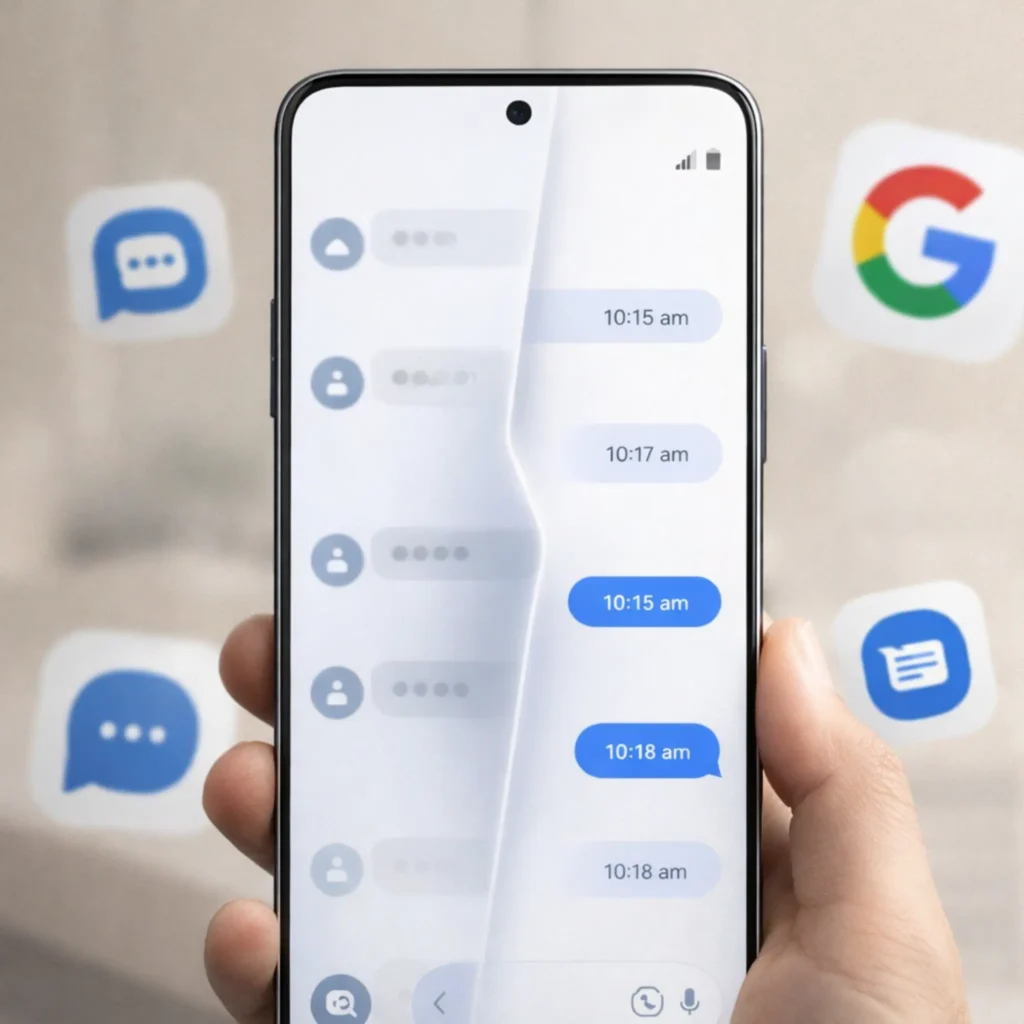

Samsung has put a firm end date on one of the most familiar apps in its Galaxy ecosystem, and that deadline is now driving a fresh wave of attention across Android. The company has confirmed that Samsung Messages will be discontinued in July 2026, pushing users toward Google Messages as the default texting platform on newer Samsung phones.
The change is trending because it is no longer just a quiet software preference or a gradual design tweak. Samsung has now turned a long-running shift into an official countdown, giving Galaxy users a limited window to move away from an app many have used for years for everyday SMS, group chats, and carrier-based messaging.
For consumers, the immediate issue is simple. If Samsung Messages has remained your default app, the company wants that to change before support ends. For the broader Android market, though, the decision says something bigger about where mobile software is heading: fewer duplicate apps from phone makers, and more reliance on Google’s own services at the center of the Android experience.
Samsung’s messaging shift is now official
Samsung had already been signaling this direction for some time. On newer Galaxy devices, Google Messages has increasingly taken over the default role, while Samsung’s own app began to feel less central than it once did. What is different now is the clarity. The phaseout has a public deadline, and that turns a slow transition into a real user-facing event.
That matters because messaging apps are not like wallpaper tools or optional add-ons. They sit at the core of how people communicate with banks, schools, workplaces, delivery services, relatives, and emergency contacts. Any change involving the default texting app is automatically more disruptive than a routine software retirement.
Samsung is framing the move as part of a smoother Android messaging experience. Google Messages already handles SMS, MMS, and RCS, the newer standard designed to bring richer features such as typing indicators, better media sharing, and more modern group conversations to texting. Google also promotes the app as a more connected experience across Android devices, which helps explain why Samsung is stepping back instead of maintaining a parallel option.
Readers who want to understand the replacement app in more detail can see Google’s overview of Google Messages, which lays out its RCS features, device syncing, and current Android support.
There is also a practical wrinkle in Samsung’s announcement. Not every user will experience the switch in exactly the same way. Some devices on older software are outside the immediate impact described in Samsung’s notice, while certain users on Android 12 and 13 may need to make manual adjustments rather than expecting the new app to slide neatly into place on its own.
Why this matters beyond one Samsung app
This is not just about Samsung cleaning up its app lineup. It reflects a wider reordering of Android itself. Over the years, major phone brands often built their own versions of core apps for email, browsers, assistants, galleries, and messaging. That gave manufacturers more control over their software identity, but it also created fragmentation. Two Android phones could run the same operating system while offering very different default communication tools.
Messaging became one of the clearest examples of that split. Samsung Messages remained popular with loyal Galaxy users, while Google Messages became more important to Android’s broader push around RCS. The coexistence worked for a while, but it was never the cleanest setup. As Google leaned harder into making Messages the standard Android texting layer, Samsung’s own app started to look more like a legacy holdover than a long-term platform.
That is why this shutdown has significance beyond nostalgia. It shows how much influence Google now has over the most visible parts of Android, even on devices sold by the platform’s biggest hardware partner. Samsung is not exiting messaging altogether, but it is giving up a branded app that once represented a more independent approach inside the Android world.
For users, the impact will be uneven. Many Galaxy owners will barely notice, especially if they already use Google Messages, WhatsApp, or other chat apps for most conversations. Others may find the change more personal, especially those who preferred Samsung’s interface or kept using it out of habit. There is always friction when a familiar default disappears, even if the replacement is widely available and technically more capable.
Still, the direction of travel is hard to miss. Samsung is narrowing the gap between a Galaxy phone and Google’s own vision of Android, and messaging is one of the clearest places where that strategy is now visible to ordinary users. With July 2026 now on the calendar, the app’s future is no longer a matter of speculation. For anyone still holding onto Samsung Messages, the countdown has started.
You May Also Like
Medik8 Sunscreen Recall: SPF 50 Products Fail Protection Standard
Author Bio
Swikriti is a Swikblog writer with 9 years of experience focusing on financial markets, stock analysis, and high-impact global news with a strong editorial perspective.

Make Swikblog your go-to source on Google for reliable updates, smart insights, and daily trends.