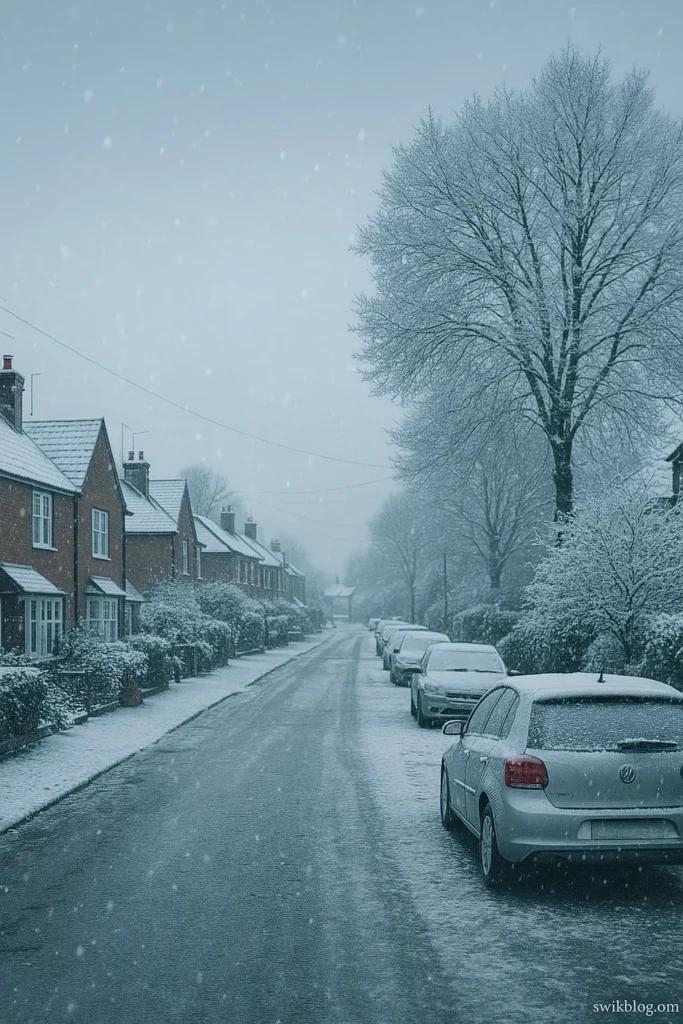

As December progresses, colder conditions are beginning to settle across parts of the UK, prompting renewed interest in the snow weather forecast. With temperatures dropping and daylight hours shortening, many people are wondering whether snow could arrive in the coming days and what this means for travel, daily routines, and the run-up to Christmas.
While snow in the UK is often unpredictable, meteorologists say the current weather pattern does increase the likelihood of wintry conditions in some areas. However, not all cold spells result in snowfall, and much depends on wind direction, moisture levels, and overnight temperatures.
What the Current UK Snow Forecast Shows
According to the Met Office, the UK is expected to experience below-average temperatures at times, particularly overnight. Northerly and north-easterly airflows can introduce colder air, increasing the chance of frost, ice, and occasional wintry showers.
At present, widespread heavy snowfall is not forecast, but there is potential for light snow or sleet in certain regions, especially during colder nights and early mornings. These conditions can change quickly, so short-term updates are important.
Where Snow Is Most Likely to Occur
Snowfall in the UK tends to be uneven, with geography playing a significant role. Higher elevations and northern regions generally have a greater chance of seeing snow than low-lying southern areas.
- Scotland: Upland areas and the Highlands are the most likely to see snow, particularly during colder spells.
- Northern England: The Pennines and other higher ground may see wintry showers or light snowfall.
- Wales: Snow is more likely over hills and mountains, with lower areas seeing cold rain or sleet.
- Midlands: Conditions may vary, with frost and ice more likely than significant snowfall, though brief snow is possible.
- Southern England: Snow is less common but can occur during particularly cold periods, often mixed with rain.
Understanding the Term “White Christmas”
In the UK, a “white Christmas” is officially defined as snow falling on December 25, rather than snow lying on the ground. This means that even a brief snow shower on Christmas Day qualifies, while settled snow from earlier in the month does not.
Historically, white Christmases are relatively rare, especially in southern England. Northern and higher-altitude regions have a greater chance, but even there, snow on Christmas Day is far from guaranteed.
What This Means for Travel and Daily Life
Even light snow or frost can have an impact on transport and outdoor activities. Icy conditions are often more disruptive than snowfall itself, particularly on untreated roads, pavements, and rural routes.
People travelling early in the morning are advised to allow extra time and remain alert for slippery surfaces. Public transport may also be affected during periods of frost or wintry showers, especially in exposed or elevated areas.
How Reliable Are Snow Forecasts?
Snow forecasting in the UK is challenging due to the country’s variable climate and proximity to the Atlantic. Small changes in temperature or wind direction can significantly alter outcomes, turning snow into rain or vice versa.
Forecasts are generally most accurate within a five-day window. Beyond that, they provide an indication of possible trends rather than precise conditions. This is why official forecasts are updated frequently as new data becomes available.
What to Watch for in the Coming Days
As winter continues, key indicators to watch include overnight temperatures near or below freezing, warnings for icy conditions, and references to wintry showers in official forecasts. These signals often suggest an increased chance of snow, particularly on higher ground.
Checking local forecasts regularly is the best way to stay informed, as conditions can vary widely from one area to another.
Looking Ahead
While snow remains a possibility in parts of the UK this winter, it is not expected to be widespread or persistent at this stage. Cold spells may come and go, bringing frost, ice, and occasional wintry weather rather than prolonged snowfall.
As always, staying informed through trusted weather sources and planning ahead during colder periods can help minimise disruption and keep travel safe during the winter months.
You May Also Like
Arctic Cold and Lake-Effect Snow Could Disrupt Travel

Make Swikblog your go-to source on Google for reliable updates, smart insights, and daily trends.