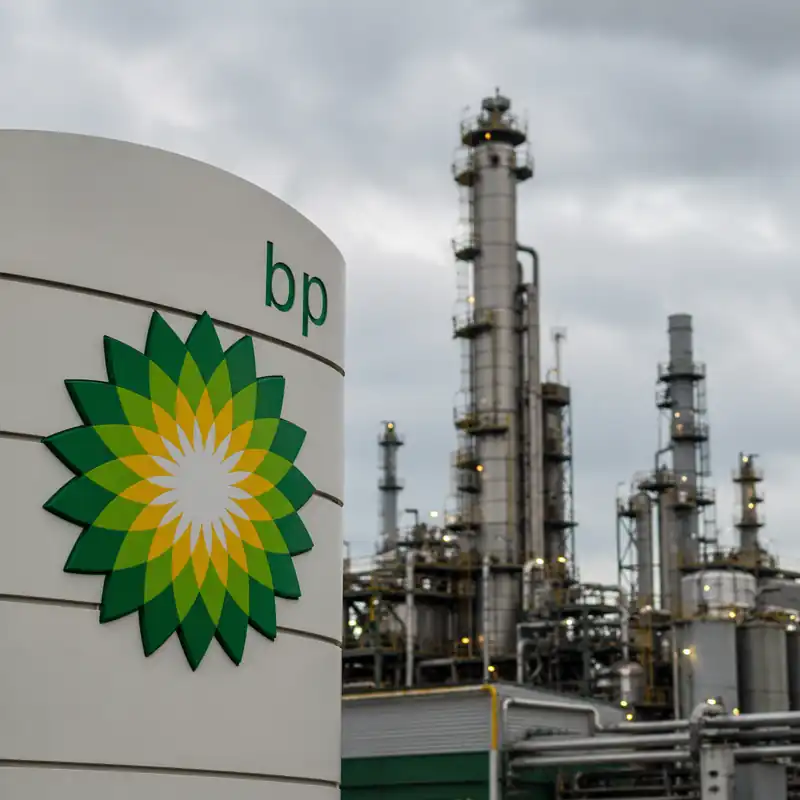
US stocks moved modestly higher on Tuesday as investors navigated a complex mix of rising oil prices, escalating geopolitical tensions, and the start of a closely watched Federal Reserve meeting. Despite renewed pressure from energy markets, the Dow Jones Industrial Average (^DJI), S&P 500 (^GSPC), and Nasdaq Composite (^IXIC) all edged higher, extending a cautious rebound across Wall Street.
Market snapshot: The Dow (^DJI) traded near 47,025.81, up 0.17%. The S&P 500 (^GSPC) climbed to around 6,718.93, gaining 0.29%, while the Nasdaq (^IXIC) led with a 0.46% rise, reflecting continued strength in tech stocks.
The upward move came even as oil surged sharply, driven by intensifying conflict in the Middle East. Fresh attacks on energy infrastructure and rising fears around the Strait of Hormuz have disrupted supply expectations, pushing crude prices back into focus for global markets.
Brent crude (BZ=F) jumped close to $104 per barrel before easing slightly, while West Texas Intermediate (CL=F) traded just under $94. The ripple effects were visible across fuel markets as well, with US diesel prices climbing above $5 per gallon for the first time since late 2022.
The geopolitical backdrop has turned increasingly volatile. Iran has continued strikes on energy infrastructure, including a major gas field in the UAE, while Israel reported the killing of a senior Iranian security official. These developments have raised serious concerns about the stability of global energy flows, especially as the Strait of Hormuz — a key shipping route — remains effectively blocked.
That disruption has forced markets to reassess inflation risks just as central banks were preparing to shift toward rate cuts. Instead, rising energy prices are complicating the outlook, adding pressure to policymakers ahead of key decisions this week.
Fed meeting takes center stage as rate expectations shift
The Federal Reserve has begun its two-day policy meeting, with investors widely expecting no change in interest rates. According to CME FedWatch data, markets are pricing in a 99% probability that rates will remain unchanged in the near term.
However, the bigger focus is on the Fed’s forward guidance. With oil prices surging again, policymakers face a difficult balance between controlling inflation and supporting economic growth. Any signal that rate cuts could be delayed further may weigh on equities in the sessions ahead.
Investors will closely watch comments from Fed Chair Jerome Powell for clues on how the central bank views the latest energy shock. Even subtle shifts in tone could influence bond yields, equity valuations, and global risk sentiment.
Energy sector leads while airlines react to fuel surge
The energy sector continues to dominate market performance. The Energy Select Sector SPDR Fund (XLE) has already logged multiple record highs this year, supported by strong gains across oil majors and refiners.
Companies like Exxon Mobil (XOM) and Shell (SHEL) have surged more than 25%–30% in 2026, while refiners such as Valero Energy (VLO) have climbed as much as 45% year-to-date. Oil services firms like Baker Hughes (BKR) and Liberty Energy (LBRT) also posted strong gains, highlighting broad-based strength across the sector.
At the same time, airline stocks moved higher as travelers rushed to lock in fares before potential price increases. Executives from Delta Air Lines (DAL), American Airlines (AAL), and Alaska Air (ALK) reported a surge in bookings, reflecting consumer expectations of rising travel costs due to higher fuel prices.
Tech resilience and Nvidia outlook support Nasdaq
The Nasdaq’s outperformance was supported by continued optimism around artificial intelligence and semiconductor demand. At its latest GTC event, Nvidia (NVDA) outlined a massive growth outlook, projecting up to $1 trillion in chip sales through 2027.
This bullish narrative helped offset broader macro concerns, as investors continue to see AI as a long-term growth driver. Smaller tech names and software companies also showed signs of recovery, even as the sector faces resistance at key technical levels.
In the S&P 500, analysts are watching the 6,750 level as a short-term ceiling, with 6,800 seen as a key resistance zone. A breakout above these levels could signal stronger momentum, while failure may trigger renewed volatility.
Bitcoin and alternative assets show resilience
Outside traditional markets, Bitcoin (BTC-USD) traded near $74,000, showing notable resilience despite geopolitical uncertainty. The cryptocurrency has gained roughly 10% since late February, outperforming both equities and gold during the same period.
Institutional inflows have remained strong, with more than $2.1 billion entering crypto ETFs in recent weeks. This trend suggests that investors are increasingly viewing digital assets as an alternative store of value during periods of global instability.
For a broader look at how oil and macro trends are shaping markets, investors can follow ongoing analysis from Yahoo Finance.
The overall picture remains finely balanced. Stocks are rising, but the rally is fragile. Oil prices are sending a clear warning, while the Federal Reserve’s next move could determine whether markets extend gains or face renewed pressure. With geopolitical risks still escalating and energy markets volatile, the coming sessions may prove decisive for the direction of global equities.

Make Swikblog your go-to source on Google for reliable updates, smart insights, and daily trends.