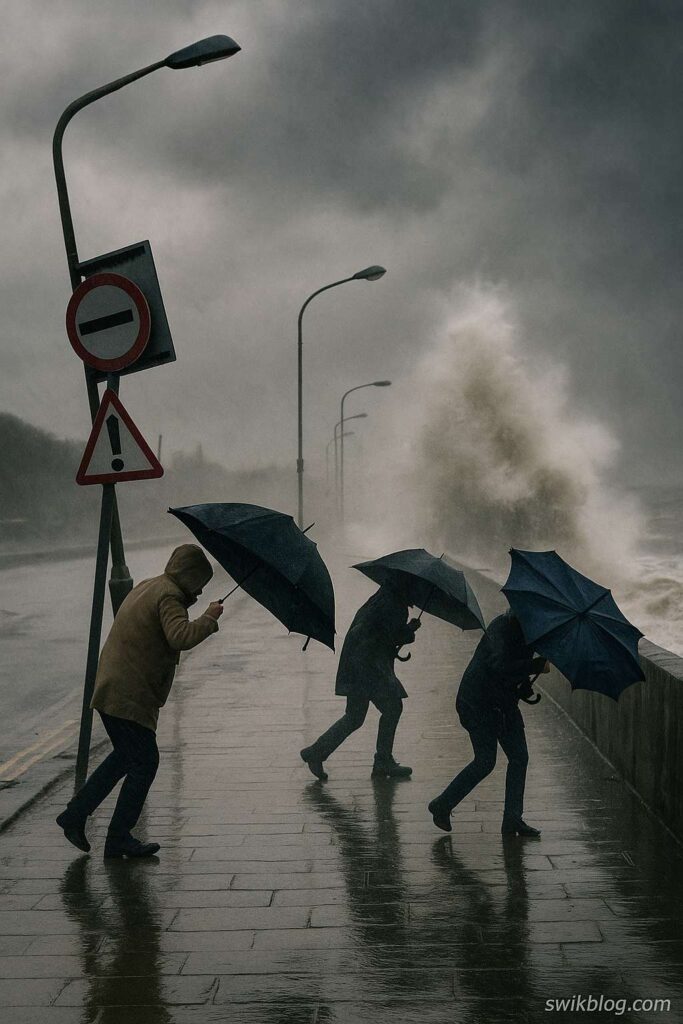

Storm Bram is battering large parts of the UK with heavy rain and storm-force winds, cutting power to thousands of homes, flooding riversides and throwing road, rail and air travel into chaos as amber “danger to life” warnings come into force.
By Swikblog News Desk | Published: December 9, 2025 | London, United Kingdom
Heavy rain, howling winds and a country on weather alert
After racing in from the Atlantic, Storm Bram has turned Tuesday into a day of amber and yellow weather warnings stretching from south-west England and south Wales right up to north-west Scotland and parts of Northern Ireland. Forecasters say some areas could see close to a month’s worth of rain in little more than 24 hours, alongside gusts that are strong enough to bring down trees, damage roofs and tear down power lines.
The UK Met Office has issued amber alerts for heavy rain and severe winds in the worst-affected regions, warning of a “danger to life” from fast-rising floodwater, flying debris and treacherous travel conditions. A wider zone of yellow warnings covers much of the rest of the country as Bram continues to track north and east. Full details of the live warnings can be found on the Met Office weather warnings page .
Rail routes curtailed and flights cancelled as travel plans unravel
Commuters have woken up to severe disruption on some of the UK’s busiest rail corridors. Services between London and south-west England and south Wales are badly affected by flooding, fallen trees and speed restrictions, while lines in parts of Scotland are also facing delays and cancellations as the storm pushes north.
It is not just the railways. Drivers have been warned to expect difficult or even impossible conditions on exposed bridges and high routes. In Greater Manchester, part of the M66 has been shut following a multi-vehicle crash in stormy conditions, underlining just how quickly weather-related incidents can escalate.
Aviation is also feeling the strain. More than 40 flights to and from Dublin have been cancelled as Bram lashes the Irish Sea, with knock-on delays expected for passengers connecting through UK airports. Anyone travelling today is being urged to check the latest information from operators and allow extra time for journeys.
Thousands without power as flood risk climbs
Storm Bram’s strongest gusts have already left thousands of households without electricity in parts of England, Wales and Scotland. Network engineers are working through the day to restore supplies, but further outages are likely as winds intensify over north-west Scotland and parts of Northern Ireland later on.
Along river valleys and low-lying coasts, saturated ground is struggling to cope with yet more rainfall. Flood alerts and warnings have been issued across England and Wales, with communities in south-west England and south Wales among those facing the greatest risk of rivers overtopping their banks and surface water quickly building up on roads.
Live coverage from broadcasters such as BBC News shows flooded streets, stranded vehicles and emergency crews racing to pump water away from homes and businesses as the storm moves through.
From Ireland to the Highlands: where Storm Bram is hitting hardest
Bram’s impact has been felt on both sides of the Irish Sea. Ireland endured the first punch, with powerful winds bringing coastal flooding, dangerous waves and widespread power cuts as the system deepened rapidly offshore before sweeping into Britain.
As the core of the storm migrates north, north-west Scotland is braced for gusts that could approach hurricane-force on exposed coasts and high ground. Parts of Northern Ireland are also under amber wind warnings later today, with the potential for downed trees, damaged buildings and more prolonged outages.
Elsewhere, yellow warnings for rain and wind extend across much of central and northern England, with forecasters warning that rainfall totals will be enough to trigger localised flooding even outside the core amber zones.
Everyday life on hold: from commutes to Christmas shopping
For millions of people, Bram has arrived at one of the busiest times of the year, just as Christmas shoppers, commuters and holidaymakers pour onto roads and railways. With services cut and town centres battling standing water, many will be weighing up whether their journeys are essential at all.
The storm is also colliding with frustrations that were already building around the cost and stress of getting around the country. Earlier this week, Swikblog highlighted how a one-minute overstay in a UK car park turned into a £170 bill in our report on parking fines being “out of control” . Today, many motorists are abandoning plans altogether rather than braving flooded car parks and gridlocked ring-roads.
What you should do if you’re in the warning areas
Authorities across the UK are urging people in amber zones to treat Bram seriously and to prepare for disruption that may last beyond the storm’s peak. That means:
- Only travelling if your journey is genuinely essential.
- Keeping a small emergency kit ready – including battery packs, torches, basic medicines and copies of key documents.
- Moving valuables, cars and outdoor furniture away from areas that could quickly flood or be hit by falling branches.
- Staying away from piers, harbour walls and coastal paths where large waves and debris can be deadly.
- Checking on neighbours, particularly older or vulnerable people, if it is safe to do so.

Make Swikblog your go-to source on Google for reliable updates, smart insights, and daily trends.