A remark from the White House chief of staff has travelled quickly — not because it alleges a hidden habit, but because it frames power as a kind of temperament, learned up close.
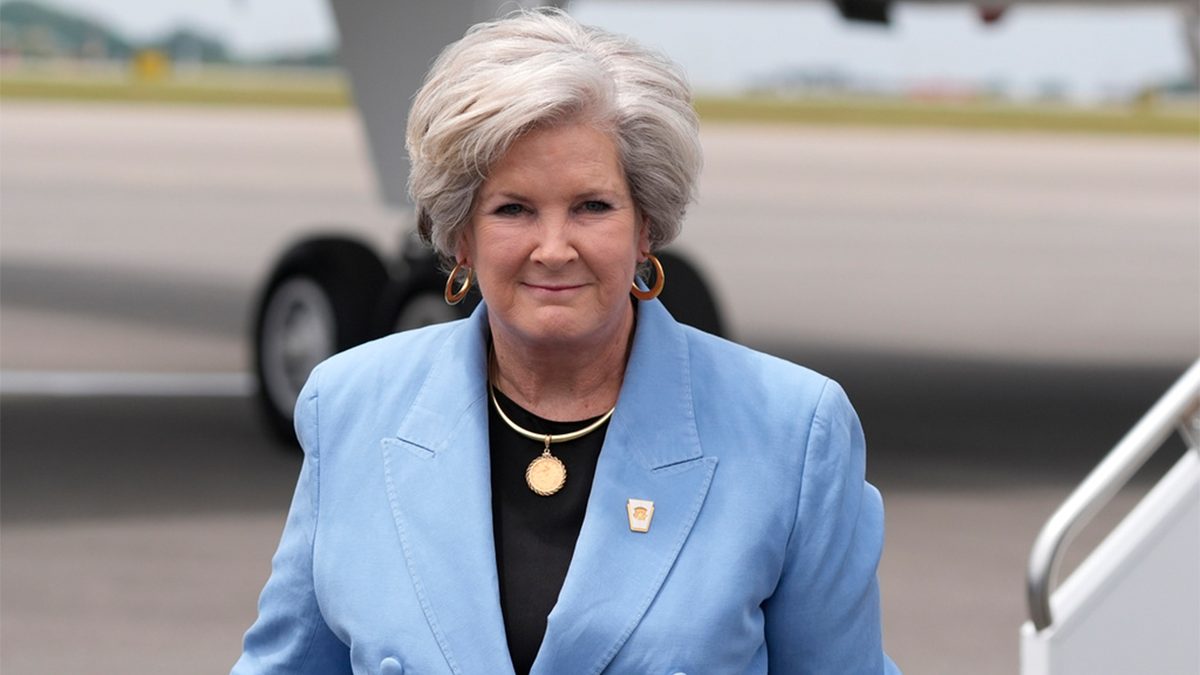
Susie Wiles, the White House chief of staff, has triggered a fresh round of scrutiny after comments published in a Vanity Fair profile in which she suggested Donald Trump has what she called “an alcoholic’s personality.” The phrasing is provocative — but the context matters: Wiles was not claiming Trump drinks. She was describing a style of behavior she associates with addiction, shaped by her family history.
In the interview, Wiles frames her view through what she witnessed with her father, Pat Summerall — the former New York Giants player and long-time NFL broadcaster whose voice became part of American Sundays for generations. Summerall’s alcoholism was widely documented, and he later spoke publicly about recovery and sobriety. Wiles’s point, as presented in the Vanity Fair piece, is about how “big personalities” can expand and harden — and how that confidence can look, from the outside, like invincibility.
What Wiles actually said — and what she didn’t
The line that has been repeated across news and social media focuses on the conclusion. But Wiles also included a clear caveat: she is not a clinician. She described her own observation as something a psychologist might dispute, then connected it to her experience of living around alcoholism. In that framing, she said alcoholics’ personalities can become exaggerated — and that Trump, in her view, “operates” with total certainty that there is nothing he cannot do.
The distinction is crucial for readers trying to interpret the remark fairly. Trump has long presented himself as a non-drinker, often citing family tragedy as a reason for abstaining. The Vanity Fair interview, as well as follow-up coverage, treats Wiles’s language as metaphorical: a description of temperament and attitude, not an allegation of drinking.
The original short write-up that pulled the quote into wider circulation appeared via Yahoo’s syndication of For The Win coverage, which highlighted the father-daughter connection and the line about “big personalities.” (If you want the quick version of the media echo, it’s a useful snapshot: read it here.)
Why Pat Summerall is part of this story
Pat Summerall wasn’t just a famous surname in sports. He was an NFL player who became one of the most recognizable voices in broadcasting, known for his calm, measured delivery. But he also faced a long struggle with alcoholism, and his recovery was an important part of how he later understood his own life and work. When Summerall died in 2013, major sports outlets noted both his broadcasting legacy and his sobriety journey. ESPN’s obituary coverage, for instance, referenced his years of sobriety and later health complications. You can read that background here.
Wiles’s comments land differently because they draw on that experience: not politics as theory, but personality as something observed in a household — the way confidence can harden into certainty, the way authority can become absolute, and the way the people around it learn to navigate it.
Why this is resonating now
In modern politics, personality is not a side story — it’s often the story. And chiefs of staff rarely speak in public in ways that invite psychological interpretation, especially about the president they serve. That’s one reason this remark has travelled: it is a rare glimpse of an insider describing leadership style in human terms.
It also hits an uncomfortable cultural nerve. Alcoholism is widely understood, and many readers have personal experience with it — in families, workplaces, friendships. When a senior official uses that language, even metaphorically, it can feel both relatable and loaded. The effect is less “scandal” than “recognition”: people arguing over what, exactly, the comparison means — and whether it should be made at all.
A careful read: insight, optics, and the limits of analogy
Taken at its most generous, Wiles’s point is about human behavior: the way certain personalities move through the world with maximal confidence, the way they treat obstacles as temporary, and the way they assume outcomes are bendable. Taken at its harshest, critics hear an attempt to medicalize politics — to label opponents with a psychological frame that they did not choose.
Either way, the remark exposes a tension at the heart of modern leadership coverage: voters and readers want “the real person,” but the language of personality can quickly turn into the language of diagnosis. Wiles’s own disclaimer — that she is not a psychologist — reads like an attempt to stay on the safe side of that boundary.
For now, the comment functions less as a definitive statement than as a cultural Rorschach test: a line that different audiences will interpret through their own experiences of addiction, authority, family history, and power.
You may also like

Make Swikblog your go-to source on Google for reliable updates, smart insights, and daily trends.