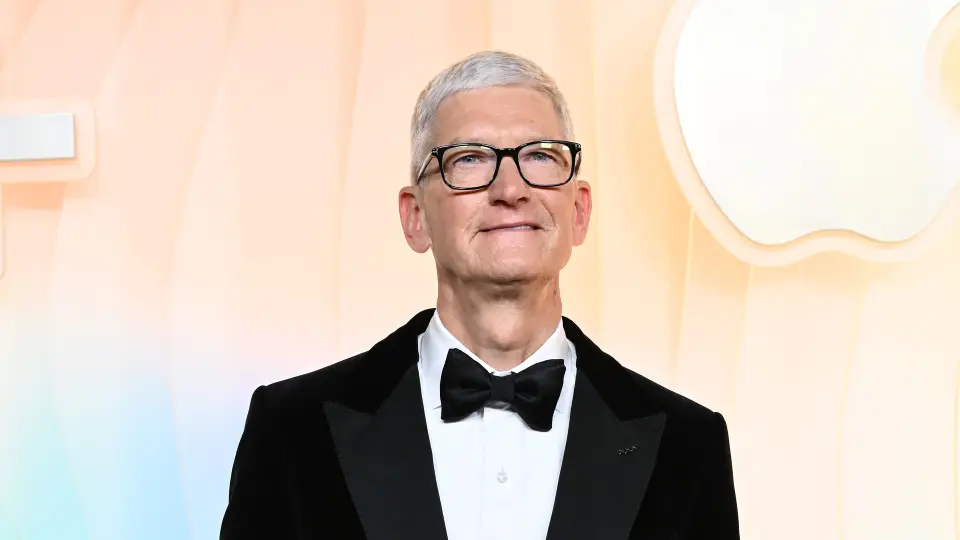

Apple’s decision to replace Tim Cook with John Ternus is more than a routine leadership change. It closes one of the most commercially successful chapters in modern corporate history and opens a far more uncertain one. Cook will step down as Apple chief executive on September 1, 2026, with Ternus, the company’s senior vice-president of hardware engineering, taking over the top job. Cook will remain involved as executive chairman, a structure that gives Apple continuity at board level even as day-to-day control shifts to a new leader.
Apple has presented the handover as part of a long-term succession plan rather than a sudden break, which helps explain why investors appeared calm after the announcement. That muted market response matters because leadership changes at a company of Apple’s size can easily trigger wider doubts about strategy, growth and product direction. Instead, the reaction suggested that Ternus was already viewed as a credible internal successor, not a risky outsider.
That calm response also reflects how Apple has managed transitions in the past. The company prefers control, order and preparation, and this change follows that same pattern. There has been no sign of internal turmoil, no dramatic shift in message and no hint that the move was forced by a crisis. In a business world where executive exits are often wrapped in uncertainty, Apple has tried to make this moment feel deliberate and stable.
Cook leaves behind a company that is vastly bigger, richer and more entrenched in everyday life than the one he inherited from Steve Jobs in 2011. During his tenure, Apple’s market value rose from about $350 billion to roughly $4 trillion. That extraordinary climb was not built on one breakthrough alone. It came from the continued success of the iPhone, the rise of Apple Watch and AirPods, and the expansion of services such as Apple Music, iCloud and Apple TV+.
His leadership style was very different from Jobs’s. Cook was never the theatrical product visionary in the public imagination, but he became something equally powerful: an executive who could turn Apple into a machine of immense scale and reliability. He brought operational discipline, supply-chain strength and financial consistency to the company at a level few chief executives have ever matched. Apple under Cook became more predictable, more globally integrated and more valuable than ever before.
That does not mean the company avoided criticism. In recent years, Apple has faced increasing scrutiny over whether it is moving quickly enough in artificial intelligence. Rivals including Microsoft and Google have pushed harder and louder into AI-powered products, while Apple has often appeared more measured and at times more cautious. For a company long associated with setting the pace in consumer technology, that has raised real questions about whether it can still define the next era instead of reacting to it.
This is where John Ternus steps into a role that carries both opportunity and pressure. Unlike Cook, whose strengths were often associated with operations and execution, Ternus is seen first as a product and engineering leader. He joined Apple in 2001 and rose through the hardware organisation, helping lead the development of devices that still sit at the centre of the company’s identity, including the iPhone, iPad and Mac. Over time, he became one of the most influential figures behind Apple’s core hardware strategy.
His elevation is significant because it signals that Apple still believes its future will be shaped by tightly integrated products rather than by chasing every trend in the market. Ternus has spent years inside the company’s engineering culture, working on the products that define Apple’s relationship with consumers. That makes him a logical choice for a moment when the company must connect hardware, software and AI more seamlessly than ever before.
He also inherits a company with enormous strengths. Apple still has one of the most loyal customer bases in the world, a vast installed device network, control over its own silicon and a brand identity built around premium design and privacy. Those advantages give Ternus a strong foundation. But they do not guarantee leadership in the next decade. In technology, scale can protect a company, but it can also make reinvention slower and harder.
The challenge ahead is not simply to preserve what Cook built. It is to prove that Apple can still feel culturally central in a market increasingly shaped by intelligent assistants, AI-driven software and new computing interfaces. Consumers will not judge this transition on the wording of Apple’s announcement. They will judge it on whether the products feel more useful, more ambitious and more forward-looking than they do today.
Cook’s move to executive chairman offers Apple continuity during that shift. It also mirrors leadership transitions seen at other technology giants, where high-profile chief executives stepped back from daily operations while staying closely tied to strategy. That arrangement gives Ternus room to establish his own leadership style while allowing Apple to keep Cook’s experience close during a period that could redefine the company’s next chapter.
The broader significance of this moment lies in what it says about Apple’s priorities. Cook’s era was defined by expansion, discipline and financial power. Ternus now enters an era that will be judged more sharply on innovation, product direction and Apple’s ability to compete in the AI age. The company remains one of the most formidable businesses in the world, but the standard for Apple has always gone beyond profits. It is expected to shape habits, influence industries and make the future feel tangible.
That is why this transition matters so much. Tim Cook secured Apple’s dominance and multiplied its power. John Ternus must now show that the company can still lead with conviction in a rapidly changing technology landscape. If he succeeds, Apple may begin a fresh chapter of influence. If not, it risks looking like a giant protecting its past rather than defining what comes next.
For readers following major business transitions, technology strategy and the forces shaping the next phase of Big Tech, you can explore more analysis in our latest business coverage. For Apple’s official executive background, visit Apple’s leadership page for John Ternus.
You may like: Apple Smart Glasses could arrive with 4 designs, AI features and a 2027 launch timeline.

Make Swikblog your go-to source on Google for reliable updates, smart insights, and daily trends.