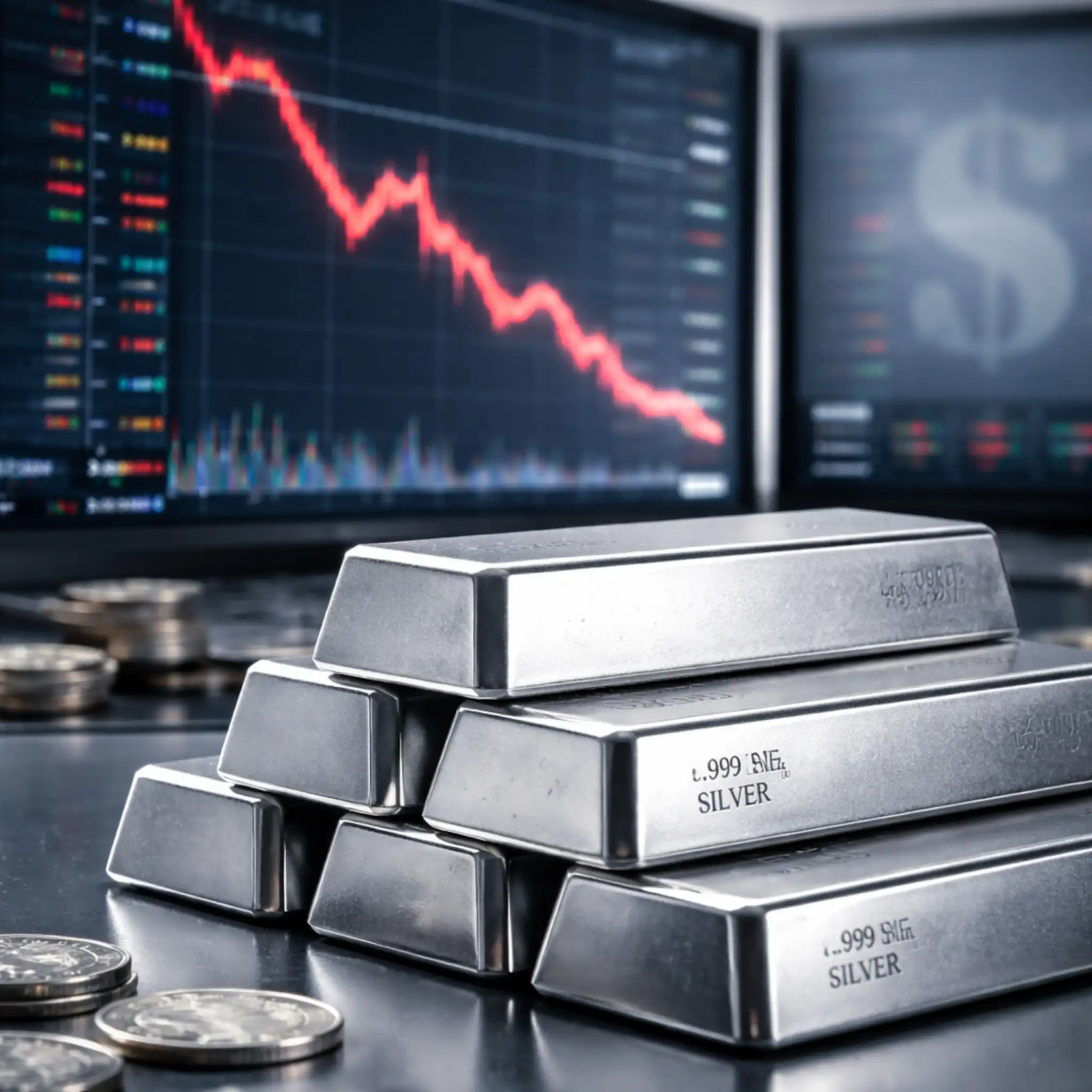

US gold price today faced a sharp reversal as COMEX gold futures (GC=F) plunged nearly $200, pushing prices down to around $4,688 per ounce and marking a steep 4% intraday drop as volatility surged across precious metals and traders rapidly exited positions.
The sudden fall has caught traders and investors off guard, especially after gold had been trading near elevated levels and showing relative strength. A move of this magnitude signals strong bearish momentum and a rapid shift in short-term sentiment in the global precious metals market.
Gold price crash today: what triggered the fall?
The decline in gold prices appears to be driven by a combination of macroeconomic pressure and technical breakdown. A stronger US dollar, rising bond yields, and shifting expectations around Federal Reserve policy are putting pressure on non-yielding assets like gold.
Gold typically performs well when interest rates are expected to fall or remain low. However, when markets start pricing in higher-for-longer interest rates, gold tends to lose its appeal as investors shift toward yield-bearing assets. This shift in positioning is clearly visible in today’s sharp drop.
Additionally, profit booking at higher levels has intensified the fall. Traders who entered at lower levels appear to be exiting positions, accelerating the downside momentum.
COMEX futures below $4,900: why this level matters
The break below the $4,900 level is technically significant. This level acted as a strong psychological and support zone in recent sessions. Once prices slipped below this mark, selling pressure intensified rapidly.
In futures markets, such breakdowns often trigger stop-loss orders and algorithmic selling, leading to sharp and fast declines. The COMEX gold futures contract (GC=F), widely tracked on platforms like Yahoo Finance, reflected this heavy selling pressure throughout the session.
The breach of this key level suggests that the market may now test lower support zones in the near term if selling continues.
Intraday movement and volatility spike
Today’s price action highlights extreme volatility in the gold market. The metal not only dropped sharply but also showed wide intraday swings, indicating panic selling and high trader participation.
The bid and ask spread in futures pricing also reflects active trading conditions, where rapid price changes are driven by both institutional and short-term traders reacting to macro signals.
Such volatility is often seen during major market turning points or when sentiment shifts abruptly.
Spot gold vs futures: understanding the price difference
It is important to note that the price shown in COMEX futures (GC=F) may differ slightly from spot gold prices. Spot gold represents the current market price for immediate delivery, while futures contracts are based on future delivery months.
This difference, known as the “basis,” is influenced by interest rates, storage costs, and market expectations. While the futures market is leading today’s selloff, it also acts as a key price discovery mechanism for global gold pricing.
For deeper understanding of how gold futures work, traders often refer to the CME Group gold futures overview, which explains contract structure and trading dynamics.
Is this a short-term correction or trend reversal?
The big question now is whether this sharp fall is a temporary correction or the beginning of a larger downtrend. In commodity markets, such steep declines can sometimes be followed by quick recoveries, especially if the fundamental demand for the asset remains strong.
However, if macroeconomic conditions continue to weigh on gold — particularly a strong dollar and rising yields — the downside pressure could persist in the short term.
Traders will closely watch whether gold can reclaim the $4,900 level. Failure to do so may signal continued weakness, while a quick recovery could indicate that today’s fall was an overreaction.
What investors should watch next
Going forward, several key factors will influence gold prices:
• US Federal Reserve policy signals
• Movement in US Treasury yields
• Strength of the US dollar
• Global economic uncertainty and inflation trends
Any shift in these factors can quickly change gold’s direction, especially in a highly sensitive market environment like the current one.
Investors should also keep an eye on trading volumes and price stability over the next few sessions. Sustained weakness below key levels may confirm a bearish trend, while consolidation could signal a base formation.
Market sentiment turns cautious
With gold falling sharply, overall market sentiment has turned cautious. The precious metal, often considered a safe-haven asset, is now facing short-term pressure despite its long-term appeal.
This shift highlights how quickly market dynamics can change, especially when macroeconomic conditions evolve.
For now, the headline remains clear — gold prices have plunged significantly, COMEX futures have broken below a key level, and traders are bracing for further volatility ahead.
You may also like: BP Shares Rise 2.17% After $7.5B Refinery Sale and Cost-Cut Plan

Make Swikblog your go-to source on Google for reliable updates, smart insights, and daily trends.