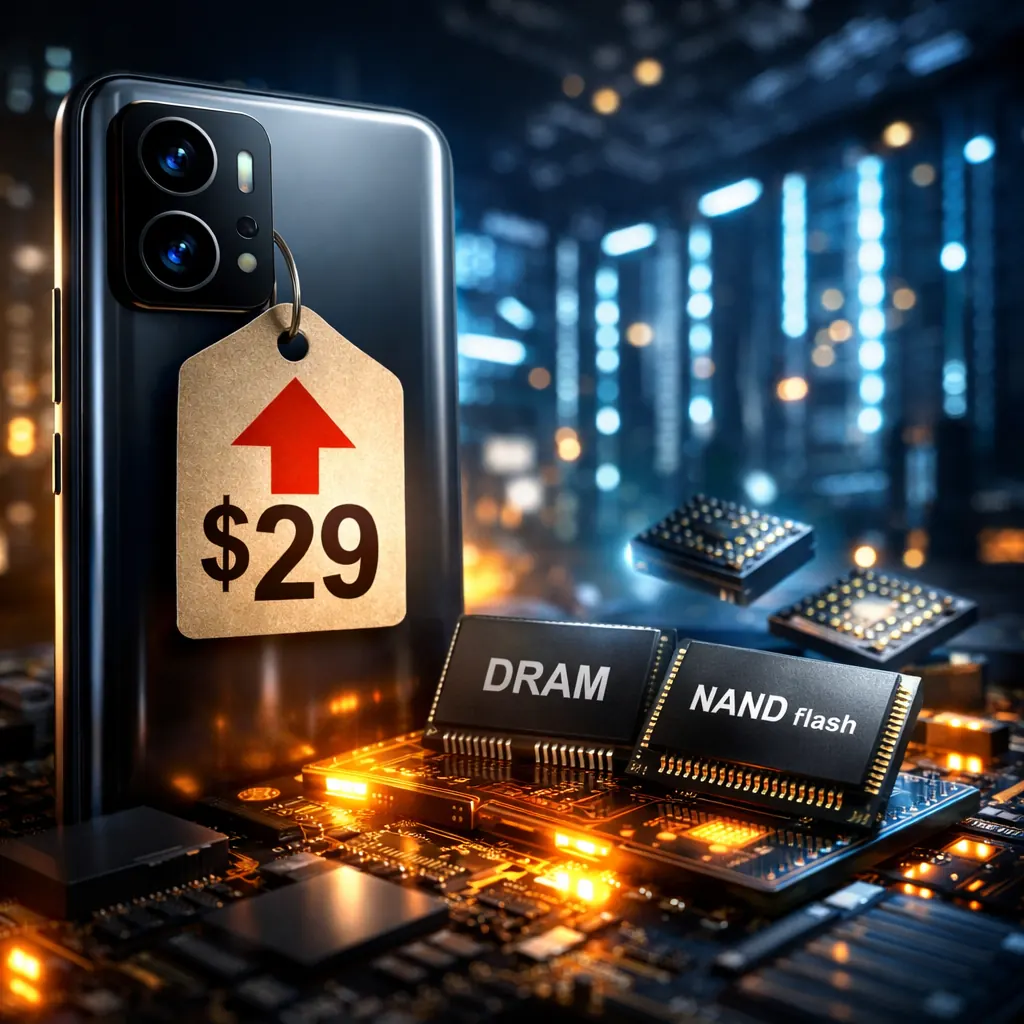

Smartphones are getting more expensive again—and this time, the reason goes far beyond branding or premium features. Xiaomi has raised prices on several of its models by around 200 yuan (about US$29), highlighting a deeper shift happening across the global tech industry.
The trigger is not demand from consumers, but an intense squeeze in the semiconductor supply chain. Memory chip prices—critical components inside every smartphone—have surged dramatically, driven largely by the explosive growth of artificial intelligence.
What looks like a small price increase today could signal a much bigger trend for smartphone buyers worldwide.
Memory chip costs surge far beyond expectations
Xiaomi confirmed that the price hikes will take effect next week and will impact three of its smartphone models. The company pointed directly to rising component costs, especially memory chips, as the main reason behind the move.
According to Xiaomi president Lu Weibing, the increase has been unusually sharp. Memory prices for comparable configurations have surged nearly four times compared to last year, a jump he described as exceeding expectations.
This surge is backed by industry-wide data. Research firm TrendForce estimates that in the second quarter of 2026:
• DRAM prices (used for speed and multitasking) could rise 58% to 63% quarter-on-quarter
• NAND flash prices (used for storage) may jump 70% to 75%
Meanwhile, analysts expect DRAM prices to more than double in 2026, with further increases likely into 2027. Some estimates suggest prices have already crossed US$10 per gigabyte in the open market.
These are not typical fluctuations—they represent one of the sharpest cost escalations the industry has seen in years.
AI boom is reshaping the entire chip market
The biggest driver behind this surge is the rapid expansion of artificial intelligence infrastructure.
Data centres, cloud providers and AI companies are now consuming massive amounts of memory chips. These systems require high-performance DRAM and advanced storage, putting them in direct competition with smartphone manufacturers.
According to SemiAnalysis, memory accounted for around 8% of hyperscaler spending in 2023 and 2024. That share is expected to jump to around 30% in 2026 and rise even further in 2027.
In simple terms, AI is absorbing a growing share of global memory supply—and it is willing to pay more for it.
This shift is forcing chipmakers to prioritise high-margin AI demand, leaving consumer electronics companies like Xiaomi with tighter allocations and higher procurement costs.
At the same time, supply expansion has not kept pace. Semiconductor production remains constrained by rising costs in raw materials, energy, logistics and manufacturing complexity, all of which have been amplified by ongoing geopolitical tensions.
Smartphone makers face rising pressure on margins
Xiaomi is not alone in reacting to these cost pressures. Other major Chinese smartphone brands, including Oppo, Vivo and Honor, have also raised prices in recent months.
The reason is clear: margins are shrinking.
Xiaomi’s latest financial results highlight the pressure:
• Smartphone revenue: 186.4 billion yuan in 2025 (down 2.8% year-on-year)
• Shipments: 165 million units
• Gross margin: dropped to 8.3% from 12% a year earlier
Despite strong shipment volumes, profitability is declining. That leaves manufacturers with limited options—either absorb the rising costs or pass them on to consumers.
So far, companies are choosing the latter.
Interestingly, demand for smartphones has not collapsed, even as prices rise. While the PC market has softened, smartphone demand has remained relatively stable, allowing brands to push through price increases without significantly hurting sales.
What this means for global consumers
For buyers, the implications are becoming clearer.
The era of consistently falling smartphone prices—or getting more for the same price—may be ending. Instead, consumers could see:
• Higher starting prices for mid-range devices
• Premium models becoming even more expensive
• Fewer aggressive discounts and launch offers
• Greater focus on higher-storage variants
Even small increases, like Xiaomi’s US$29 adjustment, can add up across markets and product cycles.
More importantly, this is not a temporary spike. The underlying driver—AI demand—is expected to grow stronger over the next several years. As long as memory remains a critical bottleneck, pricing pressure is likely to continue.
Xiaomi’s move reflects a broader reality: smartphones are no longer the centre of the tech ecosystem. They now compete for resources with data centres powering AI, cloud computing and next-generation digital services.
That shift is quietly changing how devices are priced.
For consumers planning their next upgrade, the message is simple. The cost of smartphones is no longer just about features or competition—it is increasingly tied to the global race for computing power.
And that race is only getting faster.

Make Swikblog your go-to source on Google for reliable updates, smart insights, and daily trends.